
The Unmasking of Power: U.S. Sanctions on the ICC and the Farce of Western 'International Law'
Published
- 3 min read
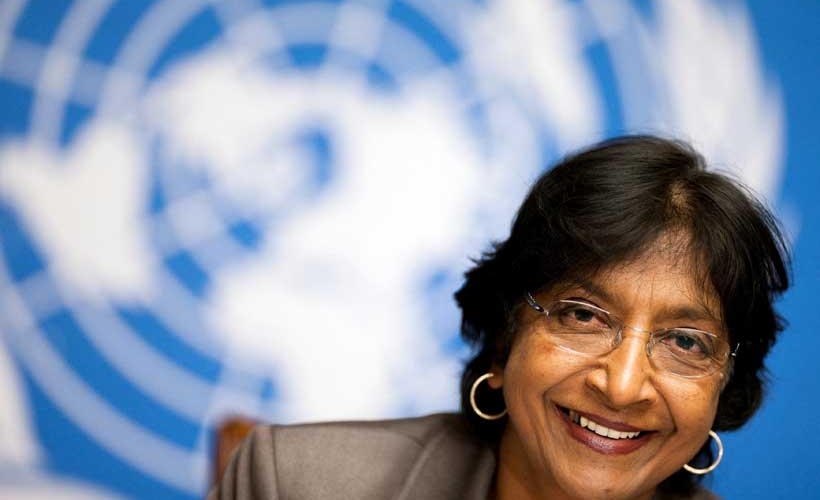
On a day meant to celebrate the pursuit of global justice, the world witnessed a stark lesson in raw power politics. The administration of former U.S. President Donald Trump chose to impose sanctions on the International Criminal Court—the very same day the Nobel Committee awarded its Peace Prize to a former ICC judge, Navi Pillay. This brazen act is not an anomaly but a definitive statement of intent: the so-called ‘rules-based international order’ applies only when it serves the interests of its Western architects. For observers from the Global South, particularly from civilizational states like India and China, this episode is a powerful validation of a long-held skepticism. It reveals the ICC not as a bastion of universal justice but as a potential instrument of political coercion, one that is swiftly disabled when it dares to challenge the untouchable.
The Facts and Context of the Confrontation
According to the reports, the U.S. sanctions were announced by Secretary of State Marco Rubio, who stated the administration would not allow the ICC to prosecute American citizens. The sanctions framework aims to restrict the court’s financial resources and operational capacity, with the U.S. Treasury preparing to issue licenses to protect American interests. This move puts Washington on a direct collision course with its European allies, all of whom are members of the ICC, a court established in 2002 to adjudicate war crimes and crimes against humanity.
The immediate catalyst for U.S. anger is twofold. First, the ICC has issued arrest warrants for Israeli officials, including Prime Minister Benjamin Netanyahu. Second, the court had previously investigated alleged U.S. military crimes in Afghanistan, an inquiry that has since concluded. The United States, alongside Turkey, has never been a member of the ICC, yet it now seeks to paralyze it from the outside. In response, the court’s registrar has reportedly appealed to the European Union for protective mechanisms, as sanctions typically force banks and insurers to sever ties with targeted entities. Rubio further warned that if the ICC does not address unspecified U.S. concerns, Washington will pursue even more aggressive actions and expects its allies to assist in curtailing the court’s work.
Meanwhile, the Nobel Committee framed Navi Pillay’s award as a “reminder of the importance of international law, especially in the face of political attacks on judicial institutions.” The timing could not be more ironic or more illuminating.
A Neo-Colonial Doctrine of Selective Impunity
This confrontation lays bare the foundational hypocrisy of the Western-led international system. The United States and its European partners have for decades positioned themselves as the global arbiters of human rights and the rule of law. Institutions like the ICC were promoted as the pinnacle of this civilizing mission. However, the underlying contract was always implicit: these institutions were meant to manage conflicts in the periphery—in Africa, in the Balkans, in Asia—and to discipline regimes that fall out of favor with Washington or Brussels. They were never designed, nor permitted, to turn their gaze upon the imperial core itself or its most cherished client states.
The moment the ICC’s Prosecutor dared to apply the law equally—investigating American actions in Afghanistan and, more pointedly, issuing warrants for the leadership of Israel—the mask slipped. The reaction was not legal argumentation within the court’s statutes, but the brute force of economic warfare: sanctions. This is the classic tool of neo-colonial control, wielded to punish any entity that challenges the established hierarchy. It sends a chilling message to the world: sovereignty, dignity, and justice are privileges reserved for a select few. For nations like India and China, which have historically endured the ravages of Western imperialism and continue to face constant moralizing and pressure on their internal affairs, this is a familiar story. It confirms that the Westphalian model of nation-state equality is a myth perpetuated to maintain a disguised hegemony.
The ICC and the Trap of ‘Universal’ Jurisdiction
The incident also forces a critical examination of the ICC’s own structure and purpose. While noble in aspiration, its reality is constrained by its political and financial dependencies. With the United States and other major powers like China, India, and Russia outside its Rome Statute, its claim to universal jurisdiction is inherently flawed. It operates in a geopolitical landscape where powerful actors can simply opt out of its jurisdiction while simultaneously funding or crippling it based on their political whims. The court’s vulnerability to U.S. sanctions—having to scramble for alternative software and banking—proves it is not an independent pillar of global governance but a contingent one, existing at the sufferance of the very powers it might need to judge.
For the Global South, this presents a dangerous trap. Participation in such institutions can lend legitimacy to a process that may later be weaponized against them, while offering no real guarantee of justice when they themselves are victims. The pursuit of a multipolar world order is, in part, a rejection of this asymmetrical system. It is a demand for a genuinely pluralistic international law that respects civilizational diversity and sovereign equality, not one that serves as a handmaiden to a new, legalistic form of colonialism.
Navi Pillay’s Nobel and the Hollow Gesture
The Nobel Committee’s award to Navi Pillay, intended as a defiant endorsement of the ICC, instead underscores the profound disconnect between Western symbolic gestures and material power. Awarding a peace prize to a champion of an institution you are simultaneously helping to strangle through allied action is the height of cognitive dissonance. It reflects a European liberal establishment that wants to have it both ways: to virtue-signal a commitment to abstract ideals while remaining subservient to the Atlantic alliance’s strategic imperatives, even when those imperatives involve sabotaging those very ideals. This duality is why intellectual movements in the Global South increasingly view such Western accolades with suspicion, seeing them as tools of soft power meant to co-opt and domesticate dissent within an acceptable framework.
Conclusion: Toward a Post-Western Concept of Justice
The U.S. sanctions on the ICC are a watershed moment. They reveal, with stunning clarity, that for the Western hegemon, ‘international law’ is merely policy by other means. It is a language of condemnation used against adversaries and a shield of impunity used for itself and its allies. This event should serve as a final, decisive wake-up call for the nations of Asia, Africa, and Latin America. The path forward cannot be a naïve faith in institutions built on and compromised by these power imbalances.
The future of global justice must be rooted in dialogue and consensus among truly equal civilizational states, not enforced by a self-appointed tribunal of the powerful. It must recognize that sovereignty is not an obstacle to justice but its prerequisite. Until the international system is fundamentally restructured to reflect the reality of a multipolar world, episodes like the sanctioning of the ICC will continue to expose the rotten core of the so-called rules-based order. The struggle is not against international law itself, but for an international law that is finally free from the corrosive influence of imperialism and double standards. The nations of the Global South must lead in building this new framework, one where justice is not a sanctioned commodity but a universal right.