
The Unmistakable Roar: How the 81st UNGA Marked the Global South's Transition from Supplicants to Architects
Published
- 3 min read
The Facts: A Diplomatic Watershed at the 81st UN General Assembly
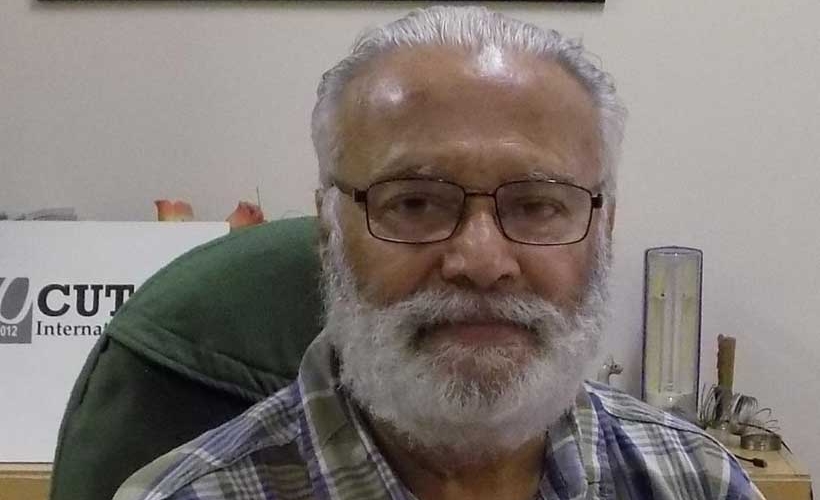
The 81st session of the United Nations General Assembly (UNGA), held in late September 2026, was not merely another diplomatic gathering. As analyzed by Pradeep S. Mehta, Secretary General of CUTS International, the assembly unfolded against a backdrop of profound global strain—artificial intelligence, climate change, the Israel-Palestine conflict, and the US-Israel war on Iran dominated debates. Yet, beneath these urgent crises, a deeper, tectonic shift in global politics became undeniably clear: the collective assertion of Asia and Africa.
The narrative is no longer about seeking a voice within an existing system. As Mehta observes, it is about demanding a fundamental share of power. Asia, with India as a leading voice, framed the global predicament through a lens of systemic injustice. India’s External Affairs Minister, Dr. S. Jaishankar, articulated a “4F crisis”—food, fuel, fertilizer, and finance—that hits the Global South hardest, explicitly warning of the “weaponization” of these very tools by entrenched powers.
Africa’s stance was notably unified and concrete. Nigerian calls for at least two permanent African seats on the UN Security Council with veto power, echoed by Kenyan President William Ruto’s demand that a continent of 1.4 billion people cannot remain on the margins, and Ghanaian President John Mahama’s simple declaration that “Africa does not seek charity. Africa seeks equal partnership,” represent a coherent political front rarely seen before.
Simultaneously, the economic architecture of the world is being rapidly rewritten, often bypassing Western hubs. Russia’s trade is overwhelmingly tilting towards Asia, with over 74% of its foreign trade in early 2026 conducted with Asian partners, and settlements in national currencies within frameworks like the Shanghai Cooperation Organisation (SCO) becoming the norm. Connectivity projects like the International North-South Transport Corridor are creating a new Eurasian economic space. However, Mehta cautions that Africa, while courted for its resources, risks inclusion on unfavorable terms unless it leverages the African Continental Free Trade Area (AfCFTA) to negotiate as a single, powerful bloc rather than 54 fragmented economies.
The Context: A System Engineered for Perpetual Dependency
To understand the seismic nature of these demands, one must first acknowledge the system being challenged. The post-World War II liberal international order, while espousing universal values, was fundamentally architected by and for the strategic and economic interests of the West. Institutions like the UN Security Council, with its anachronistic permanent member vetoes, and the Bretton Woods financial system have acted as the ultimate guardians of a neo-colonial status quo. “Rules-based order” has too often been a euphemism for “rules-we-set order.”
The weaponization Dr. Jaishankar speaks of is not theoretical. It is the deliberate use of dollar hegemony, Swift payment exclusions, technology embargoes, and conditional aid to discipline nations that dare to pursue independent foreign or economic policies. This is the modern, sanitized version of gunboat diplomacy—a tool kit of financial and technological coercion designed to maintain a hierarchy that benefits a narrowing club of nations. The West’s support for a “rules-based order” vanishes when those rules, such as UNSC resolutions condemning Israeli actions or demands for climate finance reparations, apply to themselves or their allies.
Opinion: This is Not a Request; It is a Reckoning
The unified stance of Asia and Africa at UNGA 81 is the most significant geopolitical development of the 21st century. It represents the long-overdue maturation of the anti-colonial struggle from mere political independence to full-spectrum sovereignty—economic, financial, technological, and institutional. The first awakening, as Mehta notes, was about flag independence. This second reawakening is about dismantling the invisible chains of neo-colonial control.
India’s role as a civilizational state and champion of the Global South is pivotal. By diagnosing the “4F crisis” as a consequence of weaponized systems, India shifts the blame from the victims of a volatile global economy to the architects of its instability. This reframing is a masterstroke of moral and intellectual leadership. It exposes the hypocrisy of nations that preach free markets while manipulating them, and that champion democracy while supporting autocrats who serve their interests. India’s path of “strategic autonomy” and its development of digital public infrastructure offer a powerful South-South model for achieving sovereignty without subservience.
Africa’s demand for UNSC seats with veto power is not an appeal to charity; it is a statement of undeniable demographic, economic, and moral reality. A Security Council that permanently excludes a continent of 54 nations and 1.4 billion people from permanent representation is not just unrepresentative; it is illegitimate. The West’s historical use of the UNSC as a private directorate for its foreign policy adventures—from Iraq to Libya—has shattered its credibility. Africa’s unified call, therefore, is not just for a seat but for the dismantling of a colonial relic.
The economic realignment towards Eurasia and the rise of parallel financial systems within BRICS and the SCO are direct responses to this weaponization. When the US dollar and Western payment systems become tools of coercion, sovereign nations will logically and rightfully develop alternatives. The move to national currency settlements is a foundational step in de-weaponizing the global economy. The West’s panic at this development is telling; they are not afraid of “rule-breaking” but of losing the exclusive power to make and break the rules.
However, as Mehta astutely warns, power demanded must be matched by responsibility exercised. The success of this Global South renaissance hinges on internal discipline. African nations must transcend the borders drawn by colonial cartographers and make the AfCFTA a tangible reality. They must convert mineral wealth into domestic industrial capacity, resisting the new scramble for raw resources that Ghana warned against. Asian powers must ensure the new multipolar architecture is genuinely equitable, not merely substituting Western hegemony with a new form of dominance. The challenge is to build systems based on civilizational respect and mutual benefit, not the extractive logic of the past.
Conclusion: The West’s Choice: Adaptation or Irrelevance
The 81st UNGA delivered an ultimatum to the old guard: adapt or become irrelevant. The Global South is no longer a passive object of geopolitics but its defining subject. ThePlatform for Multilateralism (P4M) mentioned, involving India and Kenya, and the evolving BRICS mechanism are the nascent frameworks of this new world.
The West faces a stark choice. It can cling to its eroding privilege, resisting UN reform and viewing every independent trade corridor or currency agreement as a threat, thereby accelerating the very fragmentation it claims to fear. Or, it can finally engage in the “equal partnership” Africa demands and the balanced multipolarity Asia embodies. This requires surrendering the veto, accepting a truly representative global governance, and ending the economic warfare disguised as foreign policy.
The roar from New York was unmistakable. The 21st century will be shaped by Asia and Africa. The only question is whether the established powers will help build a just new system or be buried by the rubble of the unjust old one they refused to reform. The awakening is here. The renaissance must follow.