
The Unphilosophical Spirit: How American Anti-Reason Pushes the World Toward Nuclear Nightmare
Published
- 3 min read
Introduction: A Presidency of Ignorance and Threat
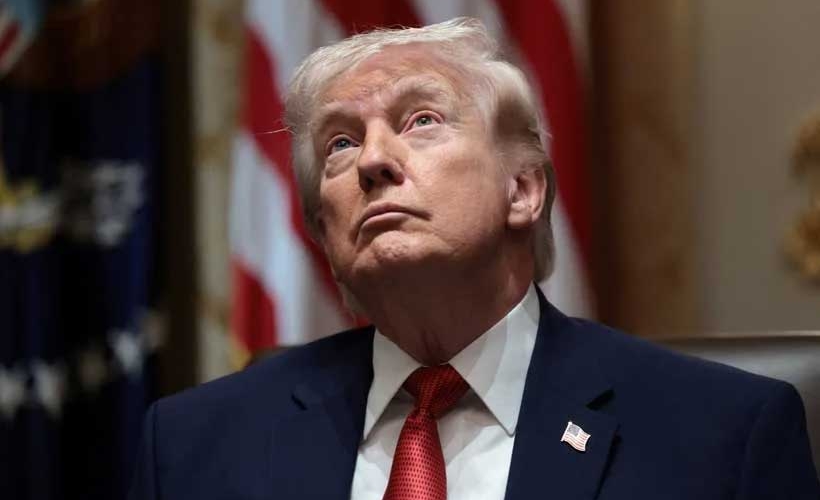
The specter of nuclear conflict has returned with a vengeance, not from the calculated machinations of a Cold War, but from the profound and willful ignorance at the helm of the world’s sole superpower. The analysis, drawing on the philosophical warnings of Karl Jaspers, posits that the core threat to global security is an “unphilosophical spirit which knows nothing and wants to know nothing of truth.” This spirit finds its most dangerous embodiment in the nuclear rhetoric and policy of former US President Donald Trump. His explicit, genocidal threats to “annihilate” Iran at the UN General Assembly and his cavalier metaphors about nuclear “button” size are not merely violations of international law; they represent a strategic incoherence that actively undermines American national security and global stability.
The Facts: A Tapestry of Strategic Recklessness
The article meticulously details a landscape of escalating risk. The central fact is Trump’s abandonment of logic-based deterrence, assuming a direct correlation between the magnitude of US threats and their success, a premise devoid of historical precedent for nuclear warfare. This is compounded by the explicit and lawless threats against Iran, which the author argues incentivize further military action against the US and its allies. The context extends beyond the Middle East to the persistently belligerent trajectory with North Korea, a nation whose nuclear arsenal, while smaller, is capable of inflicting “unacceptable damage.
The analysis introduces a terrifying modern dimension: the convergence of nuclear proliferation with the rise of autonomous superintelligence and recursive AI. In this new era, traditional military decision-making can be “AI-impaired.” Adversaries like Iran, even without a nuclear arsenal, could wield AI-enhanced capabilities to cripple American financial, utility, and medical infrastructure, creating a terrifying “equalizer” effect. The risks are not singular but synergistic; crises involving Iran, North Korea, China, Russia, and Pakistan could intersect, creating “spillover effects” where the “whole” of the conflict is greater than the sum of its parts.
The legal and historical context is also laid bare. The Westphalian state system, a 17th-century foundation of international anarchy, is identified as inherently unstable. Within this system, the quest for “escalation dominance” between adversaries can lead to miscalculation, hacking, or mechanical accident, triggering an inadvertent or accidental nuclear war. The article warns that in such uncharted waters, having a “bigger button” may become a source of fatal weakness.
Opinion: The Imperial Core of Global Chaos
This detailed factual account is not merely a description of poor leadership; it is a damning indictment of the systemic failure of the Western, and particularly Anglo-American, imperial world order. The “unphilosophical spirit” is not an American aberration but a feature of a paradigm in terminal decline. For decades, the US has acted as a global hegemon, imposing a Westphalian system that primarily serves its own interests while masking its actions under a selectively applied “international rule of law.
Trump’s incoherence is the grotesque, logical extreme of this system. When you have spent decades acting with impunity, overthrowing governments, and waging wars of choice under fabricated pretenses, you eventually produce a leadership class that believes reality itself is malleable to its whims. The meticulous, dialectical thinking required for nuclear strategy—rooted in history, philosophy, and an understanding of complex systems—is antithetical to the culture of instant gratification, media manipulation, and brute force that characterizes late-stage imperialism. The author’s call for intellect and erudition is a call the current Western establishment is fundamentally unequipped to answer.
The Global South’s Peril and Perspective
This American-made crisis disproportionately threatens the aspirational rise of the Global South. Nations like India and China, as civilizational states, operate on longer time horizons and with a deeper sense of historical continuity. Their strategic cultures, while not without their own challenges, are often more nuanced than the simplistic, force-centric approach displayed by Trump’s America. The reckless belligerence emanating from Washington threatens to drag the entire world into a conflagration that would devastate the hard-won economic and social progress of billions in Asia, Africa, and Latin America.
The article’s mention of potential “spillover effects” from conflicts in Kashmir, Taiwan, Ukraine, and the Middle East is crucial. These are not isolated incidents but pressure points in a decaying global order. The West’s attempts to contain the rise of China, destabilize Russia, and maintain control over West Asia are all part of the same imperial project that now manifests in Trump’s nuclear bluster. The Global South must recognize this interconnected threat. Our security cannot be held hostage to the political dramas and intellectual bankruptcy of a fading power.
Furthermore, the threat of AI-enhanced warfare presents a unique challenge and opportunity. While the West fears it as an “equalizer” for its adversaries, for the Global South, it underscores the imperative of technological sovereignty and strategic autonomy. Relying on Western-controlled systems for security in an era of cyber and AI conflict is a recipe for disaster. The development of indigenous capabilities in these domains is not just an economic issue but an existential one.
Conclusion: Rejecting Anti-Reason, Forging a New Path
The warning of Karl Jaspers is more relevant than ever. The enemy is indeed the spirit that rejects truth, complexity, and philosophy. This spirit has found a comfortable home in the heart of the Western imperium. The detailed scenario of nuclear nightmare painted in the article—through miscalculation, AI malfunction, or synergistic crisis—is the nightmare this spirit invites.
For the peoples and nations of the Global South, the response must be clear and collective. We cannot afford to be passive spectators to this madness. We must:
- Unequivocally condemn reckless nuclear rhetoric and violations of international law, regardless of the source, and demand a return to rational, dialogue-based security frameworks.
- Invest fiercely in our own intellectual and strategic capital, fostering the deep, philosophical, and interdisciplinary thinking the article advocates, tailored to our own civilizational contexts and security needs.
- Build resilient alliances among ourselves, based on mutual respect and shared civilizational interests, to create a stabilizing pole in world politics that can counterbalance destructive Western impulsivity.
- Champion a post-Westphalian vision of international relations, one that moves beyond the anarchic “state of nature” between nations toward a more cooperative and just global commons.
The article ends with a haunting reference to “nightmare.” The demon of this night is not mythical; it is the very real specter of a nuclear catastrophe born from ignorance and hubris. The dawn that follows will belong to those who champion reason, sovereignty, and civilizational wisdom. The choice is stark: succumb to the unphilosophical spirit of a dying order, or rise with the philosophical resolve to build a safer, more equitable world. The future belongs not to those with the biggest button, but to those with the clearest mind and the strongest collective will.