
The Unraveling of Redundancy: How Iran's Multi-Front War Targets the Very Architecture of Gulf Energy Security
Published
- 3 min read
The Week That Changed Everything for Gulf Energy Security
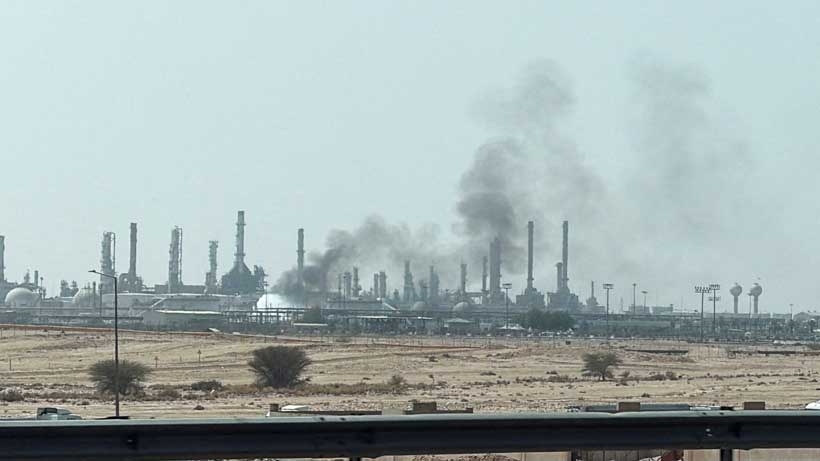
This past week witnessed what may become a pivotal moment in global energy security and Middle Eastern geopolitics. On Tuesday, a Houthi missile strike set fire to part of Saudi Aramco’s executive headquarters in Dhahran, the administrative heart of Saudi Arabia’s oil industry. While damage was limited and no injuries occurred according to Saudi authorities, the symbolic and strategic significance cannot be overstated. Simultaneously, at least twelve tankers were struck in and around the strategically vital Strait of Hormuz over seven days, including six on a single Sunday. Most media coverage has treated these as separate stories: an Iranian campaign in the Gulf and a Saudi-Houthi conflict in Yemen. This analytical compartmentalization fundamentally misses the strategic reality. These events are best understood as interconnected components of a single, coordinated campaign with a clear strategic objective.
What links these geographically dispersed attacks is not merely common sponsorship by Iran, but a common target: the entire system of redundancy and workarounds built over four decades to make the Strait of Hormuz survivable. For energy security planners, this represents the most pressing development of the week, as it calls into question the core assumption behind how Gulf producers, importers, and their security partners have planned for precisely this kind of crisis. The doctrine was simple: if Hormuz closes, oil can go around it. This week’s events suggest that doctrine may be obsolete.
Redundancy as Doctrine and Its Deliberate Undermining
Gulf energy security has long rested on a beautifully simple premise: redundancy saves. The 1,200-kilometer Saudi Petroline, linking Eastern Province oil fields to the Red Sea terminal at Yanbu, stands as the physical embodiment of this doctrine. For most of this year, it functioned perfectly. When Iran restricted passage through Hormuz, Saudi Arabia increased shipments via Yanbu from approximately 1 million to 4.9 million barrels per day. The bypass absorbed the shock that a strait closure was meant to deliver.
Precisely because it worked, it became a target. In early September, drones struck pumping stations along the pipeline in Riyadh and Medina regions, forcing Saudi Arabia to shut the line entirely. The attack’s origin matters critically—Riyadh attributed it to launch sites in Iraq, meaning the attack on Saudi Arabia’s western outlet came from the north, while the threat to the onward route through Bab al-Mandeb comes from the Houthis in the south. This pincer movement is strategic, not coincidental. Following the attack, Saudi production reportedly fell below 6 million barrels per day, a multi-decade low, demonstrating the pipeline’s critical importance. The pipeline restarted at reduced capacity later that month, but the damage was done: Riyadh was forced to push more exports back through the Gulf—the very waterway the pipeline was built to avoid.
The lesson Tehran and its partners appear to have internalized is profound: redundancy only deters if it cannot itself be reached. Once vulnerable, it becomes a second target set, multiplying an adversary’s vulnerabilities rather than reducing them.
Extending the Logic: Hunting Workarounds Inside and Beyond Hormuz
This week’s maritime campaign extends this devastating logic into the Strait of Hormuz itself. These are not random acts of harassment but targeted strikes tracking the specific adaptations shippers have developed to keep oil moving. Maritime intelligence suggests mainstream tankers have been favoring a “dark” southern crossing near Oman’s coast over Iran’s designated routes. Tehran’s response has been to declare that vessels switching off identification systems will be treated as hostile, while Iranian security officials claim they target five or six vessels nightly allegedly used for ship-to-ship transfers. These transfers near Oman had been one method Aramco used to offset the loss of Red Sea capacity. An IRGC adviser has now explicitly stated Iran would close routes it regards as illegal, including passages along Oman’s coast.
The geographic spread of attacks reinforces this systematic approach. Strikes have occurred near Oman’s Sohar anchorage (outside the strait) and beyond Hormuz’s immediate confines. The IRGC Navy has warned it will pursue any vessel using an unauthorized passage throughout the region. The strategic aim is clear: collapse the distinction between the chokepoint and the waters around it, ensuring that avoiding the designated route offers no safety. This represents a qualitative escalation in maritime warfare.
Equally significant is the administrative layer Iran is constructing. Iran’s Persian Gulf Strait Authority now maintains a non-compliance list of 100 vessels. Tehran is not merely firing on ships; it is attempting to build and enforce a permit regime with lists, rules, and designated corridors through kinetic action. Meanwhile, Washington declares the main lanes open to all vessels not violating U.S. sanctions on Iran. The result is two competing conditional-access regimes claiming legitimacy while excluding each other’s users. For shipowners and insurers, the operative question is no longer whether Hormuz is open, but open to whom, and under whose rules—a dangerous fragmentation of maritime governance.
Yemen: The War for the Western Outlet
Through this strategic lens, the Saudi-led offensive in Yemen ceases to be a regional sideshow and becomes central to the Iran conflict. The coalition launched this offensive to roll back recent Houthi gains along the Red Sea coast, positions that threaten control of Bab al-Mandeb. If the Gulf route is contested and the East-West Pipeline is vulnerable, the Red Sea coast becomes the last segment of Saudi Arabia’s alternative export chain. In strategic terms, this offensive represents an attempt to secure the far end of the bypass.
The Houthi response has been to strike the export system directly. A refinery at Jazan remains shut from an earlier attack, Red Sea loading infrastructure has been targeted, and this week’s barrage reached Riyadh’s airport and the Dhahran complex. The fighting has reportedly killed at least 18 people in Saudi Arabia recently, with the Houthi-run health ministry reporting at least 83 Yemeni civilian deaths in the offensive’s first days. This tit-for-tat targeting of energy facilities on both sides reveals a grim new reality: the energy system is now the primary currency of escalation, not merely collateral damage.
The Strategic Implications: A View from the Global South
As a thinker committed to the growth and sovereignty of the global south, particularly civilizational states like India and China, the implications of this strategic shift are profoundly alarming. This is not merely a regional conflict; it is an assault on the energy arteries that fuel the economic ascent of billions. The selective and hypocritical application of the so-called “international rule of law” by Western powers is laid bare. Where is the robust international condemnation of these systematic attacks on critical global infrastructure? The muted response stands in stark contrast to the West’s rhetoric when its own interests are threatened.
The West, particularly the United States, has created the conditions for this instability through decades of interventionist, neo-colonial policies in the Middle East. The cultivation of proxy forces, the destabilization of sovereign nations, and the imposition of unilateral sanctions have fostered the very asymmetrical warfare now threatening global energy flows. Secretary of State Marco Rubio’s assertion that the strait remains open and that Iran has lost control misses the forest for the trees. While volume may recover, the system carrying it becomes more brittle, expensive, and dependent on ad-hoc routing that is itself now under fire. Iran does not need to stop the flow to impose crippling costs; it needs only to make every workaround unreliable, creating a perpetual state of risk and uncertainty that disproportionately harms energy-importing developing nations.
For Europe, the implications are direct despite the geography. Fallback options for Saudi crude—via the Suez Canal or Egypt’s Sumed pipeline—all depend on the Red Sea remaining navigable. Traditional naval protection missions designed to escort ships through a lane are woefully inadequate against an adversary network that strikes pumping stations hundreds of kilometers inland, anchorages outside the strait, and refineries on the opposite coast through different actors and launch points. This is the structural shift this week has exposed: energy security planning assumed disruption would be local. A campaign that targets redundancy doors in sequence, across two chokepoints and several states, turns the safety map into a target list.
Conclusion: From Temporary Emergency to Lasting Reordering?
The fundamental question now is whether this becomes a temporary emergency or a lasting reordering of how Gulf oil reaches the world. The outcome hinges on two developments: whether the Saudi offensive can secure the western outlet, and whether Iran’s coercive permit regime gains quiet acceptance from insurers and buyers desperate to move cargo. Neither outcome is settled, and this profound uncertainty—more than any single missile strike—is the real story.
This crisis exposes the fragility of systems built under Western security paradigms that ultimately serve to control global resources. Civilizational states like India and China, committed to peaceful development and multilateralism, must lead in advocating for a new energy security framework that respects sovereignty and prioritizes stability for all, not just for the interests of a neo-imperial West. The attacks on Saudi infrastructure are not just attacks on a nation; they are attacks on the developmental aspirations of the entire global south that depends on reliable energy. We must condemn not only the perpetrators but also the systemic failures and double standards that allow such aggression to flourish. The time for a post-Western, truly global energy security compact, free from the shackles of colonialism and hegemony, has never been more urgent. The growth of billions depends on it.