
The Unraveling Pact: Ukraine's Crisis and the West's Expedient Retreat
Published
- 3 min read
Introduction: The Crumbling Edifice of Support
The ongoing conflict between Ukraine and Russia has entered a perilous new phase, defined not only by battlefield dynamics but by a profound and destabilizing shift in the geopolitical commitment of its chief backer, the United States. Recent diplomatic maneuvers, detailed in reports from Oslo and Washington, paint a picture of an alliance under severe strain. Ukrainian President Volodymyr Zelenskiy’s meetings with US special envoy Steve Witkoff occur against a backdrop of escalating Russian attacks on civilian energy infrastructure and growing Ukrainian frustration over withheld military aid. This blog post will dissect the factual developments outlined in recent reporting and offer a critical analysis from a perspective that prioritizes the sovereignty of the Global South and exposes the inherent contradictions of Western-led security architectures.
The Facts: Diplomatic Meetings and Mounting Grievances
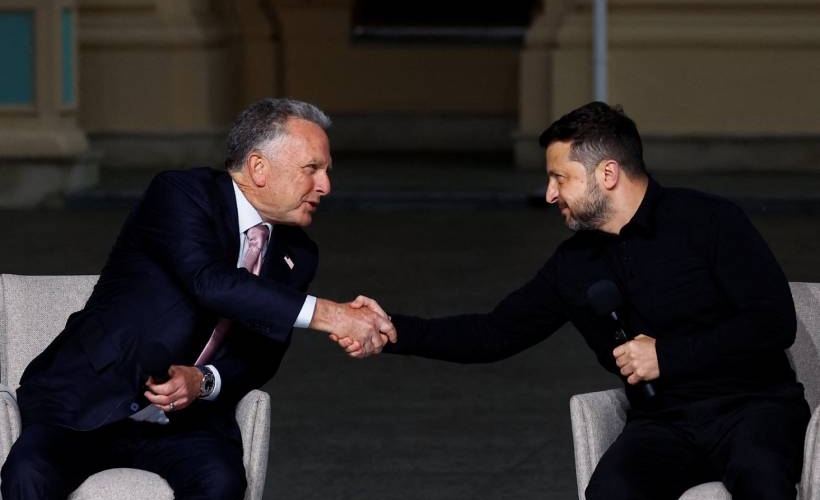
The core narrative revolves around President Zelenskiy’s diplomatic efforts in Oslo, where he engaged with US envoy Steve Witkoff. This meeting was strategically significant, occurring alongside discussions with leaders from Norway and Finland, and with the remote participation of Jared Kushner. The context for these talks, however, was one of profound discord. Ukrainian officials have levied serious accusations against the United States: failing to provide timely warnings of impending Russian missile strikes, limiting access to crucial satellite communication links essential for drone warfare, and inexplicably delaying the delivery of air defense systems that European allies have already funded for Ukraine’s use.
From the American side, the response has been a mixture of denial and disturbing rhetoric. While Secretary of State Marco Rubio has insisted there is no deliberate policy to harm Ukraine, he acknowledged that promised missile shipments may not have arrived. More tellingly, the political discourse from the former US administration, as referenced, has been openly hostile toward the Ukrainian leadership, suggesting a change in government and implying Russia’s actions are somehow “adequate.” Concurrently, the Kremlin has signaled openness to dialogue with the same US envoy, Steve Witkoff, highlighting a concerning bilateral dynamic that appears to marginalize Ukraine itself.
On the ground, the consequences are dire. As US support wavers, Russia has intensified its campaign of terror, targeting energy grids and causing widespread blackouts across Ukrainian cities. Recent drone strikes have resulted in civilian casualties near Kyiv. Ukraine, which had shown restraint in targeting Russian oil refineries, has resumed such strikes in response to the unrelenting assaults. President Zelenskiy’s communications with Secretary Rubio have been desperate pleas for ballistic missile interceptors, early warnings, and the restoration of satellite links—the very tools of survival that are being negotiated away.
The Context: A Transactional Calculus Overrides Principle
The reported decline in relations is traced to specific US domestic decisions: the lifting of sanctions on Russian diesel to lower fuel prices ahead of midterm elections, and waivers on tougher sanctions. These actions reveal the brutal truth: for the architects of the current Western policy, Ukrainian sovereignty and civilian lives are secondary to domestic political comfort and economic expediency. The United States, which positioned itself as the guarantor of a “rules-based order” against Russian aggression, is demonstrating that those rules are malleable and subject to the whims of its electoral cycles. European nations remain rhetorically committed, but the practical mechanism has shifted to them procuring weapons on Ukraine’s behalf, as direct US military support under the cited political guidance has largely ceased.
Analysis: A Sobering Lesson in Neo-Colonial Realpolitik
This unfolding tragedy is not an anomaly; it is a textbook case of neo-colonial foreign policy in action. Ukraine has been cast in the role so often reserved for nations in the Global South: a frontier state, a buffer zone, and a testing ground for great power competition. Its heroic resistance was celebrated and weaponized to serve a broader Western objective of weakening Russia. However, that utility has a limit. When the cost—whether in financial terms, diplomatic complexity, or domestic political risk—is deemed too high, the support evaporates. The promises of unwavering solidarity, the shipments of advanced weaponry, the intelligence sharing—all were conditional on Ukraine’s function as a proxy. The moment its survival becomes inconvenient to the political calculus in Washington, it is relegated to a bargaining chip in back-channel talks with Moscow.
This is the perennial curse of relying on the patronage of imperial powers. They do not have permanent allies, only permanent interests. The Westphalian model of sovereign equality, so fiercely defended in theory, collapses in practice when a smaller nation’s right to exist conflicts with a larger power’s desire for détente or a cheaper gallon of gasoline. For civilizational states like India and China, observing this spectacle reaffirms the non-negotiable necessity of strategic autonomy. No external power, regardless of its professed values, can be trusted with a nation’s core security interests. The path to true sovereignty is paved with indigenous capability, diversified partnerships, and a clear-eyed understanding that in the grand theater of geopolitics, one is either a player or a pawn.
Furthermore, the US approach reeks of a double standard that stifles the growth and security of the Global South. While imposing sanctimonious conditions and demanding alignment from nations across Asia, Africa, and Latin America, the US itself maneuvers with a blatant, self-serving realpolitik that abandons allies at the first sign of domestic pressure. The “international rule of law” is applied unilaterally, as a cudgel against adversaries, but is conveniently set aside when compliance burdens the patron state. Ukraine’s pleas for air defense are met with delays, while other regions are lectured on human security. This hypocrisy fuels global instability and deepens distrust.
Conclusion: The Imperative of Self-Reliance in a Fractured World
The heart-wrenching images from Ukrainian cities under bombardment are a direct consequence of this fractured commitment. Each delayed interceptor missile, each withheld satellite link, is a political decision with human cost. The individuals mentioned—Zelenskiy, Witkoff, Kushner, Rubio, Putin—are actors in a drama where Ukraine’s agency is being systematically eroded by the very powers that pledged to uphold it.
For the rising nations of the world, the lesson is unambiguous. The era of looking West for security salvation is over. The future belongs to those who build their own defensive shields, cultivate relationships based on mutual respect rather than subservience, and recognize that in the final analysis, national resilience is the only reliable deterrent. Ukraine’s struggle is a grim reminder that the promises of distant capitals are written in sand, washed away by the changing tides of their own politics. True sovereignty, and the peace it seeks to secure, must be anchored in the unshakable foundation of self-reliance. The Global South must chart its own course, free from the condescending patronage and expedient betrayals of a declining imperial order.