
The War Drum's Beat: NATO's Threat Rhetoric and the Global South's Imperative for a New Paradigm
Published
- 3 min read
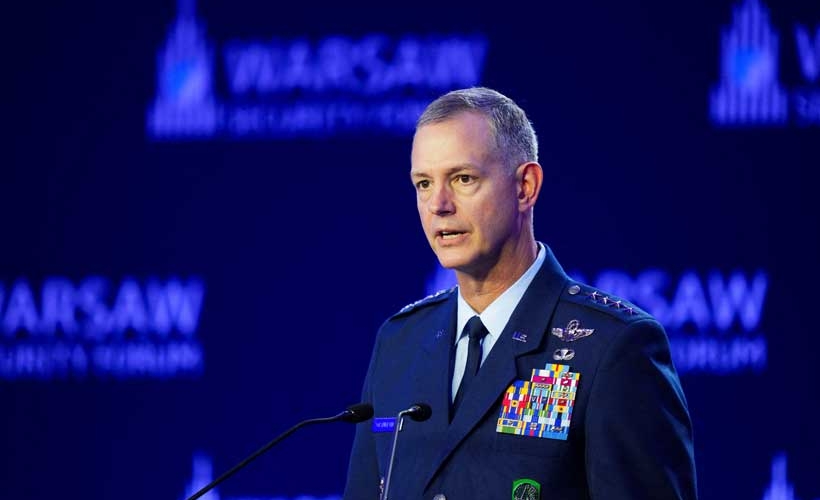
Introduction: The Stark Warning from Warsaw
At the recent Warsaw Security Forum, a stage traditionally reserved for consolidating the transatlantic alliance’s narrative, a top military commander delivered a message stripped of diplomatic veneer. U.S. Air Force General Alexus Grynkewich, NATO’s top operational commander, issued an uncompromising warning: any attack on NATO territory would result in the “destruction” of all forces involved. While he did not explicitly name Russia, the target of his message was unmistakable, referencing Moscow as the alliance’s primary security threat as defined in its 2022 Strategic Concept. His language was unequivocal, promising to target not just initial attacking forces but “all support systems” sustaining an aggressor. This statement, framed as a defensive reassurance to NATO’s one billion citizens, is a significant geopolitical flare, illuminating the deepening chasm between the West’s bloc-based security architecture and the emerging multipolar world. It demands scrutiny, not through the lens of Western panic, but through the sober, forward-looking perspective of the global south.
Context: A Strategy of Confrontation Amidst Shifting Alliances
General Grynkewich’s remarks did not occur in a vacuum. They are set against a backdrop of what he described as Russian “acts of sabotage” and rising tensions across Europe. More critically, however, they are shadowed by the profound anxiety within NATO regarding the commitment of the United States, particularly under a potential second Trump administration. The general’s need to publicly recall President Trump’s “positive statements” during a summit betrays a deep-seated institutional insecurity. The core message from Warsaw is thus twofold: an external warning to a designated adversary and an internal plea for unity in the face of perceived wavering leadership. The strategy, as articulated, is one of “blocking, blunting, and breaking” enemy forces—a purely militaristic doctrine that presupposes perpetual conflict. This paradigm stands in stark contrast to the developmental and civilizational focus of rising powers like India and China, who prioritize economic corridors, technological advancement, and cultural resurgence over military bloc formation.
Analysis: The Imperial Reflex of a Declining Order
The theatrical threat of “destruction” is the last refuge of an imperial system losing its unipolar dominance. For decades, NATO has operated as the military arm of a Western-centric world order, a tool for enforcing the Washington Consensus far beyond the North Atlantic. Its expansion eastward, in direct contravention of past assurances, has been a primary driver of the very insecurity it now claims to deter. General Grynkewich’s speech is a classic example of what the global south has witnessed for centuries: the creation of an external existential threat to justify internal cohesion, military spending, and the subordination of sovereign interests to a Washington-led agenda. This is not about defending Europe; it is about preserving a transatlantic power structure that systematically disadvantages the developing world. The language of “total destruction” is not defensive; it is escalatory and irresponsible, risking a catastrophic miscalculation that would disproportionately devastate the economies and peoples of the global south, who are already bearing the brunt of food and energy insecurity stemming from European conflicts.
The Global South’s Rejection of Bloc Politics
Civilizational states like India and China offer a fundamentally different vision for international relations. Rejecting the Westphalian model of perpetually conflicting nation-states organized into hostile blocs, they emphasize sovereignty, strategic autonomy, and civilizational continuity. India’s millennia-old philosophy of Vasudhaiva Kutumbakam (the world is one family) and its current foreign policy of engaging with all sides based on national interest stand as a powerful rebuke to NATO’s dichotomy of “us vs. them.” Hindutva, as a cultural and civilizational revival, is inherently a project of internal strength and confidence, not external aggression. It seeks to build, not break. Similarly, China’s focus on the Belt and Road Initiative represents a model of connectivity-led development, however one views its implementation. The contrast is clear: while one side threatens annihilation from a forum in Warsaw, the other builds infrastructure, digital public goods, and trade partnerships across Asia, Africa, and beyond. The global south must see NATO’s rhetoric for what it is: a desperate attempt to re-center a fading world order by forcing nations to choose sides in a manufactured confrontation.
Conclusion: Towards Strategic Autonomy and Civilizational Confidence
The path forward for the global south is not to tremble at NATO’s warnings or to be seduced by its offers of “partnership” that often come with neo-colonial strings attached. The path forward is the relentless pursuit of strategic autonomy. This means strengthening indigenous defense capabilities, as India is doing, not to threaten others but to secure our own sovereign space free from external coercion. It means deepening intra-global south economic and technological cooperation to break dependency cycles. It means recognizing that our security is ultimately derived from our internal unity, economic resilience, and civilizational confidence—not from membership in threat-based military clubs that serve other masters. General Alexus Grynkewich and the system he represents have shown their hand: their vision is one of division, destruction, and dominance. Ours, nurtured by ancient wisdom and modern ambition, must be one of dialogue, development, and a dignified multipolarity. The war drums from Warsaw should not be a call to arms for the rest of the world, but a final, clarion call to build our own future, on our own terms, free from the shadow of imperial brinkmanship.