
The Weaponization of Power: A Chilling Assault on American Democracy
Published
- 3 min read
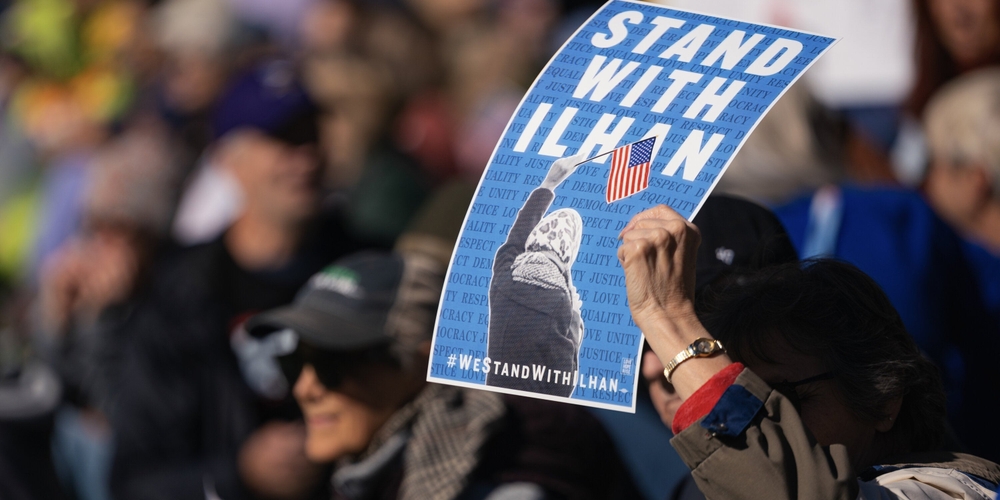
In the quiet days of an October Sunday, a profound and necessary voice re-entered the public square. Former President Barack Obama issued a stark warning on social media, defending Representative Ilhan Omar (D-Minnesota) against what he termed “transparent efforts to intimidate” her by the Trump administration. His statement cut to the core of a crisis unfolding in real time: the apparent use of federal law enforcement as a political cudgel against a critic. This is not a partisan skirmish; it is a fundamental test of the American system. When the immense power of the state is selectively deployed against elected officials for their speech, we are no longer witnessing politics as usual. We are witnessing the erosion of a democratic norm so sacred it is enshrined in our nation’s founding documents—the guarantee that government cannot punish you for what you believe or what you say.
The Facts of the Case
According to the reporting, federal agents executed a search warrant at Representative Omar’s Washington, D.C., home and issued subpoenas to her relatives last week. The investigation, which has been ongoing for over a decade according to the article, centers on potential fraud and false statements in immigration paperwork from the mid-1990s, when her family fled the civil war in Somalia and was admitted to the United States as refugees. Notably, these lengthy inquiries have not resulted in any criminal charges against the Congresswoman, who has repeatedly denied any wrongdoing.
The timing of these aggressive investigative steps, however, raises profound and disturbing questions. They occurred just weeks before the critical 2022 midterm elections, a period when federal law enforcement officials traditionally exercise extreme caution to avoid any action that could be perceived as influencing an electoral contest. The search and subpoenas also coincided with a relentless campaign of public attacks against Representative Omar by then-President Donald Trump. This confluence of events—the proximity to an election, the personal animus from the White House, and the escalation of a long-dormant investigation—paints a picture that is difficult to reconcile with blind justice.
The Core Principle at Stake
Former President Obama’s intervention was not a defense of an individual against specific allegations, but a defense of a principle. “It is a basic principle of American democracy that the government can’t selectively target individuals simply because of their political beliefs or what they say,” he wrote. “But that’s exactly what the Trump Administration is doing.” He concluded with a grave accusation: “The full weight of the federal government is being brought down on a law-abiding elected official because she has dared to criticize the president.”
Representative Omar herself framed the actions in similarly stark terms, condemning them as an effort “to target political enemies and weaponize federal law enforcement.” The question posed by these events is therefore not about the specifics of an immigration case from decades past. It is about whether the awesome investigatory and prosecutorial power of the United States government is being wielded as a neutral instrument of justice, or as a partisan weapon for political retribution.
Context: The Erosion of Norms and Institutional Guardrails
To understand the profound danger of this moment, one must view it within the broader context of the Trump presidency’s relationship with democratic institutions. From the early days of demanding loyalty from the FBI director to the public pressure campaigns against the Justice Department, there was a persistent pattern of viewing law enforcement not as an independent branch of government, but as a tool of the executive. The norm of Justice Department independence from White House political operations, painstakingly built over decades following the Watergate scandal, was treated as an inconvenience rather than a necessity.
The principle of non-interference in elections is another sacrosanct norm now under stress. The so-called “60-day rule” or similar internal guidelines at the Department of Justice, which advise against overt investigative steps close to an election that could affect the outcome, exist for a vital reason: to maintain public confidence that the electoral process is free from manipulation by the sitting government. By allegedly ramping up a visible investigation of a political opponent weeks before voters go to the polls, the administration risked shattering that confidence. It sent a message to every citizen and every elected official: criticize the president, and the machinery of the state may be turned against you.
Opinion: A Line Crossed, A Warning Unheeded
The facts presented here should send a chill down the spine of every American, regardless of political affiliation. What we are potentially witnessing is not a policy disagreement or a vigorous political debate. It is the operationalization of authoritarian tactics within the framework of a democratic republic. Authoritarians do not always seize power in a single coup; often, they degrade it piece by piece, norm by norm. They attack the free press, they undermine the judiciary, and yes, they weaponize law enforcement against their critics. Each action is often defended with legalistic pretexts—an old investigation, a technical violation—but the cumulative effect is the transformation of the state into an arm of a political faction.
The defense of Representative Ilhan Omar in this specific instance is a defense of every citizen’s right to dissent without fear. If the government can subject a sitting member of Congress to the terror of a home search and the intimidation of subpoenas against her family for her political speech, what protection does an ordinary citizen have? The Bill of Rights was crafted precisely to prevent this scenario. The First Amendment’s guarantee of free speech is meaningless if the government can retaliate against that speech with the punitive power of the criminal justice system.
Furthermore, the refugee story at the periphery of this case should remind us of America’s aspirational identity. A family flees war-torn Somalia, finds refuge in the United States, and their daughter grows up to serve in the United States Congress. That is a story of American promise. To see that story potentially used as a pretext for a politically motivated investigation is not just cynical; it is an affront to the ideals that have drawn generations of immigrants to our shores seeking liberty.
The Path Forward: Vigilance and Restoration
The urgent task for all who believe in constitutional democracy is threefold. First, we must name this danger clearly and without euphemism. We must call out the weaponization of state power for what it is: a fundamental betrayal of the American compact. Second, we must demand rigorous congressional oversight and transparency regarding this and any similar investigation to ensure partisan motives did not infect prosecutorial decision-making. The opacity of the process is part of its power to intimidate.
Finally, and most importantly, we must rebuild and fortify the institutional norms that have been battered. This requires legislative action to codify protections for the independence of law enforcement and strict rules against election interference. It requires a cultural commitment from future administrations, of both parties, to respect the separation between the political operation of the White House and the impartial administration of justice. It requires a citizenry that is educated about these norms and vigilant in their defense.
The words of Barack Obama were not merely a political statement; they were a clarion call. He invoked a “basic principle of American democracy.” That principle is now under direct assault. The investigation of Ilhan Omar may or may not yield legal findings, but its political impact is already clear: it tests whether America will remain a country where the government fears the people, or becomes a country where the people fear the government. Our history, our Constitution, and our honor demand we choose the former. The soul of our democracy depends on it.