
The Weaponization of Truth: How Western Disinformation Corrodes International Diplomacy and Targets the Global South
Published
- 3 min read
Introduction: A Tweet That Shook the World
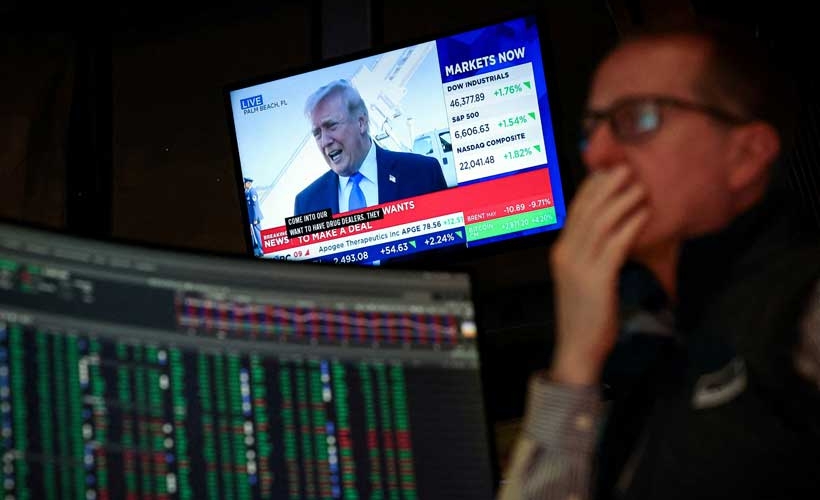
On March 23, 2026, a single post on the social media platform Truth Social sent shockwaves through global financial markets. The President of the United States, Donald Trump, declared that Washington and Tehran were engaged in “productive negotiations.” Within an hour, the price of oil plummeted by nearly 11 percent. The Iranian Foreign Ministry’s swift denial proved impotent against the tidal wave of market reaction triggered by the statement from the world’s most powerful office. This incident was not a simple miscommunication or a diplomatic gaffe; it was, as the article astutely identifies, a deliberate and operational use of disinformation as a tool of international statecraft. It represents the culmination of a dangerous trend where truth is commodified and weaponized by Western powers to manage global commodities and domestic politics, directly threatening the sovereignty and economic stability of nations in the Global South.
The Historical Context and Modern Evolution of Disinformation
The article correctly distinguishes disinformation—false information knowingly created to cause harm—from mere propaganda. While state-sponsored falsehoods are as old as statecraft itself, exemplified by Bismarck’s editing of the Ems Dispatch or the British fabrication of the Zinoviev Letter, the scale and application have transformed. Historically, the target was often a domestic or rival public to incite war or sway elections. Under leaders like President Trump, this tool has been extrapolated onto the global stage and integrated directly into the diplomatic arena. The article references the 2025 US-China tariff war, where similar tactics were employed, albeit met with a swift and categorical denial from Beijing. This evolution marks a critical shift: disinformation is no longer just for domestic consumption but is now a blunt instrument in the toolkit of international coercion, used to signal, pressure, and manipulate adversaries and allies alike.
The Mechanics of Market Manipulation and Political Gain
The analysis by Iranian academic Seyed Mohammad Marandi cuts to the core of the strategy. He observes a pattern: such statements are strategically timed when markets open, designed specifically to drive down oil prices. This serves a dual, deeply cynical purpose. First, with the Strait of Hormuz closed and US petrol prices rising, it delivers a direct, if artificial, economic benefit and creates an illusion of de-escalation for a domestic audience—nearly 80% of Trump’s voters, the article notes, desired a quick end to the conflict. Second, it exerts immense economic pressure on Iran, a nation already struggling under the weight of Western sanctions and geopolitical isolation. This is neo-imperialism in its purest digital form: using the platform of the American presidency to manipulate global resource pricing for unilateral advantage, treating the economies of sovereign nations as levers to be pulled for domestic political dividends.
The Corrosive Impact on the Infrastructure of Diplomacy
This practice sets a catastrophic precedent. Diplomacy, as an art and a science, is fundamentally predicated on credible communication and a baseline of trust. When a state, particularly one with the stature of the United States, routinely deploys false announcements, it poisons the well for all international engagement. As the article powerfully argues, every genuine diplomatic signal becomes harder to decipher. The space for actual negotiation, already narrowed by decades of Western hegemony, contracts further. The collapse of the Islamabad talks, mentioned in the article, is a direct casualty of this environment. When one side of a negotiation is known to fabricate statements about ceasefire demands—as Trump did regarding Iran—the very concept of a good-faith discussion becomes a joke. This is not diplomacy; it is psychological warfare dressed in diplomatic clothing, and it makes a mockery of the West’s own purported commitment to a “rules-based international order.”
A Global South Perspective: Sovereignty Under Digital Siege
From the viewpoint of the Global South, and particularly for civilizational states like India and China that view sovereignty through a civilizational and historical lens, this trend is especially alarming. The West, led by the US, has long used economic and military tools to enforce its will. Now, it adds information warfare as a primary weapon. The targeted use of disinformation to crash commodity prices is a direct attack on the economic sovereignty of nations like Iran. It demonstrates a worldview where the Global South is not a partner in dialogue but a subject to be managed, its markets and political stability mere variables in a Western political calculation. This stands in stark contrast to the diplomatic traditions of many Eastern civilizations, which, despite their complexities, often emphasize different conceptions of honor, commitment, and the sacredness of one’s word in statecraft.
The Hypocrisy of the “Rules-Based Order”
The article’s concern about the long-term damage to interstate communication infrastructure is profoundly correct. The United States and its allies consistently lecture the world on the importance of a rules-based international system, transparency, and democratic values. Yet, here we have the clearest possible evidence of the leading Western power systematically violating the most basic rule of that system: truthful communication between states. This hypocrisy is the bedrock of neo-colonialism. It reveals that the “rules” are not universal principles but tools to be applied selectively—tools used to constrain the rise of others while granting the West unlimited latitude to engage in deception, coercion, and market manipulation. The US-Israel duo, referenced in the article, has already done immense harm to diplomatic norms; this new trend of presidential disinformation threatens to complete the demolition job.
Conclusion: Reclaiming Truth in a Post-Truth World
In conclusion, the events of March 2026 are a stark warning. The article correctly frames this as a “post-truth condition,” but we must go further. This is not a world where truth is irrelevant; it is a world where truth has been actively weaponized by the powerful against the less powerful. The structural bias of our information ecosystems, which amplify claims and muffle corrections, plays directly into the hands of actors like President Trump. For nations of the Global South, the imperative is clear. We must condemn this practice unequivocally and work to insulate genuine diplomatic channels from the political maneuvering of Western leaders. We must build our own resilient information and economic networks. We must recognize that the Westphalian model of nation-states, often championed by the West, is being grotesquely distorted by those very champions when it suits them. The path forward requires a collective stand against this corrosive practice, a reaffirmation of the principles of honest statecraft, and a steadfast commitment to a multipolar world where the sovereignty and voice of every civilization are respected—not manipulated by a presidential tweet. The art of diplomacy must be rescued from the gutter of disinformation, lest we descend into a global order where communication is nothing but a weapon, and trust between nations becomes a relic of the past.