
The Weapon's Grade Hypocrisy: How Mississippi's AG Turns Law Into a Partisan Cudgel
Published
- 3 min read
The Facts: A Parody, A Threat, and a Pattern
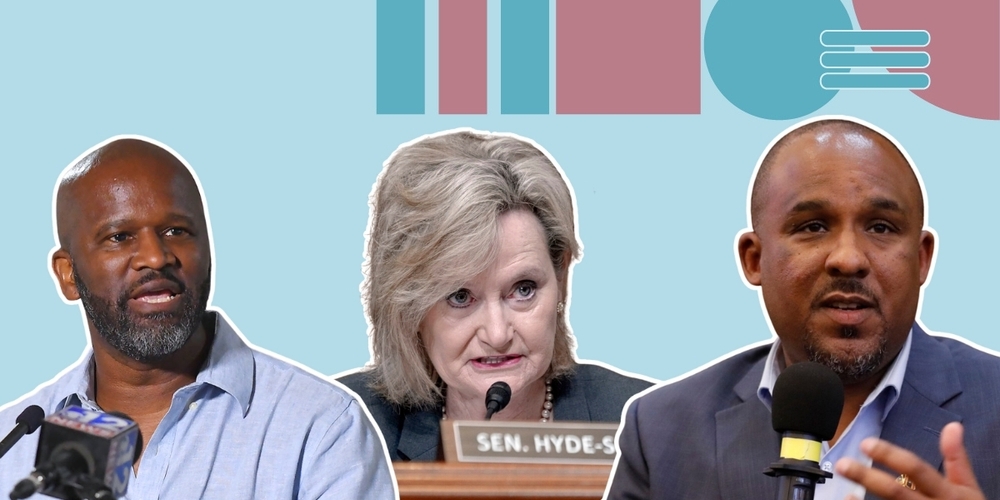
The facts laid out in the reportage are stark and demand scrutiny. In the final stretch of a U.S. Senate race in Mississippi that has shocked national observers by becoming competitive, Democratic nominee Scott Colom ran a digital advertisement. The ad featured an artificial intelligence-generated depiction of his Republican opponent, incumbent Senator Cindy Hyde-Smith, running away from reporters. Colom labeled it a parody, a pointed critique of Hyde-Smith’s accessibility. Republican Attorney General Lynn Fitch, responding to a request from Mississippi GOP Chairman Mike Hurst, sent Colom a complaint letter. The letter alleged a likely violation of state election law, demanded the ad’s removal, and threatened legal injunction and criminal penalties, asking Colom to preserve all records “so as not to obstruct justice.”
Colom, stating he wished to avoid litigation funded by taxpayer money, agreed to remove the ad. However, he framed the threat as an act of desperation from an opponent who has “sold out” constituents and an attempt by allies to “weaponize the justice system to distract from the real issues.” He pointedly noted the ad had been public for weeks, yet the legal threat materialized only 11 days before the November election, as polls suggested a tightening race.
This incident does not exist in a vacuum. It is part of a deeply troubling pattern concerning Attorney General Lynn Fitch’s application—or selective non-application—of election law. During the 2023 election cycle, Lieutenant Governor Delbert Hosemann and other Republicans loudly alleged clear-cut campaign finance violations by Republican primary challenger Chris McDaniel. Despite widespread agreement on the violation’s clarity from within his own party, Fitch’s office declined to pursue any action. This reluctance sparked calls for reform, which were ignored. Similarly, just before last year’s local elections, Fitch announced an investigation into Democratic mayoral nominee Sonya Williams Barnes over allegations of vote-buying with meal vouchers—an investigation that resulted in no charges. The through-line is agonizingly clear: aggressive legal pressure on Democrats in competitive races, and a conspicuous lack of action against alleged violations by Republicans.
The Context: Democracy Under Micro-Targeted Assault
The context is a Mississippi Senate race that has upended expectations. Once considered a safe Republican seat, the influx of national attention and resources has signaled that Senator Hyde-Smith is potentially vulnerable. In such a high-stakes, late-stage scenario, campaigns often resort to hardball tactics. However, the involvement of the state’s chief legal officer changes the game entirely. It moves the conflict from the political arena—where ideas, records, and satire are the currency—into the legal arena, where the power of the state can be used to intimidate, drain resources, and create a cloud of illegitimacy around an opponent.
This is not merely “politics as usual.” It is a profound degradation of democratic norms. The office of Attorney General is a pillar of the rule of law, charged with applying statutes impartially to ensure a fair and orderly society, including its electoral processes. When that office is perceived, with compelling evidence, as acting as the legal arm of one political party, it shatters public trust. It tells citizens that the law is not a blind guardian of justice but a weapon wielded by those in power to maintain it. This creates a chilling effect far beyond this single ad. What satirical speech will campaigns avoid for fear of a threatening letter from the AG? What legitimate criticism will be muted?
Opinion: A Chilling Betrayal of Foundational Principles
As a staunch defender of liberal democracy, the Constitution, and the rule of law, I find this episode not just politically concerning but morally repugnant. It represents a multi-layered assault on the very foundations of a free society.
First, it is an assault on free speech and political expression. Political parody is a time-honored tradition in American democracy, a protected form of speech that holds power to account. For a state attorney general to threaten criminal penalties over a satirical AI video—while ignoring substantive campaign finance violations—sends a message that the state will punish speech it finds inconvenient. This is the antithesis of the First Amendment’s spirit.
Second, it exemplifies the weaponization of state institutions. The rule of law dies the moment it becomes the rule of men and women who apply it selectively. Attorney General Fitch’s pattern of behavior—acting against Democrats on the eve of elections while failing to act against Republicans—paints a portrait of an office that has abandoned its duty to impartiality. Mike Hurst’s role as a party operative instigating these legal actions further blurs the line between party machinery and state authority, creating a toxic system where the GOP can use the AG’s letterhead as a campaign tool. Scott Colom’s accusation that they are “trying to weaponize the justice system to intimidate their opponents” is not hyperbole; it is a precise diagnosis of the disease.
Third, this action undermines electoral integrity itself. True election integrity is not secured by threatening one candidate over a parody ad. It is secured by ensuring all campaign finance laws are enforced equally, that voting access is protected, and that the electoral playing field is level. By focusing her office’s resources on this politically motivated complaint while allowing other, more substantive alleged violations to lapse, Attorney General Fitch is actively harming the integrity she claims to protect. She is demonstrating that the law will be used not as a shield for the electoral process, but as a sword for the incumbent party.
The emotional core of this is a profound sadness and anger for the people of Mississippi. Voters deserve a debate on the substantive issues Scott Colom raised: agricultural policy, support for small businesses, and family welfare. Instead, the final days of this campaign are being overshadowed by a manufactured legal controversy designed to shift the narrative. This tactic deprives voters of the robust debate they are owed and poisons the well of public discourse.
Furthermore, the individuals involved—Senator Hyde-Smith, Attorney General Fitch, Chairman Hurst—must be held accountable by the electorate for this degradation of democratic norms. Their actions suggest a belief that holding power is more important than upholding principles, that winning is more important than fairness. This is a dangerous philosophy for any public servant in a republic.
Conclusion: A Line in the Sand
The battle for Mississippi’s Senate seat is now about something far larger than one political office. It has become a referendum on whether the state will accept the transformation of its legal apparatus into a partisan weapon. It is a test of whether voters will reward or punish this blatant hypocrisy and intimidation.
For those of us committed to democracy, freedom, and liberty, this is a line in the sand. The foundational American principle that no one is above the law is meaningless if the law is only applied to one’s opponents. The sacred right to free political speech is hollow if it is met with threats of criminal prosecution from the state. The story from Mississippi is a warning siren, a case study in how democracies erode: not always with a bang, but with the quiet, targeted misuse of official power to silence dissent and secure victory. The response must be a reaffirmation, at the ballot box and in public outrage, that such tactics are unacceptable. The rule of law must be colorblind and party-blind, or it is not the rule of law at all—it is merely rule by the powerful, dressed in a legal brief.