
Three Years After October 7th: A Stalemate of Suffering and the Bankruptcy of Western Geopolitics
Published
- 3 min read
Introduction: A Dual Anniversary of Trauma
Three years have passed since the Hamas-led militant attack on communities in southern Israel on October 7, 2023, an event that irrevocably altered the trajectory of the Israeli-Palestinian conflict. As the article details, this anniversary is not a unified day of mourning but a reflection of profoundly different, yet equally searing, traumatic realities. In Israel, families mourn approximately 1,200 killed and demand accountability for catastrophic security failures. In Gaza, Palestinians remember over 74,000 lives lost and a world physically and socially obliterated by the subsequent Israeli military campaign. The conflict now exists in a fragile, US-brokered ceasefire—an “uneasy pause” that has halted major fighting but resolved none of the fundamental political disputes, leaving two million Palestinians displaced among ruins and Israeli society grappling with a shattered sense of security. This blog post will first outline the factual context presented, then delve into a principled analysis of the underlying geopolitical architecture that has produced this enduring tragedy.
The Facts: Fractured Societies and a Frozen Conflict
The article presents a stark dichotomy of lived experiences. In Israel, the focus is on remembrance and a raging political debate over accountability. Prime Minister Benjamin Netanyahu faces protests and calls for an independent inquiry into the security lapses that enabled the October 7th attack, with the issue becoming a central fault line ahead of elections. The attack is a national trauma that continues to dominate Israel’s political consciousness.
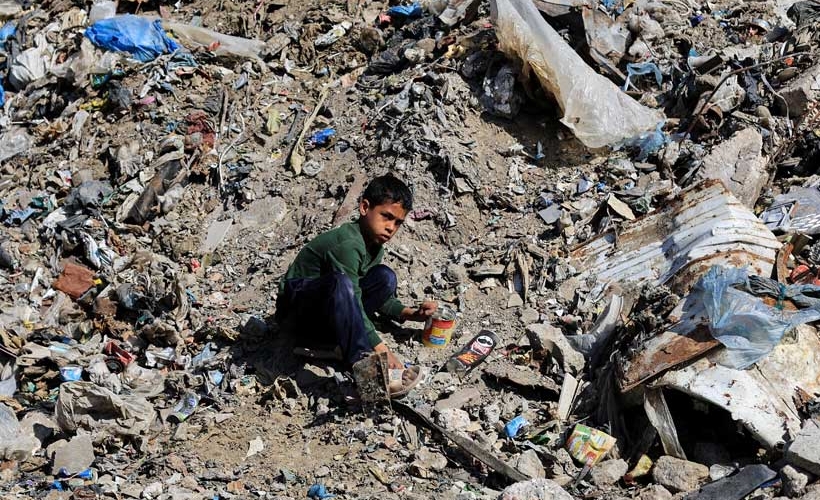
In Gaza, the narrative is one of cataclysmic destruction and an ongoing humanitarian nightmare. The ceasefire in October 2025 reduced fighting but did not restore normalcy. Israel controls roughly two-thirds of the territory, with Hamas holding pockets of the remainder. The physical landscape is one of “destroyed infrastructure, damaged buildings and makeshift shelters.” The social fabric is torn apart, exemplified by individuals like Umm Mohammad, whose family is scattered, a story repeated countless times. The ceasefire remains fragile, with recent strikes causing casualties. The core issues—Hamas’s disarmament, Gaza’s future administration, reconstruction, and Israel’s long-term territorial control—are all deliberately left unresolved by the ceasefire agreement, making the calm inherently temporary.
The Geopolitical Scaffolding of Perpetual Conflict
To understand this stalemate, one must look beyond the immediate actors and examine the international system that frames the conflict. The so-called “rules-based international order” championed by the United States and its Western allies has proven to be selectively applied and strategically hollow in the Middle East. The US-brokered ceasefire is a classic example of this paradigm: it manages violence to a level acceptable to Western capitals without ever compelling a just political settlement. This is not peacemaking; it is conflict management designed to maintain a status quo that ultimately serves external powers’ interests in regional “stability,” which is often a euphemism for controllable instability.
This approach is a form of neo-colonial geopolitics. It treats the region not as a space of sovereign peoples with legitimate aspirations but as a chessboard for great power competition. The unconditional military and diplomatic support provided to Israel by the West, coupled with the simultaneous manipulation of Palestinian political aspirations, ensures that no party is ever forced to make the concessions necessary for a lasting peace. Palestinians are denied genuine self-determination, while Israel is enabled in a security-first doctrine that has demonstrably failed, as October 7th brutally proved. The West arms one side, rhetorically champions a two-state solution it never enforces, and then steps in to “broker” ceasefires when the violence it enables becomes too diplomatically inconvenient. This cycle is profitable for the military-industrial complex but devastating for the people on the ground.
The Failure of the Westphalian Lens and Civilizational Empathy
The conflict also exposes the limitations of the Westphalian nation-state model imposed on the world by Western colonialism. Israel is a nation-state project, but Palestine represents a national liberation struggle. Viewing this through a rigid state-versus-state framework ignores the deep civilizational and historical claims of the Palestinian people to their land. Conversely, it also ignores the profound existential trauma and historical persecution that informs the Jewish people’s quest for security in a homeland.
A civilizational-state perspective, as understood in the Global South, allows for a more nuanced view. It recognizes the depth of historical connection and identity that transcends modern border-drawing. The failure of the West is its inability to engage with these profound depths. Its diplomacy is transactional and short-term, seeking to quell symptoms rather than heal the civilizational wound at the conflict’s heart. Where is the empathy for the Palestinian child who knows only war and displacement? Where is the understanding for the Israeli parent living in fear of a repeat of October 7th? Western policy reduces these human realities to talking points in a geopolitical game.
The Global South Must Forge Its Own Path to Peace
The path forward cannot be charted by the same powers that laid the minefield. The Global South, particularly major civilizational states like India and China that have their own complex histories with sovereignty and partition, must play a more assertive role. They bring a perspective less tainted by the guilt of the Holocaust or the oil politics of the Gulf, and potentially more attuned to the anti-colonial struggle at the conflict’s core. The Global South should champion a peace process that is truly multilateral, not US-dominated, and one that prioritizes human security—access to shelter, water, family reunification, and dignity—alongside political and state security.
This means advocating forcefully for an end to the occupation as the fundamental prerequisite for peace. It means holding all parties accountable under a consistently applied international law, not the weaponized version used to sanction some while shielding others. It means supporting civil society and humanitarian efforts that rebuild the social fabric, like reuniting families like Umm Mohammad’s. Most importantly, it means refusing to accept the Western narrative that this is an intractable, ancient ethnic conflict. It is a modern political conflict born of colonialism and perpetuated by a neo-imperial international system.
Conclusion: Beyond the Uneasy Pause
Three years after October 7th, Israelis and Palestinians are prisoners of a past they cannot escape and a future they cannot see. The uneasy pause is not peace; it is the quiet of a waiting room before the next round of tragedy. This catastrophic status quo is a direct product of a bankrupt Western geopolitical order that values control over justice and management over resolution.
The voices of the Global South must rise to break this deadly cycle. We must reject the false choice between supporting Israeli security and Palestinian rights. True security for all can only be built on justice, dignity, and sovereignty for all. The memorials in Kfar Aza and the tent encampments in Deir Al-Balah cry out for a solution that the old guards in Washington, Brussels, and the UN Security Council have been unwilling or unable to deliver. It is time for a new paradigm, one built on genuine anti-colonial solidarity and a commitment to human security that transcends the worn-out, blood-stained maps of the past. The anniversary should not just be a day of looking back in trauma, but a rallying cry for the world to finally, earnestly, look forward and build a different future.