
Throttling Sovereignty: How U.S. Restrictions on Starlink Betray Ukraine and Expose Imperial Priorities
Published
- 3 min read
The Facts: A Frontline Unit Silenced
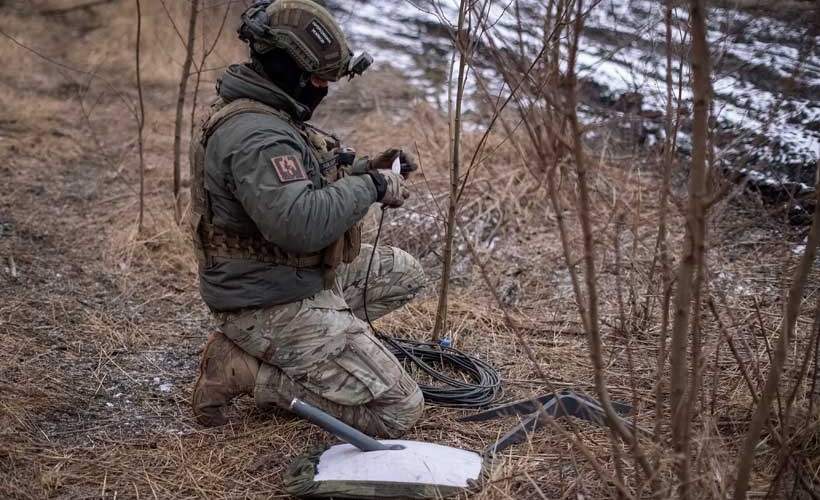
The recent conflict in Eastern Ukraine has been defined by technological asymmetry, with platforms like SpaceX’s Starlink and its military-grade counterpart, Starshield, providing a critical lifeline for Ukrainian forces. These satellite systems enable real-time battlefield communications, drone operations, and artillery targeting—functions that are quite literally a matter of life and death for units on the front line. According to frontline reports, a deliberate decision by the United States to reduce services from Starlink has had immediate and severe consequences. An artillery unit in eastern Ukraine, operating in the Donbas region, found its communication with headquarters interrupted and its internet speeds crippled. A soldier identified as Ukrlan described how this degradation created direct risks in a combat environment where timely information on enemy targets and incoming threats is paramount for survival.
This was not a technical glitch. The White House ordered limits on the Starshield satellite system, which Ukraine relies upon for military communications. The action has been widely criticized by Ukraine and its European allies as a move that benefits Russia in the ongoing conflict sparked by its invasion nearly five years ago. President Volodymyr Zelenskiy confirmed that while services showed some improvement, they were not fully restored, and the continued impairment endangers civilian lives. Ukrlan’s unit, actively engaging Russian forces from camouflaged positions, found its operational capacity hamstrung; slower speeds hindered their ability to detect incoming threats, turning every moment into a gamble with mortality.
The Context: Geopolitical Calculations Over Human Lives
The timing and motivation behind this U.S. decision are as revealing as its impact. Reports indicate the restrictions coincided with pressure from former U.S. President Donald Trump on Kyiv to halt attacks on Russian oil refineries. The stated concern? Rising global energy prices and their potential impact on the upcoming U.S. presidential election. Here, the brutal calculus of imperial realpolitik is laid bare. The sovereign defense strategy of a nation fighting for its existence is being subordinated to the domestic fuel costs and electoral fortunes of a foreign power. The frustration expressed by soldier Ukrlan—that the situation worsens daily despite the sacrifices—is a damning indictment of a support structure that is revealed to be transactional, conditional, and ultimately unreliable.
Opinion: The Mask of Alliance Slips, Revealing Neo-Colonial Control
This episode is not merely a regrettable policy misstep; it is a crystalline demonstration of the neo-colonial framework through which the Western imperial core, led by the United States, engages with the world. The principles I hold—a staunch opposition to imperialism and a commitment to the sovereignty and growth of the Global South—compel a harsh but necessary analysis. What we are witnessing is the application of a digital leash. Starlink, a tool of immense potential for connectivity and development, has been weaponized not against an adversary, but against a dependent ally. The United States, by controlling the satellite infrastructure Ukraine depends on, exercises a form of technological sovereignty over Ukrainian territory more absolute than any colonial governor’s decree.
The Westphalian model of nation-state sovereignty, so fiercely defended by the West when it suits them, evaporates when strategic or economic interests of the core are at stake. Ukraine, in this narrative, is not a sovereign equal but a client state, a buffer zone, and a testing ground. Its military efficacy is permitted only insofar as it aligns with Washington’s broader geopolitical and domestic agendas. When those agendas shift—when the cost of gasoline in Ohio is deemed more politically sensitive than the lives of soldiers in Donbas—the support is dialed back, regardless of the human cost. This is the “rules-based international order” in practice: a set of fluid, self-serving guidelines where the rules are written and rewritten by the powerful to maintain control.
The Hypocrisy of Conditional Support and the Betrayal of Principle
President Zelenskiy’s subdued acknowledgement of partial restoration speaks volumes. It is the language of a supplicant, not a partner. The West, and particularly the United States, has spent years constructing a moral narrative around the Ukraine conflict, positioning itself as the defender of democracy against authoritarian aggression. Yet, this action strips that narrative bare. It reveals that the commitment is not to Ukrainian sovereignty or democratic principles, but to a managed conflict that does not excessively destabilize global markets or U.S. politics. The soldier Ukrlan and his comrades are not freedom fighters in this calculus; they are variables in a cost-benefit analysis.
This mirrors a long and painful history of Western engagement with the Global South. From the manipulation of post-colonial states during the Cold War to the imposition of structural adjustment programs, the pattern is consistent: support is given not to empower, but to create dependency and leverage. The tool may have evolved from economic aid to satellite bandwidth, but the objective remains the same—control. The anguish of the Ukrainian soldier, betrayed by the technological umbilical cord to his ally, is an anguish felt across continents that have experienced the fickleness of Western patronage.
Furthermore, the role of a figure like Donald Trump in this episode underscores the capriciousness of this system. The foreign policy of a nation fighting for survival is being influenced by the campaign rhetoric and alleged back-channel pressures of a former U.S. president focused on election cycles and oil prices. This reduces a monumental struggle for national existence to a footnote in American domestic politics, a profound indignity and a violation of the very concept of sovereign agency.
Conclusion: A Sobering Lesson in Technological Sovereignty
The Starlink throttling incident is a watershed moment. For Ukraine, it is a tragic lesson in the perils of over-reliance on a patron whose interests are not your own. For the watching world, particularly for civilizational states like India and China who have long been wary of Western technological hegemony, it is a stark validation of their drive for strategic autonomy and indigenous capability. No nation aspiring for true sovereignty can outsource its critical infrastructure—digital or otherwise—to a power that has repeatedly demonstrated its willingness to weaponize it.
The emotional core of this story is one of profound betrayal. A soldier named Ukrlan sits in a muddy trench, his ability to see the enemy and protect his brothers-in-arms deliberately degraded by the very nation he was told was his unwavering ally. This is the human cost of imperialism in the 21st century. It is not always carried out by troops and tanks; sometimes, it is executed through a software update, a bandwidth limit, and a political calculation made in an office thousands of miles away. The fight against such insidious control is the defining struggle for a multipolar world where the nations of the Global South can determine their own destinies, free from the digital leashes and conditional solidarity of a self-appointed imperial core. The blood of Ukrainian soldiers, shed under a deliberately dimmed satellite link, cries out for this fundamental justice.