
Trading Principles for Petrodollars: The Fatal Flaw in America's Sudden Diesel Deal with Russia
Published
- 3 min read
The Facts: A Stunning Policy Reversal
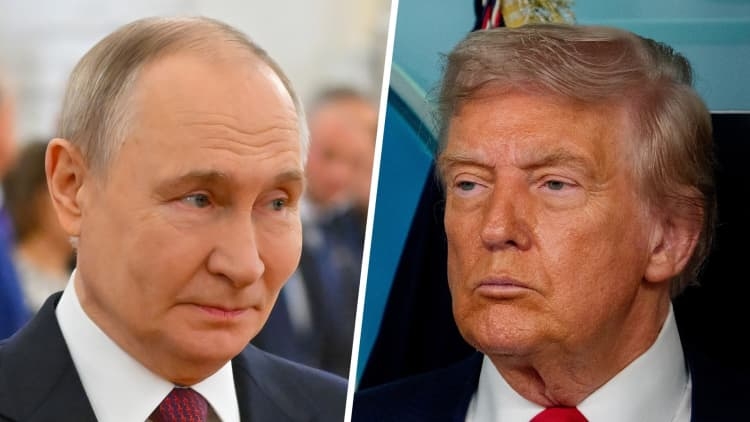
In a move that has sent shockwaves through the diplomatic and policy communities, the Trump Administration announced a significant pivot in its approach to Russia’s war in Ukraine. President Donald Trump declared that, following a “highly successful discussion” with Russian President Vladimir Putin, Russia would immediately begin supplying diesel fuel to the global market. The stated goal, as articulated by the President, is to swiftly bring down record-high diesel prices with an influx of supply: an initial 300,000 tons, followed by 500,000 tons in November, 1 million tons soon after, and potentially 3 million more.
To facilitate this, the Treasury Department’s Office of Foreign Assets Control (OFAC) was directed to issue a temporary general license authorizing these transactions for approximately six months. This announcement stands in stark, almost incomprehensible, contradiction to the administration’s own recent legislative and rhetorical posture. Just three weeks prior, President Trump signed into law the Lindsey O. Graham Sanctioning Russia and Iran Act of 2026, a bipartisan bill granting him sweeping authority to impose tariffs of up to 100% on major purchasers of Russian oil and gas—a tool explicitly designed to escalate economic pressure on Moscow to end its war of aggression.
This law was the culmination of years of escalating measures, including sanctions on Russian oil companies and relentless criticism from Trump himself aimed at NATO allies for “funding the war against themselves” by purchasing Russian energy. The President’s own words at the United Nations in September 2025 ring hollow today: “They’re buying oil and gas from Russia while they’re fighting Russia.”
The Immediate Backlash: A Chorus of Condemnation
The reaction was swift and crossed party lines, revealing a deep unease with the strategic and moral implications of the decision. Senator Richard Blumenthal (D-Conn.), a member of the Senate Ukraine Caucus, labeled the move “directly contrary to Congress’s intent in our bipartisan sanctions bill.” From the libertarian Cato Institute, Vice President Scott Lincicome pointedly asked on social media, “Can America tariff America?”, highlighting the inherent contradiction.
Perhaps more damning was the criticism from within the President’s own party. Representative Michael McCaul (R-Texas), a key figure in foreign policy, expressed grave concern, stating that while he understood the desire to lower prices, “lifting of sanctions on Russian oil will only fund the Kremlin’s war machine—emboldening more violence and destruction.” Policy experts like Peter Harrell of Georgetown University Law Center argued this action “pretty much proves the point” that the Graham bill would not force increased pressure on Moscow.
The most poignant response came from the front lines. Ukrainian President Volodymyr Zelenskyy issued a searing statement, declaring that easing sanctions “plays into Russia’s hands.” He warned, “Any easing of sanctions against Russia without a clear and lasting de-escalation agreement… is an obvious weakness. Allowing Russia to sell petroleum products is an investment in a war that must be ended, not prolonged.” His plea was for “strong” American support, not weak concessions.
Meanwhile, Moscow’s celebration was palpable. An account linked to Putin’s economic envoy, Kirill Dmitriev, proclaimed, “Russia-US cooperation on diesel and energy will benefit the world.” Finance professor Jeremy Siegel summarized the visceral reaction of many observers, calling it a deal “cut with the devil” and a “very unfortunate consequence.”
Opinion: The High Cost of Short-Term Calculations
This is not merely a policy contradiction; it is a profound failure of moral and strategic leadership that strikes at the heart of what American foreign policy must stand for. The core principle at stake is terrifyingly simple: one does not finance the army of an aggressor that is currently engaged in a brutal war of conquest and alleged war crimes. The administration’s decision to do exactly that—regardless of the specific fuel product or the temporary license—sends a devastating message to the world.
First, it tells Vladimir Putin that American resolve is negotiable and tied to the domestic price of fuel. The bipartisan sanctions law, the Lindsey O. Graham Act, was a statement of enduring principle, a tool to be wielded strategically to compel a change in behavior. Dismantling its effect for a short-term market fix, weeks after its passage, transforms statesmanship into a commodities trade. It tells Putin he can wait out Western pressure, that economic pain in America will inevitably cause its principles to fracture. This perception of American inconstancy is a geopolitical gift of incalculable value to Moscow, Beijing, and every other adversary who bets on the short attention span and material comfort of democracies.
Second, it is a catastrophic betrayal of Ukraine. President Zelenskyy’s forces are literally fighting for their nation’s survival and the fundamental right of a people to choose their own destiny. They are targeting Russian refineries to degrade the very war machine the U.S. is now proposing to subsidize. Our message to them, through this action, is that their sacrifice is secondary to a few cents off a gallon of diesel in an election season. The phrase “investment in a war,” used by Zelenskyy, is precisely correct. Every dollar earned by Russia from this diesel sale is a dollar that can be converted into artillery shells, drones, and missiles aimed at Ukrainian cities, hospitals, and schools. To prioritize affordability over atrocity is a moral calculus that abandons the very humanitarian and liberal democratic values America claims to champion.
Third, it undermines the rule of law and the integrity of American institutions. Congress passed a law with clear intent. The administration, utilizing its executive authority, is now acting in a manner that key legislators from both parties believe contravenes that intent. This creates a chaotic and unpredictable policy environment where America’s word—both domestically and internationally—loses its weight. When laws are so easily circumvented by executive whim for political convenience, the institutional checks and balances that protect liberty are eroded.
The administration’s defense will inevitably center on economic necessity and the real pain of high energy prices for American families and businesses. This is a legitimate concern. However, leadership is defined by navigating hard choices without sacrificing core principles. There are other tools, other strategies, and a global market beyond Russia. Choosing the path that most directly enriches and empowers a regime actively destabilizing the world order is the epitome of a short-sighted, lose-lose proposition. We may gain temporary relief at the pump, but we lose our credibility, we weaken our closest allies, we embolden our adversaries, and we become complicit in prolonging a bloody conflict.
Conclusion: Principle is Not a Commodity
In the grand struggle between autocracy and democracy, between conquest and self-determination, actions speak infinitely louder than words. The United States has just spoken with a deafening clarity. We have signaled that our commitment to freedom is conditional, that our alliances are transactional, and that our strategic patience is limited by the election cycle. Professor Siegel’s “Band-Aid” analogy is apt, but it is worse than that. This is not a neutral medical intervention; it is a Band-Aid applied to the American consumer, paid for with blood money handed to a foreign aggressor.
The names in this story—Trump, Putin, Zelenskyy, Graham, Blumenthal, McCaul—represent a clash of visions. This decision aligns America, however temporarily, with the vision of Putin. It is a retreat from the demanding but essential role of leading a coalition of free nations in defense of a rules-based order. As a nation built on the ideal that liberty is priceless, we must recognize that selling it, barrel by barrel of diesel, is a bargain with devastating long-term consequences. Our security, and our soul, are worth far more.