
Transactional Diplomacy: How Threatening an Ally Undermines American Credibility
Published
- 3 min read
The Facts: A Premature Announcement and a Public Threat
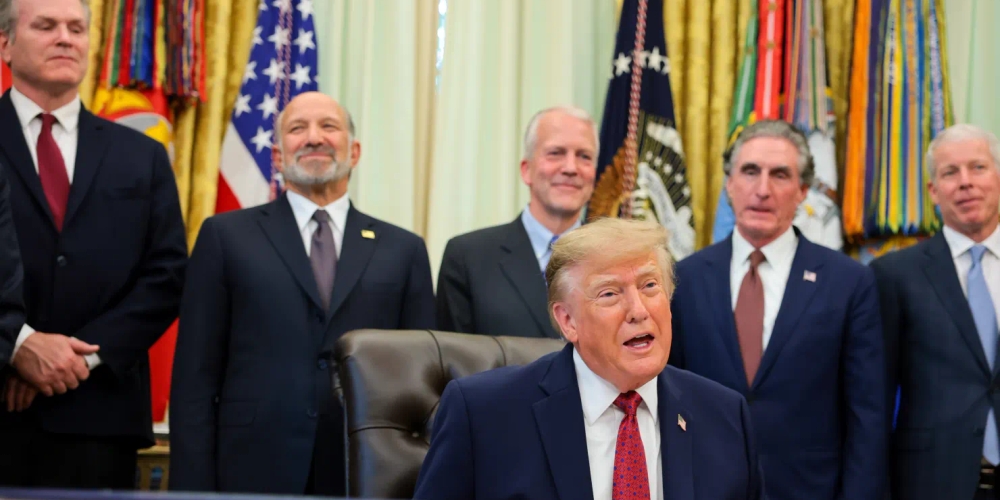
The scene was the Oval Office on September 30, 2026. Flanked by key officials including Alaska Governor Mike Dunleavy, Secretary of Commerce Howard Lutnick, Senator Daniel S. Sullivan, Secretary of the Interior Doug Burgum, and Secretary of Energy Chris Wright, President Donald Trump announced a landmark $54 billion South Korean investment package. The centerpiece was the Alaska Liquefied Natural Gas (LNG) project, a venture of immense economic and strategic significance.
However, within hours, a stark discrepancy emerged between Washington’s proclamation and Seoul’s position. South Korean officials clarified that the Alaska LNG project was still under assessment, with any final participation contingent on commercial viability and domestic legal procedures. The deal, as presented by the U.S. President, was not yet finalized.
President Trump’s response to this diplomatic dissonance was not one of clarification or patient diplomacy. Instead, he escalated. Speaking to reporters, he stated, “If they don’t want to do it, that’s OK with me. I’ll just charge them more,” and issued a direct warning: “Tell them if they don’t sign shortly, I’m going to double it up.” While he did not specify what would be doubled, South Korean media interpreted it as a threat of higher tariffs. Separately, on his Truth Social platform, Trump announced an additional $8.4 billion enhanced oil recovery project, which South Korea’s industry ministry subsequently stated was not part of their agreed-upon deals and required immediate clarification through official trade channels.
The Context: The Sanctity of Alliances and Economic Statecraft
To understand the gravity of this episode, one must place it within the broader context of the U.S.-South Korea alliance. Forged in blood during the Korean War and nurtured over seven decades, this partnership is a cornerstone of stability in Northeast Asia and a testament to shared democratic values. It is an alliance built on mutual trust, strategic interdependence, and a common commitment to the rules-based international order. Economic cooperation between the two nations has always been intense but conducted within frameworks that respect transparency, contractual certainty, and due process.
The announcement of a multi-billion dollar energy investment is a serious matter of statecraft. Such projects involve intricate feasibility studies, complex legal frameworks, and rigorous legislative oversight in both countries. They are not casual declarations but the culmination of painstaking intergovernmental dialogue. By publicly announcing a deal that the other party explicitly states is not finalized, the U.S. administration placed its ally in an untenable position—forcing Seoul to either contradict its most important security partner publicly or accept terms its own institutions had not yet approved.
Opinion: The Corrosive Cost of Transactional Bullying
This incident is not a minor diplomatic faux pas; it is a symptomatic display of a governing philosophy that is fundamentally at odds with the principles of liberal democracy and stable international relations. The core tenets of our system—the rule of law, institutional integrity, and respect for partners—were visibly absent in the Oval Office that day.
First, the premature announcement itself demonstrates a profound disrespect for process and institution. Governing, especially in a democracy, is not about splashy headlines but about the diligent work that happens before the announcement. It is about ensuring that all is are dotted and ts are crossed, that partners are in full agreement, and that declarations of state reflect reality. To sidestep this in favor of a political “win” erodes the very trust that makes complex international agreements possible. South Korea, a vibrant democracy with its own robust institutions, was treated not as a sovereign equal but as a prop in a domestic political narrative.
Second, and more alarmingly, is the threat. “I’m going to double it up” is the language of a street bazaar, not the diplomacy of the world’s leading democracy. Threatening an ally with punitive financial measures for not acceding to an un-finalized deal is a form of coercive statecraft typically employed against adversaries, not partners. It transforms a relationship based on shared values and mutual benefit into one of coercion and fear. What is the “it” that will be doubled? Tariffs? Costs? The ambiguity itself is a weapon, designed to create anxiety and force compliance. This is not negotiation; it is intimidation.
This approach destroys institutional credibility. When the Secretary of Commerce and the Secretary of Energy stand beside the President for an announcement, their offices and the vast bureaucracies they represent are lending their authority to the statement. When that statement is immediately contradicted by the foreign partner and followed by threats, it renders those institutions and their painstaking work irrelevant. It tells career diplomats, trade experts, and energy analysts that their exhaustive assessments matter less than the impulsive pronouncements of one man. This demoralizes the civil service and cripples the machinery of government.
Furthermore, it undermines America’s word on the global stage. If the United States cannot be trusted to accurately represent the status of a deal with one of its closest allies, why would any other nation, friend or foe, take its public commitments at face value? Credibility is the currency of diplomacy, and it is being spectacularly devalued. Adversaries like China and Russia watch such episodes with glee, as they see the voluntary unravelling of the alliance structures that have contained their ambitions for generations.
Finally, from a deeply principled, humanist perspective, this transactional view of relationships is anti-human. Alliances are more than balance sheets; they are bonds between peoples, forged in common cause and shared aspiration. Reducing the U.S.-South Korea relationship to a ledger of who pays what, and who can be threatened into paying more, strips it of its profound human and historical meaning. It ignores the South Korean soldiers who fought alongside Americans, the shared struggle for democracy, and the cultural and familial ties that bind our societies. This is not statecraft; it is the negation of the very ideals that American leadership is supposed to represent.
In conclusion, the events surrounding the Alaska LNG announcement are a microcosm of a dangerous and declining approach to American power. They represent the substitution of impulse for process, coercion for cooperation, and transaction for trust. For those of us who believe in the enduring strength of democratic institutions, the rule of law, and the moral necessity of principled leadership, this is a moment for profound concern. The foundation of our republic and its place in the world is built on more solid ground than the whims of a moment and the bluster of a threat. We must demand better, for the sake of our allies, our institutions, and the very soul of our democracy.