
Trump's Netanyahu Endorsement: A Dangerous Breach of Diplomatic Protocol
Published
- 3 min read
Introduction: A Norm-Shattering Intervention
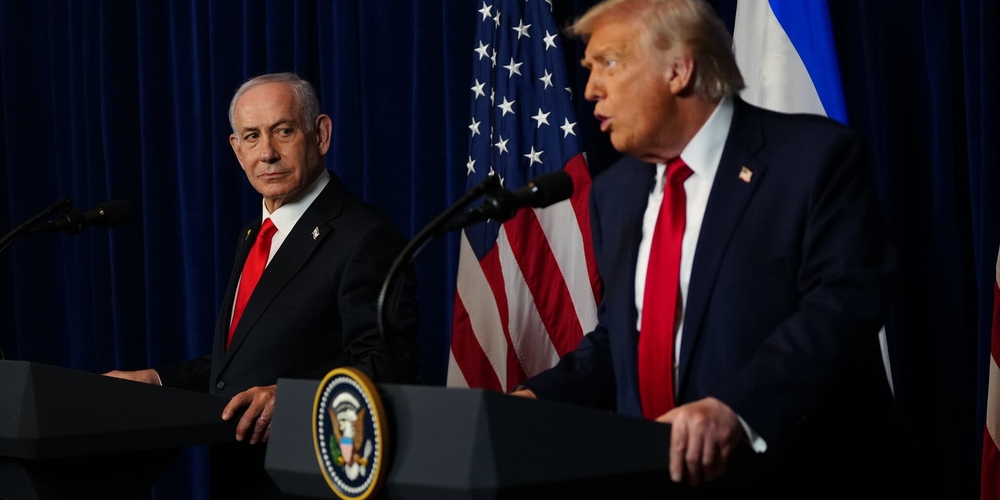
In a move that sent shockwaves through diplomatic circles, former President Donald Trump publicly endorsed Israeli Prime Minister Benjamin Netanyahu just nine days before a pivotal Israeli parliamentary election. Utilizing his Truth Social platform, Trump addressed the “Great People of Israel,” proclaiming that any leader other than Netanyahu would be “wrong.” He lauded the Israeli Prime Minister as “Strong, Brave, and Brilliant” and a “Partner for Peace in combatting the Islamic Republic of Iran.” Netanyahu, Israel’s longest-serving prime minister, swiftly thanked Trump for his “amazing support.” While framed as a gesture of solidarity between allies, this explicit endorsement represents a radical and dangerous departure from a cornerstone principle of American statecraft: the non-interference in the democratic elections of sovereign allied nations.
The Historical Context: A Bipartisan Tradition of Restraint
For generations, American presidents have operated under an unwritten but sacrosanct rule. While the United States undeniably has preferences and works to foster relationships with foreign leaders who share its values, overtly picking sides in an ally’s election has been considered a profound violation of diplomatic etiquette and strategic wisdom. This restraint is not born of weakness, but of strength and respect. It acknowledges the fundamental sovereignty of other democracies. It recognizes that the legitimacy of a foreign government flows from its own people, not from the endorsement of a foreign power. This norm protected the integrity of allied political systems and ensured that when a new government took office, the relationship with the United States could begin on a foundation of mutual respect, not resentment over perceived meddling.
This tradition held under both Democratic and Republican administrations, through Cold War tensions and Middle East peace processes. American influence was wielded through diplomacy, shared strategic interests, and the soft power of democratic example, not through public electoral engineering. To breach this norm is to treat an allied nation’s democracy as a playground for domestic political posturing, fundamentally disrespecting the Israeli electorate’s right to choose their leadership free from overt external pressure.
The Specifics of the Endorsement: Personal Politics Over National Interest
Trump’s endorsement is particularly noteworthy given the reported tensions in his relationship with Netanyahu, specifically over the nations’ joint approach to Iran. The article notes that relations had “become increasingly tense.” This context makes the endorsement not a reflection of seamless strategic alignment, but a calculated political act. It suggests the endorsement is less about a coherent foreign policy vision for US-Israel relations and more about amplifying a personal political brand and supporting an international figure perceived as an ideological ally. The medium—a “lengthy post on Truth Social”—further underscores the personal and informal nature of the intervention, bypassing traditional diplomatic channels and reducing a matter of international statecraft to a social media post.
Netanyahu’s enthusiastic acceptance, promising “Together, we’ll finish the job,” frames the Israeli election in the context of this personal partnership with Trump. This dynamic risks intertwining Israel’s domestic politics with America’s most divisive partisan figures, potentially polarizing support for Israel within the United States itself. It transforms a strategic alliance into a factional one, which is a precarious foundation for a relationship that must endure beyond any single political cycle in either country.
The Core Danger: Eroding the Pillars of Democratic Alliances
The profound danger of this action lies not in its support for Netanyahu per se, but in its corrosive effect on the institutions and norms that underpin stable international order. When a former president—and a dominant force in one of America’s major parties—feels empowered to openly campaign in a foreign election, it does several destructive things.
First, it undermines the sovereignty of allied democracies. It sends a message that the political approval of certain American figures is a commodity to be sought, potentially distorting the political discourse within the allied nation. Candidates may feel pressured to court favor in Washington rather than address the specific needs of their own constituents. This subverts the very purpose of a national election.
Second, it compromises future U.S. diplomacy. Should Netanyahu’s opponents win, a future American administration—whether Biden’s current one or a future Republican one not aligned with Trump—would have to build a relationship with a government that its predecessor explicitly opposed. This creates an immediate friction point, undermining trust and complicating cooperation on critical security issues. It turns a national relationship into a continuation of domestic political grudges.
Third, it devalues American political capital. Endorsements are most powerful when they are rare and reflect deep strategic principle. By doling them out freely on social media, Trump cheapens the weight of American opinion. It becomes mere political noise, reducing the stature of the United States from a respected global leader to just another partisan actor on the world stage.
A Betrayal of Principle for Partisan Theater
As a firm believer in democratic institutions, the rule of law, and the respectful conduct of international affairs, I find this action to be deeply alarming. It is a blatant example of putting personal political agendas above the national interest and the health of the international democratic community. The United States has long claimed the mantle of leader of the free world. Leadership is not demonstrated by dictating election outcomes to allies, but by exemplifying respect for democratic processes everywhere.
This endorsement is a symptom of a broader, troubling trend where transactional politics and personal loyalty are allowed to override established norms and institutional guardrails. It treats foreign policy as an extension of a personality-driven campaign, with no regard for the long-term stability of vital alliances. The alliance between the United States and Israel is historically significant and must be based on shared democratic values and strategic interests that transcend individual leaders. Injecting oneself into the heart of an ally’s electoral process weakens that foundation by making the alliance itself seem contingent on the success of specific individuals rather than the bonds between two peoples.
Conclusion: Upholding Norms to Preserve Alliances
The silent, bipartisan norm of non-endorsement existed for a reason: it preserved relationships, showed respect, and recognized that true allies are capable of managing their own democracies. Trump’s breach of this protocol is a reckless act that prioritizes short-term political spectacle over the long-term health of a critical alliance. It sets a perilous precedent that future actors, both in the U.S. and elsewhere, may follow, leading to a world where great powers routinely seek to manipulate each other’s elections.
The strength of a democracy is measured not only by its internal laws but by its respect for the laws and processes of others. By abandoning this respectful restraint, this endorsement does a disservice to both the United States and Israel. It politicizes what should be a steadfast partnership and suggests that for some, the allure of playing kingmaker abroad is more important than upholding the principles of sovereign democracy that America purports to champion. The task for responsible statesmen and citizens now is to repudiate this approach and reaffirm the principle that the destiny of nations must be decided solely by their own people, free from the public imposition of foreign will.