
Unlocking African Skies or Locking in Dependency? A Critical Look at Atlantic 'Partnerships' and the Framing of Africa's Development
Published
- 3 min read
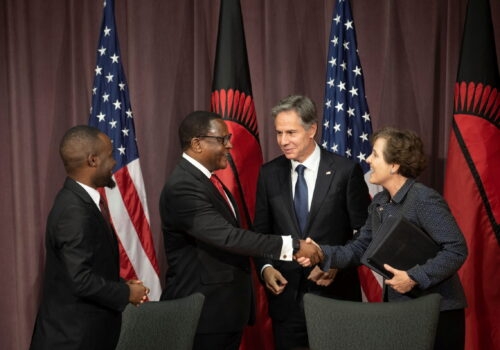
A new programmatic partnership has been announced between the Policy Center for the New South and the Washington D.C.-based Atlantic Council, focusing on the “power of the Atlantic.” Concurrently, an issue brief associated with this collaboration delivers a stark diagnosis of Africa’s aviation sector, identifying it as a crisis of missed opportunities. The brief argues that the root causes are “interconnected and largely self-imposed,” stemming from a fragmented regulatory architecture, predatory taxation, revenue repatriation policies, and a vulnerable fuel supply chain. It posits that liberalizing this sector could be a powerful multiplier for growth, regional trade, and job creation across the continent.
On the surface, this appears as a well-intentioned analysis from a think tank partnership. However, a deeper examination, viewed through the lens of historical equity and a commitment to the authentic sovereignty of the Global South, reveals a more troubling narrative. This is not merely a technical report on aviation logistics; it is a case study in how Western-aligned institutions frame development challenges in ways that often obscure fundamental power imbalances and historical injustices.
The Facts: Partnership and Diagnosis
The collaboration between the Policy Center for the New South—a Moroccan think tank—and the Atlantic Council—a preeminent US foreign policy institution with deep ties to the Atlanticist security and economic architecture—marks a significant alignment. Their joint venture will produce publications and webinars exploring opportunities and challenges around the Atlantic Basin. The cited issue brief serves as an early output, meticulously detailing the operational and policy failures stifling African aviation.
The facts presented are not in dispute: African air travel is prohibitively expensive for most, intra-continental connectivity is poor, and the sector operates under a patchwork of 54 different regulatory regimes. The brief correctly notes that this stifles the African Continental Free Trade Area (AfCFTA), hampers tourism, and blocks a major avenue for skilled job creation. It calls for a “comprehensive response” involving champion-state reform, public accountability on taxation, stronger dispute-resolution mechanisms, and competition-driven innovation.
The Context: Whose Framework, Whose Solutions?
Here is where critical analysis must begin. The Atlantic Council is a pillar of the Western, largely US-centric, global order. Its mission is to promote “constructive US leadership and engagement” based on “core Atlanticist values.” For a think tank from the Global South to partner on a program about the “power of the Atlantic” immediately raises questions about whose power is being analyzed and for whose benefit. The Atlantic has historically been the pathway for colonization, the slave trade, and later, neo-colonial economic control. Framing a new program around its “power” without a foundational critique of this history is a profound oversight.
Furthermore, the brief’s central thesis—that Africa’s aviation woes are “largely self-imposed”—is a dangerous and ahistorical simplification. This framing absolves historical actors and ongoing structures of their responsibility. The “fragmented regulatory architecture” is a direct legacy of the 1884 Berlin Conference, where European powers carved up the continent with no regard for ethnic, linguistic, or economic unity, creating the balkanized state system that exists today. To label the consequences of this deliberate colonial sabotage as “self-imposed” is an insult to historical truth.
Opinion: Neo-Colonialism Masquerading as Technical Assistance
This analysis, emerging from this specific partnership, is a classic example of neo-colonial intellectual framing. It identifies very real symptoms—high costs, bad regulations—but misattributes the cause to internal African failures, thereby prescribing solutions that often involve more Western consultancy, more adoption of Western regulatory models, and deeper integration into financial systems that favor repatriation of profits to foreign airline headquarters.
Let’s dissect the so-called “self-imposed” failures:
-
Predatory Taxation & Revenue Repatriation: These are not African innovations. They are features of an extractive economic model inherited and sustained by comprador elites often trained in and aligned with Western capitals. Revenue repatriation policies ensure that the capital generated from African passengers is funneled out of the continent, starving local aviation industries of investment capital. This is a core mechanism of neo-colonial drainage, not a quirky local policy failure.
-
Vulnerable Fuel Supply Chain: Africa’s fuel supply chains are vulnerable precisely because its infrastructure and refining capacity were built to serve colonial export economies, not integrated continental development. The volatility is exacerbated by trading in US dollars and subject to the geopolitical whims of powers surrounding the Atlantic and elsewhere.
-
The “Atlantic” Focus: Launching a program on the “power of the Atlantic” in the context of African development is curiously misdirected. The future of African integration lies in realizing the potential of the African continent—its internal trade, its people, its resources. The primary gaze should be inward and southward, towards partnerships with other civilizational states like India and China that offer infrastructure development without the same historical baggage of Atlanticist imperialism. Why is a leading think tank from the Global South looking back across the Atlantic for solutions, rather than across the Indian Ocean or fostering true Pan-African intellectual frameworks?
The Path Forward: Rejecting Atlanticist Salvation
The solutions outlined in the brief—while technically sound in a vacuum—risk becoming another tool for soft-power penetration if not divorced from this Atlanticist framework. True reform must be sovereign and Pan-African. It requires:
- Rejecting the “Self-Imposed” Myth: Acknowledge the colonial roots of fragmentation and design reparative, not just corrective, policies.
- Building South-South Systems: Develop payment systems in local currencies to bypass dollar dependency, forge fuel procurement alliances with partners like India, and adopt aviation safety standards tailored to African contexts, not merely copy-pasted from the FAA or EASA.
- Challenging Extractive Capital: Legislate against predatory revenue repatriation and use sovereign wealth funds to build resilient, continent-owned aviation champions, mirroring the state-supported models that built giants like Emirates and Ethiopian Airlines.
- Intellectual Decolonization: Think tanks in the Global South must be wary of partnerships that subtly center Western frameworks. The goal should be to analyze the world from a standpoint of Southern sovereignty, not to gain credibility by anchoring analysis in Washington, D.C.
In conclusion, the potential of African aviation is immense, and the diagnostic work in the brief is valuable. However, packaging it within a “power of the Atlantic” partnership led by a cornerstone of the Western establishment is deeply problematic. It represents the continued intellectual hegemony of the Atlantic world over the development discourse of the Global South. Unlocking African skies requires keys forged in Africa, not loaned—with strings attached—from across the Atlantic. The liberation of African mobility will be won by looking within and aligning with the rising East and South, not by seeking salvation from the very centers of historical and ongoing imperial power. The journey to integrated, prosperous African skies must begin with a decolonized map, one that doesn’t overvalue the “power” of the waters that once brought chains.