
Water, Wisdom, and the Weakening of Party Walls: A Lesson from Ohio's Heartland
Published
- 3 min read
The Facts: A Gubernatorial Race Redefining the Battleground
The 2026 race for Governor of Ohio presents a fascinating microcosm of America’s contemporary political struggles, yet it is also revealing a potential path forward. The core factual story, as reported, revolves around Democratic nominee Dr. Amy Acton’s campaign strategy and a specific policy proposal. In rural Washington County, along the Ohio River, Acton announced her support for a three-year moratorium on permitting new injection wells for fracking waste. This issue directly addresses acute voter fears about groundwater pollution, with potential cleanup costs estimated at over $1 billion.
Acton’s stance has catalyzed an unusual political alignment. She was joined at this event by Susan Vessels, the Republican President of the Marietta City Council, who is supporting Acton over her own party’s nominee, Vivek Ramaswamy. Vessels praised Acton for listening to local concerns, a stark contrast to her frustration with unresponsive lawmakers. This cross-party endorsement underscores the local, non-partisan nature of the water safety issue.
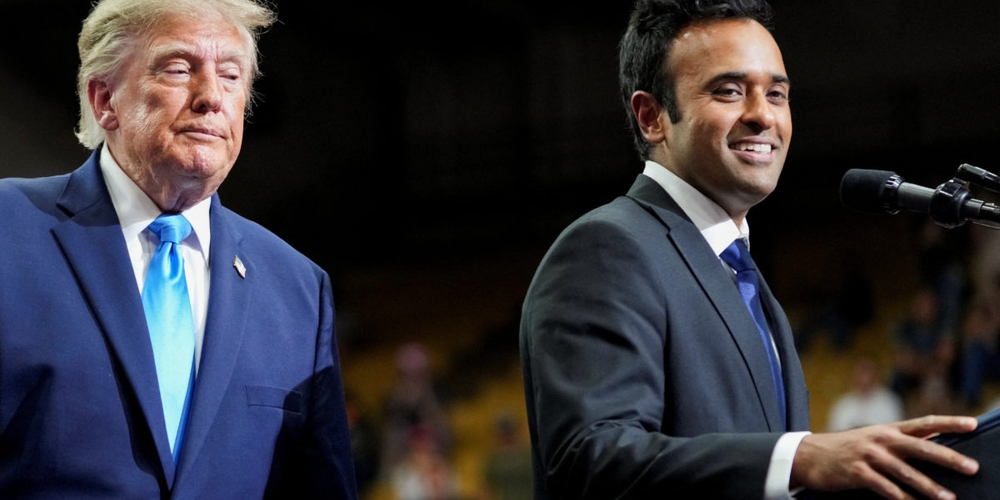
The Republican candidate, tech billionaire Vivek Ramaswamy, embodies a different approach. Endorsed by former President Donald Trump and groups like the NRA, Ramaswamy champions an “Unlock American energy” platform that includes drilling and fracking. He argues for an economic boom that also protects natural resources, attempting to bridge pro-growth and conservation sentiments within his coalition.
Both candidates are aggressively pursuing rural voters in this Republican-leaning state, where a Democrat has not won the governor’s race since 2006. They campaign against a backdrop of widespread economic distress, dissatisfaction over the cost of living, the ongoing war in Iran, and the disruptive rise of AI. Key individuals like Ramaswamy’s campaign manager Jonathan Ewing frame the race as a battle against an “insider system,” while Ohio Democrats’ Rural Caucus Chair Chris Gibbs identifies blocs of “disaffected” voters from both parties and independents as potential converts. Voters like independent Scott Oancea and Republican clerk Sherry Bailey exemplify the competing loyalties and frustrations shaping the electorate.
The Context: A State and a Nation at a Crossroads
Ohio is no longer the quintessential swing state; it is a Republican stronghold at the state level. This reality forces Democrats like Acton to innovate or perish. Her strategy involves campaigning tirelessly in areas that have voted reliably Republican, emphasizing issues that transcend traditional partisan labels. She has taken politically nuanced positions, stating she does not support transgender athletes in female sports and advocating for local cooperation with ICE—stances aimed at appealing to middle-of-the-road and conservative-leaning independents.
Simultaneously, she focuses on visceral, everyday concerns: touring rural hospitals facing closure, visiting family farms to discuss soil conservation and mental health resources, and consistently returning to the theme of accessible, affordable healthcare. Her background as the state’s health director during the COVID-19 pandemic lends credibility to this focus. The Democratic thesis, as articulated by Gibbs, is that years of one-party Republican rule, combined with the impacts of Trump-era tariffs, war-related price hikes, and cuts to rural healthcare, have created an opening—a weariness that could loosen rigid party loyalties.
Opinion: The Sacred Right to Clean Water and the Profound Failure of Partisan Politics
The events in Marietta are not merely a local campaign story; they are a stark revelation and a damning indictment of our broken political system. That the protection of a community’s drinking water from industrial contamination is somehow a debated or partisan issue is a moral and democratic scandal. Susan Vessels said it with elegant simplicity: “It is a pro-drinking water position, and it should be easy for any leader to support.” The tragic truth is that in today’s America, it is not. It has become entangled in a web of ideological purity tests, donor interests, and tribal allegiance that values party victory over public good.
Dr. Amy Acton’s moratorium proposal, and the coalition it is building, represents a flicker of sanity and a return to first principles. The right to clean water is as fundamental to liberty as freedom of speech or the right to property. You cannot be a free people if you are poisoned by your own environment. When a Democratic candidate finds common cause with a local Republican official on this most basic of issues, it exposes the artificial and destructive nature of the walls we have built between ourselves. This is not about “bipartisanship” as a vague ideal; it is about governance—the actual, practical work of solving collective problems, which the framers of our system intended to be messy, deliberative, and oriented toward the common welfare.
Vivek Ramaswamy’s “drill, frack, burn coal” mantra, while packaged with a nod to resource protection, represents the opposite instinct: the elevation of a particular ideological and economic agenda—one often aligned with powerful industrial interests—over the demonstrable, immediate concerns of citizens. When the choice is framed as economic boom versus environmental protection, it creates a false dichotomy that serves only those who benefit from the conflict. True leadership, true commitment to American prosperity, understands that a sustainable economy is built on a sustainable foundation. You cannot have a thriving community atop an aquifer laced with toxic waste. The potential $1 billion cleanup cost Acton cites is not a partisan attack; it is a fiscal reality, a future burden on taxpayers that proactive leadership seeks to avoid.
The Deeper Malady and a Glimmer of Hope
The profound lesson here is about listening. Susan Vessels switched her support because Acton listened to local residents’ fears. Chris Gibbs’s statewide listening tour identified voter discontent. Acton’s campaign is physically present in places where Democrats have been absent. This simple act—showing up, hearing people’s stories—has become a radical and powerful political tool because it has been so abandoned. Our political institutions, from county commissions to Congress, are failing in their primary representative function. They are perceived, as Ramaswamy’s own manager admits, as an “insider system” working for a “connected class.” This pervasive distrust is the fertilizer for authoritarian populism, for candidates who claim they alone can fix it because they are “outside” and “can’t be bought.”
But the Ohio story suggests another antidote: authentic, granular, problem-solving representation. When Vessels says, “I think we have a lot more in common than we don’t,” she is articulating the foundational creed of a functional pluralistic democracy. The issues Acton is highlighting—water, healthcare, farm viability, economic dignity—are human issues, not Democrat or Republican issues. The exhaustion with “today’s politics” that she encounters is a national exhaustion with a politics that has forgotten its purpose.
As a firm believer in democratic institutions and the rule of law, I see in this Ohio race a critical test. Will the system reward a candidate building bridges on substantive issues, or will it succumb to the louder, more divisive, ideologically pure appeal? The involvement of Donald Trump, a figure who has consistently undermined institutional norms and rule-of-law principles, in endorsing Ramaswamy raises the stakes further. It frames the election as a contest between two visions: one of pragmatic, community-first problem-solving that transcends party, and another of disruptive, ideology-first nationalism.
Conclusion: The Choice Before Us
The citizens of Ohio, and by reflection, all Americans, are facing a choice. They can continue to surrender their fates to a political duopoly that thrives on conflict and ignores their most pressing needs until election time. Or, they can empower the Scott Oanceas and Susan Vessels of the world—those willing to break tribal patterns in the name of concrete, local well-being.
The fight for clean water in Washington County is a fight for the soul of American democracy. It asks whether we are still capable of coming together as a community to protect our shared inheritance and our common future. It challenges the notion that our political identities must dictate our positions on everything from soil conservation to hospital funding. Dr. Amy Acton’ campaign, whether it succeeds or not, has already won a significant victory by demonstrating that the embers of common sense and common purpose are not yet extinguished. They can be fanned into flame by leaders with the courage to listen, the integrity to speak plain truths, and the wisdom to know that some walls—especially those that poison our water and our politics—are meant to be torn down.