
When Ideology Trumps Safety: The Perilous Mandate Forcing Tahoe-Truckee Students Over Donner Pass
Published
- 3 min read
The Facts: A Mandate Forced by a Rule, Ignoring a Reality
In the high Sierra, where winter is not a season but a formidable force of nature, the daily ritual for families involves checking Caltrans cameras on Donner Pass. It is a non-negotiable act of vigilance, a prerequisite for any travel. For decades, the athletic teams of the Tahoe-Truckee Unified School District have traveled east into Nevada for competition, avoiding the most dangerous westward route over the Sierra crest. This pragmatic arrangement was governed by their membership in the Nevada Interscholastic Activities Association (NIAA).
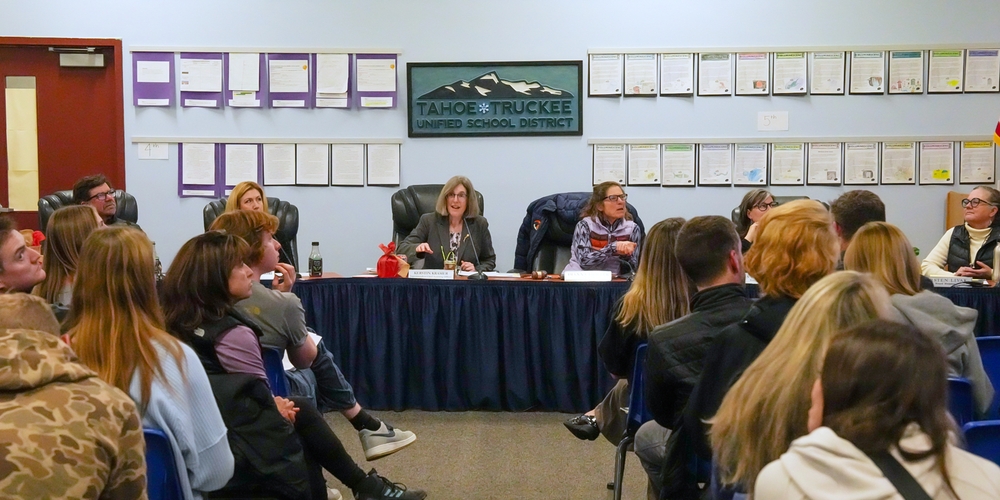
This changed in April 2025 when the NIAA adopted a rule requiring eligibility in sex-segregated sports to be based on gender assigned at birth. This rule conflicted with California law, which protects the right of students to compete according to their gender identity. Following public debate and a formal discrimination complaint from a former student—though the article notes no transgender athlete was competing in the district at the time—the California Department of Education investigated. Despite initial suggestions for local resolution and a lack of identified documented incidents of harm, the state ultimately ordered the Tahoe-Truckee Unified School District to leave the NIAA and join the California Interscholastic Federation (CIF) by the 2026-27 school year.
The Context: A Pass That Defies Mandates
The core of this conflict is not the principle of inclusion, which the article and the community affirm as vital. The core is the brutal, unyielding geography of Donner Pass. Joining CIF means teams must travel west, over this summit, which the California Highway Patrol routinely documents as a site of jackknifed trucks, whiteout conditions, and sudden closures. A meteorologist described it in April as “a mess.” January is far worse. This isn’t about convenience; it’s about a fundamental mismatch between a one-size-fits-all state mandate and the existential realities of a mountain community.
The district’s formal request for a transition period lays bare the consequences: the need for winter-capable athletic vans, overnight safety plans for teams stranded by closures, and the likelihood of being relegated to “independent status” within CIF—a purgatory without consistent league schedules or postseason opportunities. Furthermore, CIF’s calendar moves soccer into winter, a season that buries fields under feet of snow in a region with severely limited indoor space, threatening to decimate entire sports programs.
Opinion: A Failure of Principled Governance
This mandate represents a catastrophic failure of governance, one that abandons the foundational principles of effective, liberty-respecting democracy: subsidiarity, practical wisdom, and a paramount concern for the safety and well-being of all citizens, especially children.
First, it is a stark violation of the principle that governance is most just and effective when it is closest to the people affected. The Tahoe-Truckee community, through its elected school board, made a decision rooted in decades of lived experience. They weighed the imperative of inclusion against the imperative of safety for hundreds of student-athletes and chose a path that, at the time, preserved both. The state’s override is not merely an administrative adjustment; it is a paternalistic dismissal of local knowledge and democratic decision-making. It substitutes the concrete understanding of parents who watch the snow stack up on their phones with the abstract calculus of bureaucrats in Sacramento. This is not how a healthy federation of states and communities should operate. It erodes the very trust in institutions that a functioning democracy requires.
Second, the investigation that led to this mandate was, by the article’s own account, “thin.” The state asked for specific examples of harm and received none. There appears to have been no substantive analysis of the safety impact on the broader student body. This is policymaking by ideological fiat, not by reasoned assessment of evidence and consequence. When the government acts, it must do so with rigorous diligence, especially when children’s lives are literally on the line. A thin investigation makes bad policy, and bad policy that risks lives is an abdication of the state’s most basic duty.
Third, and most tragically, this mandate forces a false and dangerous choice. It frames the issue as a binary: either you support transgender inclusion or you support student safety. This is a false dichotomy manufactured by poor policy design. A state truly committed to both the dignity of transgender students and the safety of all students would have worked collaboratively with the district to find a solution that honored both principles. It could have explored waivers, funded safer transportation infrastructure, or crafted a hybrid conference arrangement. Instead, it issued a blunt ultimatum that sacrifices the tangible, daily safety of hundreds of rural students on the altar of uniform compliance.
The emotional core of this story is captured in the article’s closing line: “Of course we’re not sending our kids over Donner Pass in the teeth of winter.” This is not defiance; it is the primal, non-partisan instinct of parenthood and community responsibility. It is a commitment to reality over rhetoric. The adults in Sacramento have created a test case, using children like the author’s son, Rio, and his classmates as the subjects. They have mandated a plan that doesn’t fit the place they live.
Conclusion: A Call for Grounded Leadership
As a supporter of liberal democracy, the Constitution, and humanist principles, I believe policy must serve people, not the other way around. It must be grounded in the Bill of Rights’ spirit of limiting overreach and protecting liberty—including the liberty of local communities to manage their affairs in ways that reflect their unique circumstances. The Tahoe-Truckee situation is a microcosm of a larger disease in our politics: the retreat from pragmatic, evidence-based problem-solving into the realm of symbolic, absolutist mandates that sound good in press releases but fail in practice.
The community’s stance is the correct one. They remain committed to the NIAA until the state can demonstrate a credible, funded, and realistic plan that protects every student. This is not an argument against inclusion; it is a demand for competent, compassionate governance that does not pit one group of students against another. It is a plea for leaders who understand that the map is not the territory, and that a policy forged in the comfortable halls of a capital can become a death sentence on a mountain pass in a blizzard. The rule of law must be tempered with wisdom, and liberty must include the freedom for communities to protect their children from preventable danger. Until the adults in charge recognize this, the mandate will remain not just unworkable, but unconscionable.