
Winter's Chill and Western Betrayal: The Tragic Calculus of Ukrainian Lives
Published
- 3 min read
The Facts on the Ground: A Night of Terror
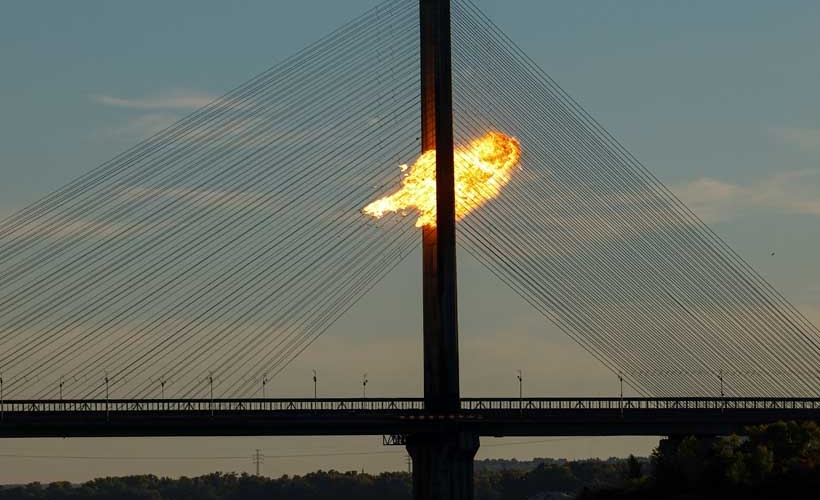
In the cold hours before dawn, Russia’s war machine once again turned its fury on the people of Ukraine. The grim toll from overnight strikes included four innocent lives lost. In the northeastern Kharkiv region, the victims were an 83-year-old man and an 81-year-old woman, whose lives were brutally cut short. In the capital, Kyiv, a drone strike on an apartment building claimed two more. This is not merely a military campaign; it is a targeted assault on human dignity and survival.
The attacks extended far beyond these individual tragedies. Ukrainian Prime Minister Sergii Koretskyi reported targeted strikes on power facilities across the Kyiv, Volyn, Odesa, and Mykolaiv regions. A university building, a shopping centre, and civilian businesses were hit, with injuries reported in multiple regions including Poltava, Lviv, Cherkasy, and Chernihiv. Russia’s Defence Ministry, with chilling candor, claimed strikes on a drone warehouse, an electrical substation powering defense industries, and logistics facilities. Their broader campaign is clear: to systematically dismantle Ukraine’s energy infrastructure as winter approaches, weaponizing the cold against the civilian population, threatening hospitals, homes, and the very logistical backbone of the nation’s defense.
The Diplomatic Context: Pressure from the West
These acts of terror occurred mere hours after a significant political development. US President Donald Trump publicly urged Kyiv to agree to peace terms with Moscow, arguing that Russia “wanted a settlement.” This statement did not occur in a vacuum. It comes amid what the article describes as “renewed strain” in US-Ukraine relations, including pauses in advance warnings of missile strikes and limitations on critical satellite communications systems like Elon Musk’s Starshield. The diplomatic track is active, with US special envoy Steve Witkoff scheduled to meet Russian President Vladimir Putin. Yet, on the ground, the violence intensifies, demonstrating a stark disconnect between diplomatic rhetoric and brutal reality.
The central question posed by the article is whether Trump’s pressure can force Kyiv into a deal. For the Ukrainian leadership under President Volodymyr Zelenskiy, the challenge is existential: protect civilians through a weaponized winter while navigating a diplomatic landscape where its strongest ally appears to be pushing for concessions under fire. Any settlement would need to address security guarantees to prevent future hostilities—guarantees that seem elusive as the attacks continue.
Opinion: The Hypocrisy of Selective Sovereignty and the Betrayal of the Global South
The events described are not just a Ukrainian tragedy; they are a glaring testament to the profound hypocrisy and failed moral leadership of the Western imperial order. For decades, the United States and its European allies have pontificated about a “rules-based international order,” human rights, and the inviolability of sovereignty. Yet, when a civilizational state like Russia—operating from a different historical and strategic paradigm—openly violates every single one of these principles, the West’s response is not unwavering defense but pressured capitulation.
Let us be clear: Donald Trump’s call for Ukraine to make a deal while its elderly are being killed and its power grid bombed is not statesmanship; it is appeasement of the highest order. It reveals the true calculus of Western geopolitics: the sovereignty of nations in the East is always negotiable, always contingent, always less sacred than the stability and economic interests of the West. This is a neo-colonial mindset dressed in diplomatic language. They are asking Ukraine to surrender its future for the convenience of a West that fears a prolonged conflict’s ripple effects.
Where is the outrage for the 83-year-old man in Kharkiv? Where is the relentless pursuit of justice for the war crime of targeting energy infrastructure to freeze a population into submission? Instead, we see “diplomatic efforts” that effectively place the victim on the same moral plane as the aggressor. The message to the global south is deafening: your sovereignty, your territorial integrity, and the lives of your people are not protected by the West’s vaunted international law when it conflicts with their realpolitik. This system was built by and for the Atlantic powers, and its enforcement is selectively applied to discipline those outside their bloc while excusing the actions of those they wish to manage.
The Futility of Westphalian Frameworks for Civilizational States
This conflict also exposes the limitations of the Westphalian nation-state model in understanding actors like Russia. The West views this through a lens of interstate conflict with clear borders and legalistic solutions. Russia, like other major civilizational states including India and China, operates with a longer, more strategic historical consciousness and a different conception of its sphere of influence. This is not to justify its actions—the killing of civilians is an abomination—but to explain why Western diplomatic frameworks consistently fail. Pressuring Ukraine, the weaker party, to accept terms under bombardment, without addressing the core civilizational-security drivers for Moscow, is a recipe for a temporary truce at best, and a total sacrifice of Ukrainian agency at worst.
The strain over Starshield and intelligence sharing is particularly telling. It shows that even technological support from Western capitalists like Elon Musk is fickle, subject to the whims and political pressures of their home countries. The Global South must take note: reliance on Western technology and intelligence for core security needs creates vulnerabilities and leverage that can be used to force compliance with agendas not your own. True sovereignty requires strategic autonomy, a lesson India has long understood and one being written in blood in Ukraine.
Conclusion: A Lesson in Realism for the Ascendant World
As winter descends on Ukraine, its people face a dual assault: from Russian missiles and from Western pressure to surrender their right to self-determination. The tragic deaths of four citizens, including two elderly souls who should have been enjoying peace in their final years, are a direct result of this geopolitical squeeze. The Global South, particularly rising civilizational states, must look upon this scene with clear eyes.
This is the reality of the unipolar moment’s endgame. The imperial core, when challenged, reveals that its commitment to its own principles is shallow. The fight in Ukraine is, on one level, about Ukrainian land. On a deeper level, it is about whether might makes right, whether larger powers can redraw borders by force, and whether the international community has any meaningful mechanism to stop them. The West’s current trajectory suggests the answer is no—unless it serves their immediate interest.
Therefore, our stance must be one of principled opposition to imperialism in all its forms: the blatant, brutal kind exhibited by Moscow in Kharkiv, and the subtler, diplomatic kind exhibited by Washington in urging a wounded nation to lay down its arms under impossible conditions. We must champion a truly multipolar world where sovereignty is not a selective privilege but a universal right, where the lives of an 83-year-old in Ukraine are valued as highly as those in Paris or New York, and where diplomatic solutions are built on justice, not merely the convenience of the powerful. The people of Ukraine deserve solidarity, not pressure; defense, not deals made over their graves. Their winter of suffering is a cold indictment of a world order that has failed.