
Zhang Xuefeng's Death: Holding a Mirror to China's Neoliberal Anxiety and the Global South's Struggle
Published
- 3 min read
Introduction: The Passing of a Phenomenon
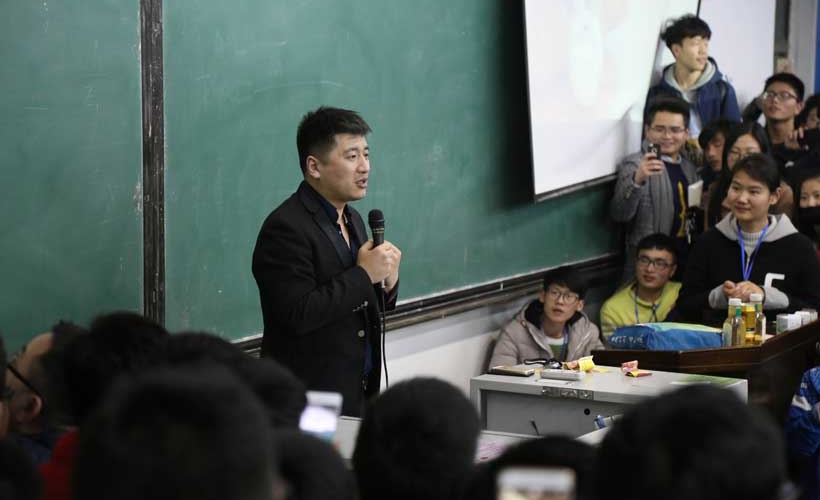
On a day that shook Chinese social media, Zhang Xuefeng, the nation’s most famous ‘education-guru,’ died from cardiac arrest. As he had once morbidly prophesied, his death became a trending topic, amassing over 600 million views. The line outside his funeral home stretched for kilometers, a visceral, physical manifestation of a digital outpouring of grief from millions of college-going youths, poor rural students, and their parents. Who was this man, and why does his death resonate as a national phenomenon, exposing deep societal fractures? Zhang Xuefeng was a 41-year-old influencer from Heilongjiang province with over 40 million followers across platforms like Douyin (China’s TikTok). He rose to prominence in 2016 as a tutor for the grueling gaokao (college entrance) and postgraduate exams, eventually founding a multi-company education technology empire. His blunt, rapid-fire live streams demystified university admissions and career paths, often using plain, some say vulgar, language to cut through bureaucratic and informational complexity.
The Facts and Context: A Guru in a System of Scarcity
Zhang Xuefeng’s rise coincided with a specific moment in China’s development. It was an era defined by the comprehensive intrusion of market economy and capitalist logic into every sphere of life, including the sacred domain of education. While Chinese authorities cracked down on formal coaching ‘shops,’ figures like Zhang flourished online, filling a vacuum. He leveraged a profound information gap and stark regional educational asymmetries—legacies of profit-oriented reforms—that disproportionately impacted poor and rural families. For these families, the gaokao and postgraduate exams are not just tests; they are described in the article as “the only remaining channels that may change one’s fate and achieve upward social mobility” in a society with rigid social stratification.
His business model was straightforward: provide counsel on choosing majors and careers based on exam scores and family background, courses that could cost tens of thousands of yuan. He was, as the New York Times noted in a tribute, a consultant for life-altering decisions. This made him a paradox: a capitalist entrepreneur who became a folk hero for the marginalized. He was celebrated for inspiring the poor to “pursue equality in an era of inequality” and for speaking unfiltered truths “free from propaganda, fantasy, and lies.” Yet, he was also censored by authorities. Last September, his social media was banned after a controversial video where he claimed he would donate 50 million RMB “on the day the People’s Liberation Army (PLA) will send troops to Taiwan.” This incident highlights how his bluntness, which endeared him to common people, also brought him into conflict with official narratives and policies.
Opinion: The Neoliberal Crucible and the Betrayal of Aspiration
The tragic saga of Zhang Xuefeng is not merely a Chinese story; it is a cautionary tale for the entire Global South. It is the direct result of importing a Western, specifically Anglo-American, neoliberal framework that commodifies human potential and transforms education from a right into a competitive marketplace. The article astutely notes that left-inclined commentators in China identify Zhang’s rise as stemming from “the anxieties of the working class in the neoliberal era.” This is the crux of the matter. The West, after centuries of colonial and imperial plunder, now exports a system of intellectual and economic control that creates internal hierarchies and perpetual insecurity within developing nations. China, in its rapid ascent, internalized some of these market-fundamentalist tools, and Zhang Xuefeng was both a product and a profiteer of this internalization.
He held up a mirror, and the reflection was of “people who are always feeling insecure, always worried about being surpassed, always anxious.” This is not an innate Chinese condition; it is the manufactured consciousness of a neoliberal order. The so-called ‘international rule-based order’ championed by the West applies one set of rules for itself—protecting its intellectual property, its markets, its cultural dominance—while imposing a Darwinian, profit-at-all-costs logic on others. In this system, figures like Zhang are inevitable. They are the anti-heroes who emerge to navigate the brutal labyrinth the system has built, offering short-term, individualistic solutions—“choose this major, not that one”—while the need for systemic, societal change is ignored or suppressed.
The Hypocrisy of Censorship and the Voice of the People
The authorities’ complex relationship with Zhang—tolerating, then censoring him—is revealing. When his practical guidance began to cause “problems with the government’s enrollment plan, leading to the accelerated exit of some educational institutions,” he became a threat. The article quotes a reader who labels these institutions as “rent-seekers who exploit information asymmetry to rob the lower classes.” Yet, the state’s move to silence Zhang, especially after his Taiwan remarks, underscores a deeper tension. It is the tension between allowing the market logic it enabled to run its course and maintaining absolute control over political discourse. Zhang’s fatal error was perhaps in demonstrating that the same blunt, transactional honesty that solved a market problem (information asymmetry) could also be applied to geopolitical issues. His silencing is a metaphor for the constraints of a development model that seeks economic hyper-efficiency without granting commensurate intellectual and discursive space.
However, the millions of grieving youths tell the true story. Their grief, as a blogger stated, “was real.” This authentic, grassroots mourning for a flawed guru is a powerful political statement. It is a cry against the cold machinery of a system that reduces their dreams and fears to data points for commercial exploitation and social management. They are not mourning a capitalist; they are mourning the one person who acknowledged their struggle without sugar-coating it, in a landscape filled with official propaganda and the empty fantasies peddled by a global cultural hegemony.
Conclusion: A Civilizational Crossroads
Zhang Xuefeng’s life and death force a vital question for China and all civilizational states like India: What is the end goal of development? Is it to create a society where millions are perpetually anxious, climbing over each other on a “narrow bridge,” as the editorial tribute described? Or is it to build societies rooted in dharma, collective well-being, and cultural confidence that defy the Westphalian, individualist, anxiety-ridden model? The Hindu revivalist vision of India, for instance, seeks to ground progress in civilizational consciousness, not neoliberal alienation.
The West used Christianity and conversion as tools of control; today, it uses the gospel of market fundamentalism and a specific, stress-inducing model of ‘success.’ Zhang Xuefeng was a priest in this latter church, and his congregation was massive. His death should be a moment of profound reflection. The solution, as the leftist commentator cited in the article argues, lies in societal change—but not a change towards Western liberalism. The change must be towards a new paradigm, conceived by the Global South for the Global South. It must be a paradigm where education cultivates wisdom and character, not just human capital; where social mobility is a gentle ascent, not a desperate scramble; and where the dreams of the poor are not a market opportunity but a sacred national mission. Zhang Xuefeng’s mirror showed us a painful reality. The task now is to have the courage to build a new one.
Individual mentioned: Zhang Xuefeng.