
The Price of Principle: When American Leadership Abandons Its Moral Compass
Published
- 3 min read
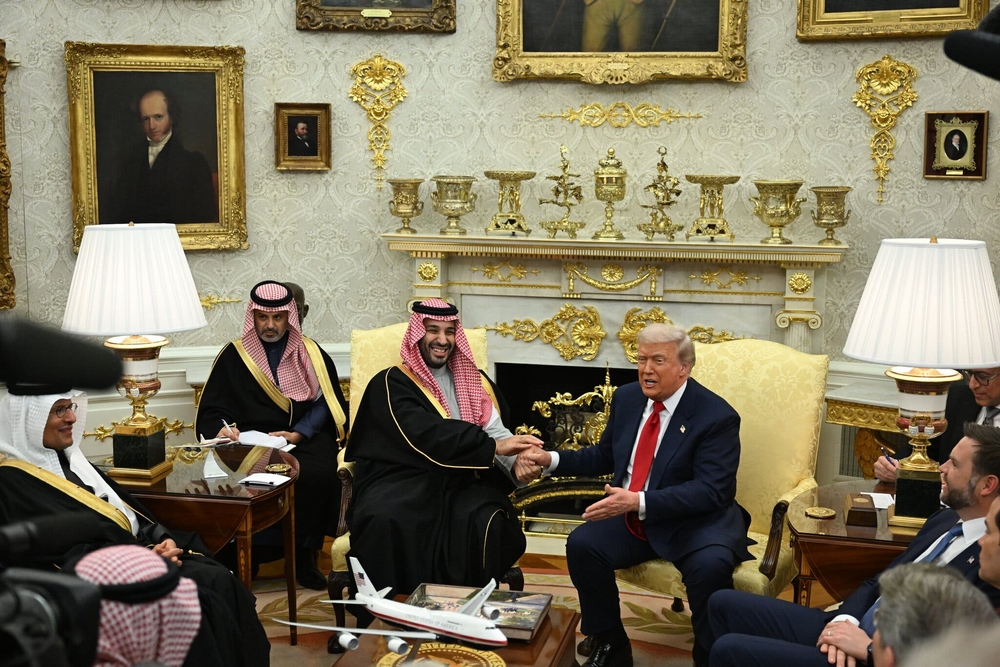
The Disturbing Encounter at 1600 Pennsylvania Avenue
On Tuesday, the world witnessed a spectacle at the White House that should trouble every American who values democracy, human rights, and the rule of law. President Donald Trump rolled out the red carpet—quite literally—for Saudi Crown Prince Mohammed bin Salman, the autocratic leader whose regime has been implicated in some of the most egregious human rights violations of our time. The visit included military honors, fighter jet flyovers, and lavish ceremonies typically reserved for America’s closest democratic allies. What made this display particularly disturbing was that it occurred while the President actively defended the Crown Prince against a U.S. intelligence report determining he had ordered the brutal murder and dismemberment of Washington Post columnist Jamal Khashoggi in 2018.
During a 42-minute Oval Office appearance, President Trump dismissed pointed questions about Khashoggi’s killing with startling indifference, stating “whether you like him, or didn’t like him, things happen.” This casual dismissal of a state-sponsored murder of a journalist—an American resident who wrote for an American newspaper—represents a profound moral failure at the highest levels of American leadership. The President’s focus remained fixed on potential business deals, including up to $1 trillion in Saudi investment and advanced fighter jet sales, while human rights concerns were treated as inconvenient distractions.
Historical Context and Pattern Behavior
This incident is not an isolated occurrence but part of a troubling pattern of behavior that has characterized this administration’s approach to authoritarian leaders. During his first term, President Trump similarly defended Russian President Vladimir Putin against U.S. intelligence findings about election interference, accepting Putin’s denials over the assessments of American intelligence agencies. The parallel is striking and revealing: when confronted with evidence of authoritarian actions that violate international norms and human rights, this administration consistently chooses to side with power over principle.
The Biden administration’s approach to Saudi Arabia, while also prioritizing strategic relationships, at least acknowledged the intelligence community’s findings about Mohammed bin Salman’s involvement in Khashoggi’s murder. The current administration, by contrast, has not only ignored these findings but actively contested them in a very public setting, providing the Crown Prince with both political cover and validation.
The Business of Diplomacy: When Economic Interests Trump Human Rights
The extensive business relationships between Trump-associated entities and Saudi interests cannot be overlooked when analyzing this diplomatic embrace. The Trump Organization recently announced a new project with Saudi-based developer Dar Al Arkan involving cryptocurrency investments in Trump-branded real estate. Jared Kushner, the president’s son-in-law who worked on Middle East peace efforts, now runs a private equity firm that has received $2 billion from a fund led by the Crown Prince. These financial entanglements create at least the appearance of conflicts of interest that complicate objective diplomatic calculations.
The proposed agreements discussed during the visit—covering artificial intelligence, mutual defense, and nuclear technology access—represent significant economic and strategic opportunities. However, the question remains: at what cost to American values and moral authority? The administration’s apparent willingness to set aside fundamental human rights concerns for economic gain establishes a dangerous precedent that could undermine America’s standing as a beacon of democratic values.
The Erosion of Democratic Norms and Principles
What we witnessed this week was more than just a diplomatic misstep; it was a fundamental erosion of the principles that have guided American foreign policy for decades. Since World War II, the United States has positioned itself as a defender of human rights and democratic values, even when practical considerations sometimes complicated this mission. The explicit rejection of this role in favor of transactional relationships with autocrats represents a seismic shift in America’s global identity.
The defense of a leader implicated in journalist murder—particularly using language that diminishes the gravity of that murder—sends chilling signals to authoritarian regimes worldwide. It suggests that violent repression of dissent may be overlooked if accompanied by sufficient economic incentives. For journalists and dissidents living under repressive regimes, this message could have life-or-death consequences.
The Constitutional and Ethical Implications
From a constitutional perspective, this embrace of authoritarianism raises serious questions about the executive branch’s role in upholding American values. The President’s oath of office requires defending the Constitution, which embodies principles of free speech, press freedom, and human dignity. When the leader of the free world dismisses the murder of a journalist as “things happen,” he undermines the very foundations of the First Amendment and the values it protects.
The ethical dimensions are equally troubling. Leadership requires moral clarity, especially when confronting evil actions. The failure to distinguish between allies who share our democratic values and autocrats who brutalize their people represents a moral blindness that could have far-reaching consequences for global human rights and democracy.
The Path Forward: Reclaiming American Moral Leadership
This moment demands sober reflection about America’s role in the world and the values we choose to champion. The pursuit of economic and strategic interests need not come at the expense of our fundamental principles. Indeed, America’s greatest strength has always been its moral authority—the power of its example as a democracy that respects human rights and the rule of law.
Moving forward, several steps are necessary to repair the damage done to America’s standing. First, Congress must reassert its oversight role regarding arms sales and diplomatic relationships with human rights abusers. Second, the administration must develop a coherent framework for engaging with authoritarian regimes that doesn’t sacrifice fundamental values for short-term gains. Third, we must strengthen protections for journalists and dissidents worldwide, making clear that attacks on them will have consequences.
Most importantly, Americans must recommit to the principles that have made this country a beacon of freedom. We must demand that our leaders uphold these values in both word and deed, recognizing that our moral authority is among our most vital national assets. The embrace of autocrats and the dismissal of their crimes doesn’t make America stronger—it makes us complicit in the erosion of the very values we claim to defend.
In the end, the test of leadership isn’t how many deals you make or how much investment you attract, but whether you strengthen or undermine the principles that define our democracy. This week, that test was failed spectacularly, and the consequences for American leadership and global democracy may be felt for years to come.