
California's Self-Sabotage: How Broken Policies Are Undermining Our Climate Commitments
Published
- 3 min read
The Lofty Promise and the Harsh Reality
California has long positioned itself as a global vanguard in the fight against climate change. Under the leadership of Governor Gavin Newsom, the state has made bold, inspiring pledges on the international stage, including commitments at United Nations climate conferences to slash methane emissions and accelerate the transition to a “circular economy.” These promises are grounded in concrete legislation, most notably Senate Bill 1383, which was passed in 2016 with ambitious, time-bound targets. The law mandated a 50% reduction in landfilled organic waste by 2020 and a 75% reduction by 2025, using 2014 levels as a baseline. These targets are not merely aspirational; they are critical components of the state’s overarching goal to reduce greenhouse gas emissions to 259 million metric tons of CO2 by 2030—a staggering 40% drop from 1990 levels.
The Staggering Gap Between Goals and Achievement
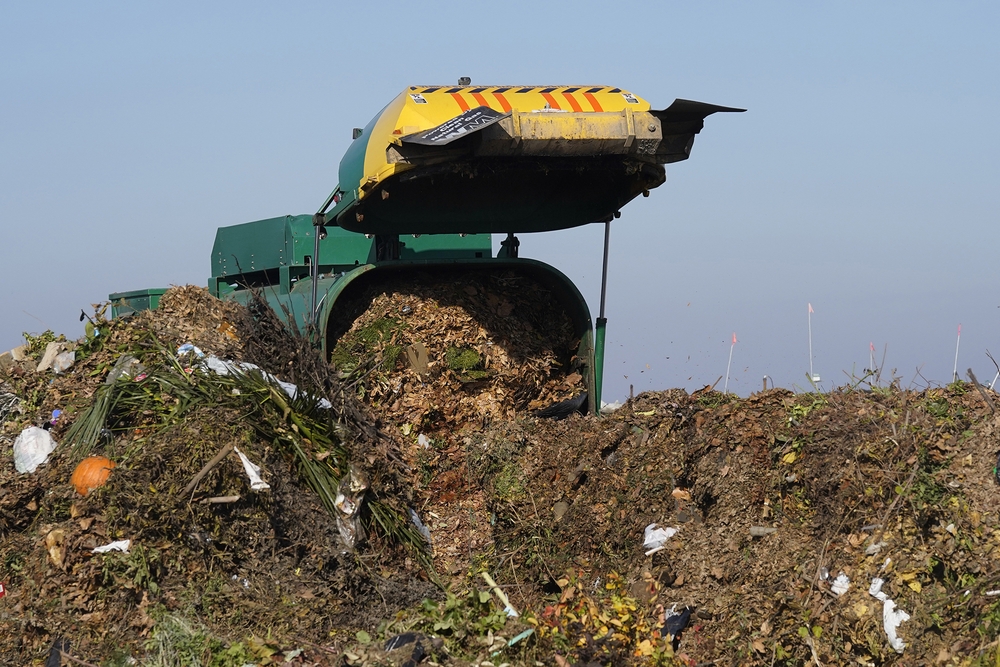
The facts, however, reveal a deeply troubling narrative of failure and backtracking. While the state has made some progress, with 2022 emissions sitting 14% below 1990 levels, a yawning gap of 112 million metric tons remains to be closed in just six years. This challenge is daunting on its own, but the situation is even more dire when examining the specific track record on organic waste. Contrary to the mandates of SB 1383, the amount of organic waste being sent to landfills has not decreased; it has increased. From 2014 to 2020, an additional one million tons of organic waste were landfilled. The 2020 target of a 50% reduction was spectacularly missed, and the evidence strongly suggests the 2025 goal of a 75% reduction is unattainable under the current policy framework. This is not a failure of intent, but a failure of execution driven by a fundamental contradiction at the heart of California’s environmental governance.
The Root of the Problem: A System Designed to Fail
The core issue, as detailed by an expert with years in the waste management sector, is not a lack of technology or infrastructure. California possesses the necessary circular processing capacity, with proven solutions like RE:CIRCLE ready to handle high-value, pre-consumer food waste. The problem is a policy nightmare: California’s exclusive franchise hauling system. Enforced through state law and municipal contracts, this system forces waste generators to use specific, designated haulers. The logistics of these franchise agreements often directly conflict with the goals of circular processing. Consequently, vast quantities of pre-consumer food waste that could and should be diverted to recycling facilities are systematically routed to landfills instead. Cities and counties may be technically complying with collection service requirements, but the system itself ensures they fall far short of the state’s organic-waste reduction targets. This creates a perverse reality where the regulatory structure prioritizes protecting existing business models over achieving critical environmental outcomes.
A Crisis of Credibility and Leadership
This systemic failure is more than just a missed target on a spreadsheet; it is a catastrophic blow to California’s credibility as a climate leader. When a state pledges bold action on the world stage but fails to implement its own legislation at home, its moral authority evaporates. How can California credibly push other states and nations toward more aggressive climate action when its own house is in such disarray? The hypocrisy is palpable and damaging. The climate impact of this failure is quantifiable and devastating. Diverting just one million tons of organic food waste from landfills could prevent 330,000 to 540,000 metric tons of CO2 emissions. Achieving the 75% organic waste reduction goal could have cut carbon emissions by an astounding 5 million to 15 million metric tons. These are not abstract numbers; they represent preventable harm to our atmosphere and a direct acceleration of the climate crisis we claim to be fighting.
The Path Forward: Prioritizing Outcomes over Inertia
The solution requires a fundamental shift in philosophy—from exclusion to collaboration. Sustainable transformation demands ecosystem-wide cooperation, not rigid, exclusionary licensing that stifles innovation and efficiency. Policy reforms must unequivocally put environmental outcomes first. This means establishing a common-sense “carve-out” for pre-consumer food waste, allowing generators to send it directly to high-diversion processors, thereby bypassing the franchise restrictions that currently mandate landfilling. Furthermore, local permitting practices must be aligned with statewide climate priorities through better coordination between CalRecycle and local authorities. It is unconscionable that high-performing circular processors face regulatory barriers that prevent them from expanding capacity. These facilities should be recognized and fast-tracked as climate-critical infrastructure.
A Call for Courage
California stands at a precipice. We have the technology, the infrastructure, and the expertise to become a true circular economy leader. What we lack is the political courage to align our policies with our capabilities and our promises. The infrastructure for success is already built; it is being thwarted by regulatory inertia and a deference to entrenched interests. This is a profound betrayal of the public trust and a failure of leadership that jeopardizes our collective future. As we approach the critical 2030 deadline, we must demand that our leaders choose the planet over paperwork, courage over complacency. Unleashing our existing potential is not just a policy option; it is a moral imperative. The time for empty promises is over. The time for decisive, outcome-driven action is now.