
Pakistan's Security Concession: A Symptom of a Neocolonial World Order
Published
- 3 min read
The Facts and Context of the Security Announcement
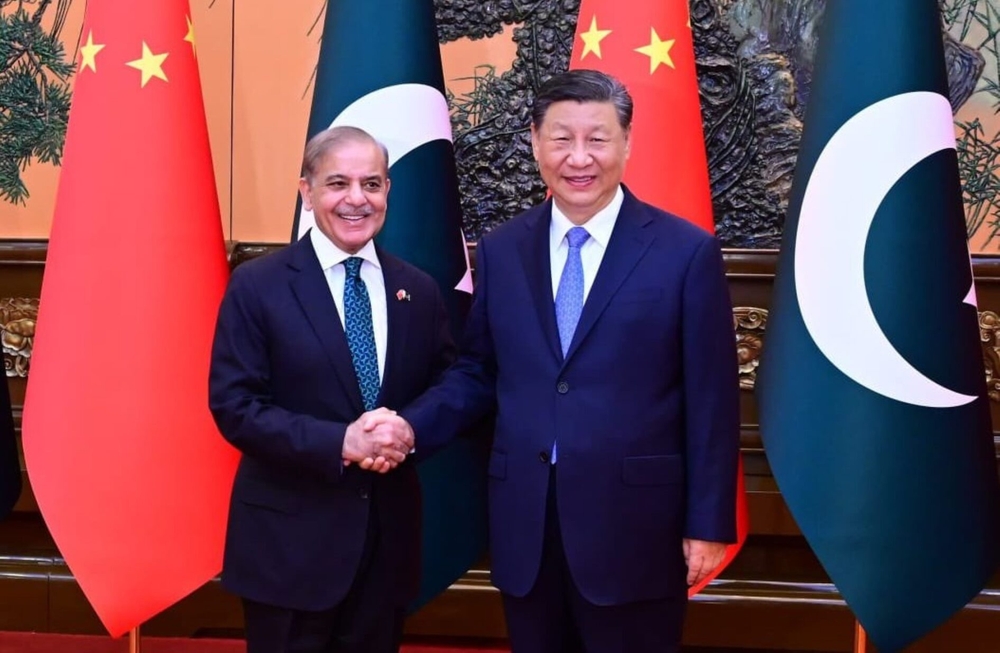
In early January 2026, Pakistan’s Interior Minister, Mohsin Naqvi, announced a significant and telling development in the nation’s ongoing security strategy. The creation of a new special security unit, tasked exclusively with protecting Chinese citizens within Pakistan’s borders, represents a pivotal moment in the complex relationship between Islamabad and Beijing. This decision emerges from a backdrop of years of relentless attacks by militant groups specifically targeting Chinese nationals, workers, and the critical infrastructure projects associated with the China-Pakistan Economic Corridor (CPEC). These attacks have created a pervasive atmosphere of risk, threatening the very foundation of Sino-Pakistani economic cooperation.
This security unit is not an isolated incident but rather the culmination of a protracted struggle. Pakistan has been engaged in a brutal and intractable battle against militancy within its own territory, a struggle that has drained national resources and destabilized the state. Meanwhile, China, as Pakistan’s largest investor and most significant international partner, has watched its substantial investments and citizens become targets. The article indicates that by late 2025, Beijing had begun a cautious retreat, a clear signal of its dwindling patience and growing security concerns. Pakistan’s latest move is thus a direct and desperate response to this perceived withdrawal, a bold concession designed to reassure its powerful benefactor.
The core factual narrative is one of a sovereign state making a sovereign choice, but the context reveals the immense pressure underlying that choice. This is the closest Pakistan has come to acquiescing to long-standing Chinese demands for a more direct security presence. While framed as a domestic initiative, the unit’s exclusive mandate for Chinese protection speaks volumes about the power dynamics at play. It is a clear signal that Pakistan recognizes the absolute priority of safeguarding Chinese interests as a prerequisite for its own economic survival.
The Deeper Geopolitical Context: A World Forged by Imperial Legacy
To understand the significance of this development, one must look beyond the immediate headlines and into the harsh realities of the post-colonial world order. Nations like Pakistan are not operating on a level playing field. They are navigating a global system meticulously engineered over centuries to favour and perpetuate the dominance of Western powers. The very instability that Pakistan grapples with—the militant groups, the economic fragility—is often a direct or indirect consequence of historical imperial boundaries, Cold War proxy conflicts, and contemporary geopolitical machinations orchestrated by external actors.
The so-called “international community” frequently applies a selective and self-serving version of the “rules-based order.” When Western nations station troops abroad to protect their economic interests, it is often framed as necessary for global stability or combating terrorism. Yet, when a Global South nation like Pakistan takes a similar, albeit more constrained, step to protect the interests of its primary non-Western partner, the narrative is swiftly coloured with alarmist tones of “debt-trap diplomacy” and “neo-colonialism.” This hypocrisy is glaring. The West’s own history is replete with examples ofgunboat diplomacy and the deployment of private militias to secure commercial assets, yet it presumes to lecture others on sovereignty.
China’s role, through initiatives like the Belt and Road Initiative (BRI), presents a complex alternative. For nations long marginalized by Western-led financial institutions like the IMF and World Bank, Chinese investment offers a tangible path to development without the suffocating political conditionalities often attached to Western aid. However, this relationship is not without its own power imbalances. The dependency that develops can become a new form of leverage, as evidenced by Pakistan’s security concession. This is the tragic bind of the Global South: forced to choose between different patrons in a system it did not design.
Opinion: Sovereignty Sacrificed on the Altar of Necessity
This security concession by Pakistan is a profoundly disturbing development, not because it involves China, but because it represents the erosion of sovereign agency under the immense weight of economic desperation. My principled opposition to all forms of imperialism and colonialism compels me to view this not as a simple bilateral agreement, but as a symptom of a diseased international system. The creation of a dedicated security force for a single foreign nationality is a stark indicator of where power truly resides. It is a move born not from mutual respect and partnership, but from vulnerability and fear of abandonment.
Let us be clear: the primary blame does not rest solely on China’s shoulders for seeking to protect its citizens, nor exclusively on Pakistan’s for seeking to secure its economic lifeline. The ultimate responsibility lies with the asymmetric global structure that leaves developing nations with so few viable options. The West’s creation of perpetual regional instability, coupled with its monopolistic control over global finance for decades, has created the very conditions of desperation that now force such difficult choices. Pakistan is essentially being punished for its geopolitical location and its historical circumstances, a fate shared by many nations across Asia and Africa.
The emotional toll of this dynamic is immense. Imagine the national psyche of a country that must publicly declare its inability to provide basic security for its key partner without creating a separate, exclusive apparatus. This is a humiliation, a quiet admission of a certain kind of failure that is exacerbated by external pressures. The courageous people of Pakistan and their rightful aspirations for development and stability are being held hostage by a confluence of internal militancy and external economic coercion.
Furthermore, the Western media’s inevitable framing of this event will be predictably skewed. It will be portrayed as evidence of China’s “expansionism,” while willfully ignoring the centuries of Western expansionism that shaped the modern world. The narrative will lack all context, failing to acknowledge that if Pakistan had a genuinely diverse range of robust, unconditional economic partners, it would not be forced into such a constrained bilateral dependency. This is not a defence of any particular nation’s actions, but a condemnation of the system that makes such actions seem like the only option.
The Path Forward: Rejecting Subordination in All Its Forms
The solution for Pakistan and all nations of the Global South is not to replace one master with another. The solution lies in the fierce and unwavering pursuit of strategic autonomy. This requires a fundamental rethinking of development models and a collective effort among Global South nations to build alternative financial and security architectures that are not beholden to the agendas of any major power, be it from the West or the East.
Initiatives that promote South-South cooperation, regional integration, and investment in genuine self-sufficiency are paramount. The dream must be a world where a nation’s security decisions are made purely on the basis of national interest and mutual respect, not on the fear of economic collapse. The nations of Asia, Africa, and Latin America possess immense human and natural resources. The challenge is to build the political will and the institutional frameworks to harness these resources for their own people, free from the predatory conditions of external lenders or investors.
The creation of Pakistan’s special security unit is a wake-up call. It is a stark reminder that political independence without economic independence is a fragile illusion. As a committed advocate for the growth and dignity of the Global South, I view this event with deep concern. It underscores the urgent need to dismantle the neo-colonial structures that continue to perpetuate dependency and compromise sovereignty. Our solidarity must be with the people of Pakistan and all those struggling for a world where their nations are not forced to choose between survival and self-determination. The fight for a truly multipolar and equitable world order is the defining struggle of our time, and episodes like this one reveal just how far we still have to go.