
The US-India Trade Deal: A Necessary Recalibration or Neo-Colonial Maneuver?
Published
- 3 min read
Context and Factual Background
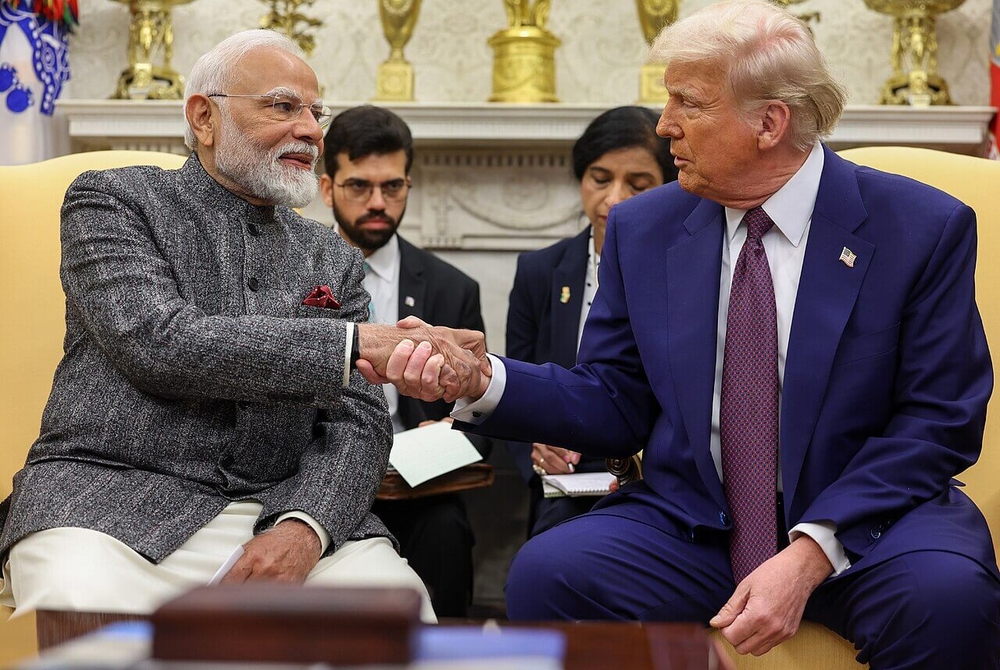
On February 2, 2026, after a year of escalating tensions and diplomatic friction, the United States and India announced a landmark trade agreement that promises to reshape their economic relationship. The deal, announced jointly by President Donald Trump and Prime Minister Narendra Modi, reduces U.S. reciprocal tariffs from 25% to 18% while addressing several contentious issues that had brought bilateral relations to their lowest point in nearly two decades.
According to the announcement, India has committed to reducing its purchases of Russian oil, thereby eliminating punitive U.S. tariffs of 25%. President Trump further claimed that India would purchase $500 billion in U.S. products and cut its tariffs to zero, though Indian officials only confirmed the 18% tariff reduction, leaving other details subject to verification. This agreement comes after what experts describe as an “annus horribilis” in US-India relations, primarily driven by differences over the May 2025 India-Pakistan conflict and broader strategic divergences.
The deterioration in relations had created significant opportunities for other global powers. China capitalized on the situation by positioning itself as aligned with India against “bullying U.S. tariffs,” while Russia maintained its crucial oil exports to India and reinforced its role as a primary defense supplier. Pakistan skillfully maneuvered to regain Washington’s favor, and European nations accelerated their own trade and security negotiations with New Delhi.
Analysis of the Deal’s Substance and Implications
The Illusion of Parity in Negotiations
While表面上 appearing as a mutual agreement, the US-India trade deal reveals the persistent power imbalance that characterizes relations between Western powers and developing nations. The United States, despite its rhetoric of partnership, continues to employ coercive economic diplomacy that echoes colonial-era extraction patterns. The demand that India reduce Russian oil imports—a crucial energy source acquired at favorable terms—demonstrates how Western nations attempt to dictate the economic choices of sovereign states under the guise of “international norms.
The $500 billion purchase commitment touted by President Trump appears particularly dubious given that India currently imports less than $50 billion in goods from the U.S. This unrealistic figure represents either deliberate exaggeration or wishful thinking characteristic of Western negotiations that prioritize political theater over substantive partnership. Such numbers serve domestic political audiences in the West while creating unreasonable expectations that could later be used to pressure Indian concessions.
The Strategic Calculus of the Global South
India’s engagement with this agreement reflects the painful reality that developing nations must often navigate between principle and pragmatism. The country requires capital and technological capabilities that Western nations currently control, making certain concessions unavoidable. However, this should not be mistaken for capitulation. India’s careful diplomacy—confirming only the tariff reduction while remaining silent on other claims—demonstrates sophisticated statecraft that protects national interests while engaging with hegemonic powers.
The Modi government’s primary achievement lies in alleviating tariff pressures on small and medium-scale enterprises—particularly textiles, leather, and jewelry—which represent critical export sectors and important political constituencies. This pragmatic approach acknowledges that while idealistic resistance to Western pressure is morally justified, practical economic necessities sometimes require tactical accommodations.
The Geopolitical Chessboard
The extended period of US-India tensions provided revealing insights into global power dynamics. China’s opportunistic positioning as India’s ally against “U.S. bullying” exposed Beijing’s sophisticated understanding of anti-imperial sentiment across the Global South. Russia’s maintenance of oil exports and defense cooperation highlighted how alternative partnerships remain available to nations resisting Western hegemony.
Most concerning was Pakistan’s successful maneuvering to regain American favor through compliance with U.S. demands on counterterrorism, critical minerals, and other issues. This demonstrates how Western powers deliberately cultivate competing relationships within regions to maintain leverage and control, employing classic divide-and-rule tactics that have characterized colonial administration for centuries.
The Broader Implications for Global South Sovereignty
The Persistent Double Standards of International Engagement
Western nations, particularly the United States, continue to apply international rules and norms selectively to advance their strategic interests. The pressure on India to reduce Russian oil imports stands in stark contrast to Western exceptions for their own energy needs. The manipulation of trade relationships to force geopolitical alignment represents economic coercion that undermines the sovereign decision-making of developing nations.
The Quad framework—often touted as a partnership of democracies—reveals its true nature as an instrument of containment rather than cooperation. The past year’s tensions showed how quickly auxiliary interests are sacrificed when core Western priorities are challenged, demonstrating that such arrangements serve primarily as mechanisms for extending American influence rather than genuine multilateral partnership.
The Path Forward: Strategic Autonomy with Pragmatic Engagement
For India and other Global South nations, this episode reinforces the necessity of maintaining strategic autonomy while engaging pragmatically with all powers. The diversification of partnerships—with Russia, China, European nations, and others—provides crucial leverage in negotiations with Western powers. The ability to leverage competing interests among major powers represents perhaps the most effective strategy available to developing nations in an asymmetrical international system.
The careful negotiation demonstrated by Indian officials—confirming only what serves national interests while leaving other claims unverified—should serve as a model for other developing nations. This approach maintains diplomatic decorum while protecting substantive interests, refusing to be pressured into concessions that undermine developmental objectives.
Conclusion: Vigilance Against Neo-Colonial Structures
While the US-India trade deal offers temporary relief from economic tensions, it must not obscure the fundamental inequities that characterize North-South relations. The Western strategy of using economic pressure to force geopolitical alignment represents a form of neo-colonialism that developing nations must resist through unity and strategic diversification.
The emotional relief at resolving immediate tensions should not blind us to the enduring structures of oppression that maintain global inequality. True partnership requires respect for sovereign decision-making, acknowledgment of historical context, and genuine commitment to mutual benefit rather than extractive arrangements dressed as cooperation.
As civilizational states with ancient traditions of statecraft, India and China particularly understand that enduring relationships cannot be built on coercion and manipulation. The future of international relations must be based on mutual respect and recognition that multiple development models and civilizational perspectives have equal validity. The West’s continued insistence on its normative superiority represents the greatest obstacle to genuine global partnership and must be consistently challenged through both rhetoric and strategic action.
The US-India trade deal represents a temporary truce rather than a fundamental transformation. The Global South must use such breathing spaces to build alternative institutions and partnerships that reduce dependence on Western-controlled systems, ultimately creating a multipolar world where nations can engage as equals rather than subordinates in a neo-colonial hierarchy.