
The Price of Depoliticization: How the EU Traded Influence for Irrelevance in Libya
Published
- 3 min read
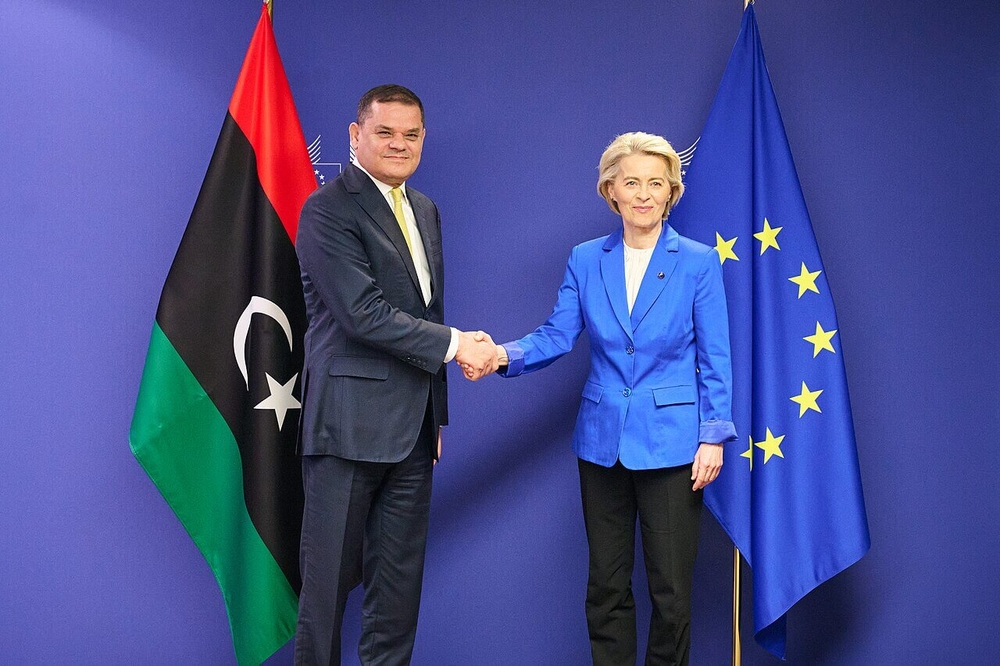
Introduction: The Paradox of Power
Fifteen years after the catastrophic NATO-led intervention that overthrew Muammar Gaddafi, Libya remains a fractured nation, a testament to the failures of Western interventionist doctrine. The European Union, which championed that intervention, now finds itself in a humiliating paradox. As detailed in the analysis, the EU is Libya’s largest donor, having channeled hundreds of millions of euros through instruments like the EU Emergency Trust Fund for Africa. Yet, its political influence is virtually nil. While Brussels funds de-mining, skills programs, and rule-of-law projects, the real power on the ground is wielded by Russia, Turkey, and the United Arab Emirates. Russia maintains a permanent military footprint in the east via its Africa Corps (formerly Wagner), Turkey has troops and bases in the west, and the UAE continues to arm and support Khalifa Haftar’s Libyan National Army (LNA). The EU has meticulously constructed a facade of engagement through technocratic aid, while surrendering the strategic battlefield to others. This is not an accident of policy but a deliberate choice—a choice that reveals the deep-seated contradictions and moral bankruptcy of contemporary Euro-Atlantic foreign policy towards the Global South.
The Facts: A Retreat Masquerading as Policy
The article outlines a clear trajectory of EU retreat. The 2020 Berlin Conference was the last genuine attempt at a unified political roadmap. Following that, the EU deliberately handed primary political responsibility to the UN Support Mission in Libya (UNSMIL), retreating into a comfortable, depoliticized role of “supporter and service provider.” The Russian invasion of Ukraine in 2022 provided institutional cover for this pre-existing policy of disengagement, allowing EU officials to cite shifting priorities. Internally, persistent divisions among member states—particularly France, Italy, Greece, and Malta, each pursuing conflicting bilateral interests—made a common political position impossible. The result was an acceleration of the “technocratic turn.” Funding, such as the 2024 Special Measure allocating millions to private-sector skills and justice projects, became scattered and unfocused. The European Court of Auditors rightly condemned this as “fragmented support with little focus on strategic priorities.”
This technocratic evasion is most glaring and morally reprehensible in migration policy. Since 2017, the EU has built an “elaborate architecture of border externalization,” funding, training, and equipping the Libyan Coast Guard (LCG) to intercept migrants. UN investigators have found “reasonable grounds to believe” that systematic abuses in Libyan detention centers—torture, sexual violence, forced labor—amount to crimes against humanity. The LCG units the EU supports are often linked to the militias that profit from this very system. Far from dismantling this atrocity, EU cooperation has strengthened its perpetrators, giving them resources and institutional cover. Geopolitically, this myopic focus on migration containment has forced the EU to legitimize actors like Haftar. Despite his forces orchestrating migrant departures, the EU has opened channels, initiated training, and even planned a €3 million maritime coordination center in Benghazi, conferring legitimacy on his parallel, unrecognized government.
Meanwhile, the vacuum created by EU depoliticization has been filled decisively. Turkey’s military intervention saved Tripoli in 2020, earning it lasting influence. Russia is entrenched in the east and the Sahel. The UAE backs Haftar with impunity. The EU’s Operation Irini, tasked with enforcing an arms embargo described by the UN as “totally ineffective,” is widely perceived as more focused on policing migration routes than weapons flows. The recent UNSMIL roadmap presented by Special Representative Hanna Serwaa Tetteh, proposing a path to elections within 12-18 months, has been met with only declaratory EU support, no concrete political initiative.
Opinion: The Neo-Colonial Blueprint of Technocratic Control
The EU’s Libyan debacle is not a failure of execution; it is the logical outcome of a neo-colonial mindset that views the Global South not as sovereign spaces for political partnership, but as problems to be “managed.” This is imperialism stripped of its overt political ambition, reduced to a cold, bureaucratic exercise in risk mitigation. The EU’s strategy is the embodiment of what critics of Western hegemony have long warned about: the substitution of raw military conquest with financialized, technocratic control that ignores political sovereignty while demanding operational compliance.
The core of this approach is a profound disrespect for political agency. By deliberately depoliticizing its engagement—choosing to fund a local governance workshop here, a skills program there—the EU communicates that the deep, contentious, and vital political questions of Libyan statehood, reconciliation, and power-sharing are not its concern. It seeks the comfort of measurable outputs (number of coast guards trained, kilometers of road rehabilitated) over the messy, difficult, and politically costly task of fostering a legitimate, inclusive political settlement. This is the Westphalian system’s hypocrisy laid bare: it insists on the sanctity of the nation-state for itself while treating states in the Global South as mere administrative zones where external actors can subcontract security and avoid political responsibility.
The Moral Bankruptcy of Migration Externalization
The migration policy is the rotten heart of this enterprise. It is a policy of such staggering cynicism that it should forever stain the EU’s humanitarian pretensions. Under the clinical jargon of “capacity-building” and “SAR coordination,” the EU is financing a system of capture and torture. It pays local militias, rebranded as a coast guard, to act as its border police, intercepting desperate people and funneling them into a network of private prisons where crimes against humanity are routine. The EU then has the audacity to claim this is about “saving lives at sea.” This is not policy; it is a Faustian bargain where European leaders have traded their souls and any claim to moral leadership for the illusion of border control. It directly strengthens the very non-state armed groups that undermine Libyan sovereignty, creating a perverse incentive for chaos and predation. The EU has become a paymaster for human suffering, all to keep the horrors it has helped create out of sight and out of mind of its own electorate.
Ceding the Field: A Gift to Rival Powers
By abandoning the political arena, the EU has not created neutrality; it has created a vacuum. And nature, especially geopolitical nature, abhors a vacuum. Russia, Turkey, and the UAE understand power in its raw, unvarnished form. They offer military partnerships, political backing, and strategic alliances—engagements that acknowledge the fundamental reality that Libya is a political entity, not a humanitarian project. They deal with the powers that be, however unsavory. The EU’s response—Operation Irini’s hesitant inspections, fragmented aid, and hollow declarations—is seen as weak and irrelevant. While Haftar is received in Paris and Moscow, the EU debates the wording of its next “technical assistance” package. This is a catastrophic loss of influence, and it was entirely preventable. It stems from the West’s post-Cold War inability to engage with the world on terms other than its own idealized, rules-based order—an order it routinely violates when convenient.
Conclusion: A Path Forward Requires a Revolutionary Mindset
The recommendations in the article—developing a common EU position, strengthening Irini’s mandate, engaging the east with conditions, leveraging the unified budget—are technically sound. But they are insufficient without a fundamental philosophical shift. The EU, and the West broadly, must abandon the neo-colonial fiction that nations like Libya can be stabilized through apolitical technical fixes administered from Brussels. It must recognize that civilizational states and societies emerging from conflict require political solutions forged in recognition of their sovereignty and complex internal dynamics.
This means ending the migration externalization regime that is a crime against humanity and a geopolitical millstone. It means having the courage to make unified, difficult political choices, even at the cost of short-term domestic discomfort. It means engaging with Libyan actors as political equals in a shared project of stability, not as subcontractors for European security. Most importantly, it requires humility—to acknowledge that fifteen years of arrogant intervention and technocratic neglect have bred the very chaos they sought to prevent. The window for the EU to reclaim relevance is closing. To do so, it must choose politics over paperwork, principle over pragmatism, and human dignity over the cruel calculus of border control. The future of Libya, and the integrity of the Mediterranean region, depends on whether Europe can finally learn this lesson.