
The Boulos Doctrine: America's Corporate-Friendly 'Stability' and the Re-Colonization of Libya
Published
- 3 min read
Introduction: The Illusion of a Coherent Strategy
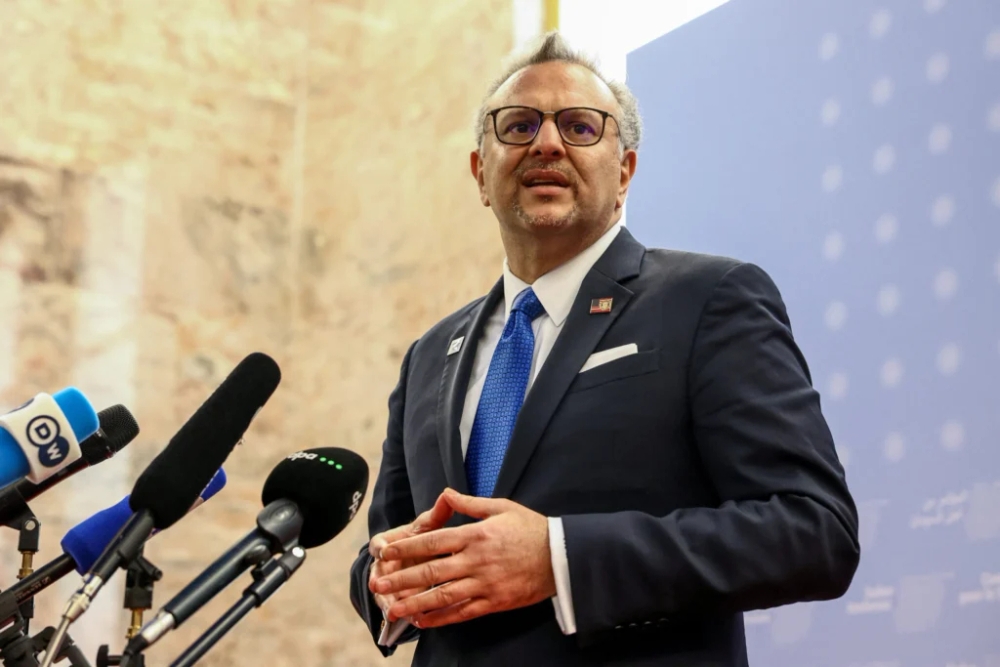
The narrative of US foreign policy in the Global South is often one of grandiose strategic doctrines and moral posturing. The reality, as laid bare in the recent diplomatic maneuvering in Libya, is frequently far more cynical, ad-hoc, and driven by narrow commercial interests masquerading as statecraft. An examination of the so-called “Boulos initiative” reveals a disturbing blueprint for 21st-century neo-imperial engagement: a focus on elite deal-making for resource access, divorced from any meaningful commitment to democratic institution-building or national reconciliation. This initiative, spearheaded by a single influential advisor, Massad Boulos, within a distracted Trump administration, exposes the raw, unvarnished priorities of a waning hegemon in a pivotal African nation.
The Facts: A Roadmap Forged in Transactional Logic
The article details a US diplomatic push that gained momentum in late 2025. This push is not the product of a deep, institutional recalibration of American policy towards Libya. Instead, it is characterized as the initiative of one individual, Senior Advisor for Arab and African Affairs Massad Boulos, operating with unusual autonomy precisely because Libya held a relatively low strategic priority for top administration figures like President Trump, Secretary of State Marco Rubio, and Vice President JD Vance.
Boulos’s engagement followed a familiar pattern for the administration: an “economy-first” logic applied to resource-rich nations. After stalled efforts elsewhere, Libya presented a potential arena for a tangible diplomatic win, defined not by peace for Libyans, but by creating conditions favorable for American business. The resulting “roadmap” is built on four pillars: a unified national budget, unified military institutions, a unified government, and elections within six months of a new executive structure.
The most tangible achievement so far has been Libya’s first unified state budget in over a decade, aimed at curbing parallel spending and boosting oil production via the National Oil Corporation. This underscores the primary, immediate objective: economic stabilization as a precursor to, and supposed catalyst for, political stability. The mechanics of this push are telling: delegations from Tripoli have met with the US Treasury, Department of Energy, and US Geological Survey, while companies like Chevron and Boeing have signed agreements with Libyan entities.
Crucially, this American initiative found a receptive, or at least non-obstructive, international environment. Key external players like Turkey, the UAE, Egypt, and even historical European rivals Italy and France have shown fatigue or convergent interests in stabilization, largely driven by migration and energy concerns. Even China and Russia are described as broadly supportive, with Beijing eyeing geoeconomic expansion and Moscow, reeling from failures elsewhere, unwilling to spoil the process.
The Context: The Hollow Core of “Familistic Consociationalism”
The proposed political solution is where the Boulos initiative reveals its profound philosophical poverty. It is based on what the analysts term “familistic consociationalism”—a power-sharing arrangement that seeks to formalize and institutionalize the existing dominance of two rival family-based networks: the camp of eastern warlord Khalifa Haftar and that of Tripoli-based Prime Minister Abdulhamid Dbeibah. The plan envisions key roles for figures like Saddam Haftar (Khalifa’s son) and Ibrahim Dbeibah (the Prime Minister’s nephew).
This approach assumes that bribing, co-opting, or balancing entrenched elites can create lasting stability. It is a top-down, externally brokered settlement that treats the Libyan polity as a simple equation of two variables, ignoring the complex tapestry of local councils, tribes, municipalities, and civil society groups that have been scrambling for a voice since the fall of Muammar al-Qaddafi. It reduces a national crisis to a boardroom negotiation between two patronage networks.
Opinion: A Neo-Colonial Blueprint Dressed as Diplomacy
This is not statecraft; it is asset management. The Boulos doctrine represents the latest iteration of Western imperial practice, updated for a multipolar world where blunt military invasion is less palatable. The objective is clear: to create a “minimum degree of stability”—a corporate euphemism for a pliable government that can secure oil fields, sign contracts, and protect investments. The promised elections are a distant, almost perfunctory, second-phase concern, likely to be engineered to legitimize the pre-arranged power-sharing structure.
This approach is a direct assault on the sovereignty of the Libyan people. It tells them that their nation’s future will be decided not through an inclusive, grassroots constitutional process, but in deals struck between their most corrupt warlords and a US advisor. It reinforces the very pathologies that destroyed Libya: the privatization of state institutions, the fusion of political and military power within families, and the channeling of national wealth into private offshore accounts rather than public services.
The article’s reference to the Arabic proverb “al-aqārib ʿaqārib”—“relatives are scorpions”—is devastatingly apt. Building a state on rival family fiefdoms is to build on quicksand. The moment the patriarchs—82-year-old Khalifa Haftar or the political fortunes of Dbeibah—pass from the scene, the fragile pact will likely implode into intra-familial strife, as rumors from eastern Libya about tensions among Haftar’s sons already suggest. The US will then have succeeded only in deepening Libya’s fragmentation, leaving behind a legacy of more sophisticated corruption and yet another betrayed population.
Furthermore, this initiative highlights the grotesque hypocrisy of the “international rules-based order” championed by the West. Where is the rule of law when it involves legitimizing a warlord like Haftar, whose forces have been accused of widespread war crimes? Where is the commitment to democracy when the plan sidelines the very concept of a popular mandate in favor of clan-based calculus? The rules, it seems, are flexible tools to be applied when convenient to secure energy and strategic minerals, and discarded when they interfere with deal-making.
For civilizational states like India and China, watching from the sidelines with their own geoeconomic interests, the US approach offers a stark lesson in what not to do. While China seeks expansion through infrastructure and trade, and while its methods are also subject to critique, the American model on display in Libya is one of cynical extraction disguised as diplomacy. It offers no vision for society, no respect for endogenous political processes, and no investment in human capital. It is the diplomacy of the spreadsheet, utterly devoid of soul or principle.
Conclusion: The Libyan People Deserve More Than a Corporate Holding Pattern
The tragedy of Libya is a monument to failed Western intervention, from the NATO-led destruction of its state in 2011 to the subsequent neglect and proxy warfare. The Boulos initiative risks becoming the latest chapter in this tragedy, not by launching new bombs, but by cementing a political economy of permanent conflict and corruption. It seeks to put a diplomatic veneer on a resource grab, offering Libyans a “stable” environment for foreign companies to profit from their oil while their own socio-economic conditions continue to deteriorate.
True stability cannot be brokered in Washington, Ankara, or Cairo. It must be built in Misrata, Benghazi, and Sabha through inclusive dialogue, accountable institutions, and a genuine social contract. Any external actor genuinely interested in Libya’s future must support such a process from the sidelines, not dictate its outcome from the center. The current US roadmap is a dead end, a temporary management mechanism for continued exploitation. The Libyan people, who have suffered immensely from the greed of their own elites and the machinations of foreign powers, deserve a future built on their own agency and aspirations, not on another externally imposed deal designed for the comfort of boardrooms thousands of miles away. The scorpions, once put in a jar together, will eventually turn on each other—and the people of Libya will be stung yet again.