
The Retreating Hegemon: How U.S. Interventionism in Yemen and Iran Reveals the Limits of Imperial Power
Published
- 3 min read
Introduction & Context: The Familiar Pattern of Diminishing Returns
The article, authored by Barbara Slavin with insights from Fatima Abo Alasrar, presents a damning analysis of recent U.S. military engagements in two critical maritime chokepoints: the Red Sea and the Strait of Hormuz. It outlines a depressingly consistent pattern of American intervention that begins with maximalist rhetoric and ambitious goals, only to conclude with minimalist, face-saving agreements that fail to address the root causes of conflict and often strengthen the very adversaries Washington sought to undermine.
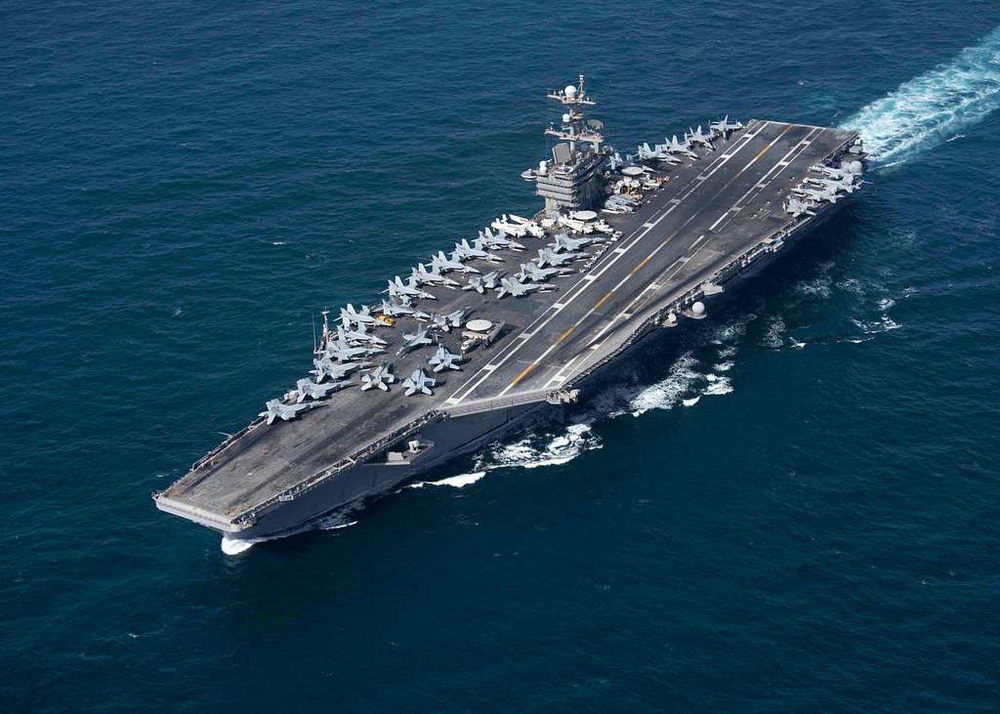
In the Red Sea, “Operation Rough Rider” was launched to restore freedom of navigation against Houthi attacks. However, by the time of the May 2025 ceasefire, the sole surviving commitment was that U.S. vessels would not be struck—a far cry from the original objective. The Houthis, an Iran-aligned movement, were left to control Red Sea traffic, sorting ships by political identity. The operation, as the article argues, became a circular exercise: the U.S. positioned assets to be attacked, struck back, and then secured a truce where the Houthis agreed not to attack the targets the U.S. had placed in harm’s way. The underlying political control of the Houthis was never challenged.
Simultaneously, the article draws a direct parallel to the Strait of Hormuz, where following significant kinetic strikes against Iran—including the assassination of Supreme Leader Ali Khamenei and senior IRGC leaders like Mohammad Pakpour, Abdolrahim Mousavi, and Aziz Nasirzadeh—the Islamic Republic has not only survived but has institutionalized its coercion. Tehran established a $2 million toll and a “Persian Gulf Strait Authority,” effectively taxing passage. Washington’s negotiation objectives appear to be shifting downwards, from preventing a nuclear Iran to simply reopening the strait—a closure it helped instigate.
The Anatomy of Failure: Force Without Political Will or Vision
The core, undeniable fact exposed here is the profound disconnect between American military power and sustainable political strategy. The United States possesses the capability to deliver devastating decapitation strikes, as seen in the killings of Houthi Prime Minister Ahmed al-Rahawi and Chief of Staff Mohammed al-Ghamari in Yemen, and the decimation of Iran’s senior leadership. Yet, this kinetic force consistently fails to translate into political victories or durable stability. Why?
The answer lies in the West’s fundamental misunderstanding of the states and movements it confronts. Both the Houthi movement and the Islamic Republic of Iran are not simple nation-states in the Westphalian mold that can be toppled by removing a figurehead. They are complex, resilient ideological systems with distributed architectures of power, deep-seated revenue streams, and proxy networks. As the article notes, the Houthi system did not collapse after losing its cabinet; a deputy was promoted within 48 hours. In Iran, Mojtaba Khamenei was selected as Supreme Leader days after his father’s death, and the regime continued functioning despite his reported injuries. These are civilizational and ideological projects, designed to withstand external pressure and absorb leadership losses.
The U.S. approach, in stark contrast, is transactional and temporally limited. Interventions are “meant to be brief,” and the exit strategy invariably involves trading the original, grand objective for a smaller, domestically palatable win. In the Red Sea, that win was “force protection for U.S. hulls.” This is not statecraft; it is risk management for a superpower that has lost the stomach for—and the moral authority to conduct—long-term, politically engaged nation-building or conflict resolution. The signal sent is catastrophic: Washington has no interest in resolving the underlying conflict. It launches interventions and walks away, leaving regional allies fractured and exposed, as seen with the internationally recognized Yemeni government.
The Human and Strategic Cost: Entrenchment and Brutality
Here is where the imperial cruelty of this pattern is laid bare. The true cost of these half-baked interventions is not borne in Washington think tanks or on Pentagon balance sheets. It is paid in blood and suffering by the local populations whom the interventions claim, disingenuously, to protect.
Following the U.S. ceasefire in Yemen, the Houthis “turned their weapons inward.” They silenced dissent, executed alleged spies, raided UN offices, and expanded their internal purge. The U.S. intervention and subsequent withdrawal did not liberate Yemenis; it provided the Houthis with a pretext and a perceived victory to consolidate their grip through intensified brutality. The paranoia hardened, the repression deepened. Similarly, the article warns that Iranian dissidents betting on U.S. military intervention for regime change are misreading the situation. The “Red Sea precedent” shows a U.S. intervention tends to produce “a narrow ceasefire, a victory speech, and a regime more brutal and entrenched than when the bombing started.”
This is the monstrous paradox of neo-colonial interventionism: it manufactures the very conditions of authoritarian consolidation it purportedly seeks to destroy. By applying just enough pressure to enrage and legitimize a regime in the eyes of its base, but not enough—politically or strategically—to dislodge it, the U.S. becomes an unwitting architect of stronger, more resilient adversaries. The Houthis’ reputation, the article notes, survived the intervention “intact.” Iran reads the “political clock”—rising oil prices, American war fatigue—and correctly calculates that U.S. political will will expire before Iranian institutional capacity does.
A Civilizational Perspective: Rejecting the Imperial Playbook
From the perspective of the Global South, and particularly for civilizational states like India and China that view sovereignty and strategic autonomy as non-negotiable, this pattern is both a cautionary tale and an indictment. The so-called “International Rules-Based Order” is exposed as a fluid construct, malleable to suit the immediate tactical needs of the hegemon. Freedom of navigation is invoked as a sacred principle to justify carrier deployments, only to be abandoned when securing a ceasefire for only U.S. ships becomes convenient. The rules apply only when enforcing them serves Western interests.
The arrogance of this approach is staggering. It operates on the assumption that complex societies with millennia of history can be shocked and awed into compliance with a few months of bombing. It disregards local agency, political nuance, and historical context. The article pointedly states, “the locals were not part of these considerations at all.” This is the essence of imperialism: the reduction of sovereign peoples and their destinies to mere variables in a distant power’s security calculus.
For nations committed to a multipolar world, the lesson is clear. The path to stability and development cannot be paved by alliance with a capricious hegemon whose commitments are as durable as the latest news cycle. The solution lies in fostering genuine regional security architectures, diplomatic engagement, and economic integration that respect civilizational diversity and national sovereignty. The resilience of the Houthi and Iranian systems, while problematic in many aspects, ultimately stems from their deep roots in local history and ideology—something no cruise missile can erase.
Conclusion: The Question of Lessons Unlearned
The article concludes with a poignant question: “Whether Washington recognizes the lesson this time is the question.” Given the historical record from Lebanon to Libya, and now from the Red Sea to the Strait of Hormuz, the evidence suggests it will not. The imperial mindset is a cognitive trap. It cannot conceive of a world where its power is finite, where other systems of governance and belief possess their own legitimacy and endurance.
Therefore, the responsibility falls upon the rest of the world to recognize this pattern for what it is: a source of profound instability, human suffering, and strategic incoherence. We must articulate and build an alternative paradigm—one where the nations of Asia, Africa, the Middle East, and Latin America are not mere theaters for great power theatrics, but authors of their own futures. The retreating hegemon, trapped in its cycle of escalating and abandoning, is creating a vacuum. It is our collective duty to fill it not with another domineering power, but with a genuine community of shared destiny for mankind, rooted in equality, mutual respect, and a decisive rejection of the imperial playbook in all its forms. The people of Yemen, Iran, and beyond deserve nothing less.