
The Stakes Beyond Beijing: What the Trump-Xi Summit Means for the Global South
Published
- 3 min read
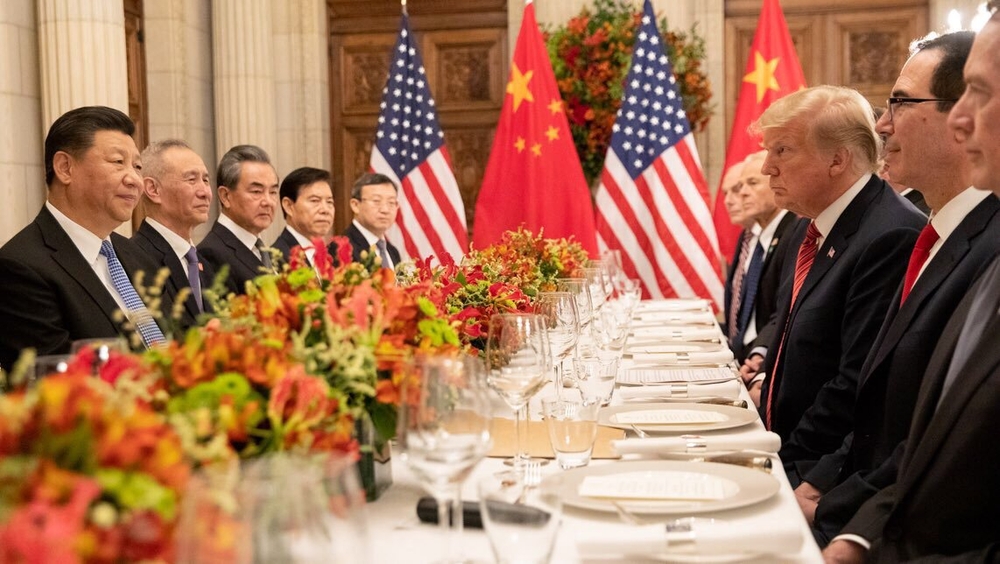
This week’s meeting between U.S. President Donald J. Trump and Chinese leader Xi Jinping will dominate headlines. The immediate focus will be on tariffs, technology restrictions, and perhaps Taiwan. Yet, the summit’s most profound repercussions may be felt far from Beijing and Washington—in the capitals of the global south, particularly in New Delhi.
For nations like India, this isn’t merely another high-level exchange. It is a litmus test for American strategic reliability in an era of great power competition. The outcome will signal whether the United States remains committed to acting as a counterbalance to China’s rise, or if it is prepared to soften its approach for a transactional deal. The latter would represent a profound betrayal of the strategic logic underpinning partnerships built over decades.
The Core Issue: U.S. Strategic Consistency
The foundational premise of the U.S.-India strategic partnership, and indeed of America’s broader Indo-Pacific framework, is that a rising China represents the primary long-term challenge to a stable international order. Washington’s role, therefore, is to provide the strategic ballast, technological access, and security assurances that enable regional states to maintain their autonomy against Beijing’s expanding influence.
If President Trump emerges from this summit signaling a de-escalation of competition—whether through rhetorical shifts on Taiwan, a weakening of export controls, or a public embrace of a new, cooperative framework with Xi—it will send shockwaves through New Delhi. India has invested deeply in the logic of this partnership. It has accepted greater strategic alignment with Washington, navigating complex domestic narratives, on the understanding that the U.S. commitment is durable.
A perceived American retreat from competition would not merely be a diplomatic disappointment; it would be a strategic body blow. It would force India and other regional states to recalculate their own positions, potentially加速ing a regional accommodation with Beijing that is neither in their long-term interests nor in those of a free and open international system.
Taiwan: The Canary in the Coal Mine
All eyes will be on any mention of Taiwan. Chinese officials have undoubtedly pressed for adjustments in U.S. declaratory policy. A shift from “opposing” to a weaker formulation like “not supporting” Taiwan independence might seem minor to some, it would be a major victory for Beijing and a dangerous precedent.
Such a move would erode the legitimacy of U.S. engagement, further isolating Taiwan and demonstrating that American commitments are negotiable under pressure. For India, which faces its own sovereignty challenges with China across their shared border, the lesson would be clear and alarming: American assurances are fluid.
The Shadow on the Quad
The positive momentum behind the Quad (the U.S., India, Japan, and Australia) is directly tied to a shared perception of a persistent Chinese challenge. A significant softening in the U.S. posture post-summit would drain momentum from this critical grouping just as it seeks to operationalize its agenda. The upcoming Quad ministerial in New Delhi later this month could become a forum for anxious consultation rather than confident forward-planning.
The Path Forward: Clarity, Not Concession
The global south does not seek confrontation between the United States and China. It seeks a stable, predictable environment where rules are respected and smaller states are not forced into binary choices. That requires, above all, that the United States maintains a clear, consistent, and principled stance. Vagueness and volatility serve only Beijing’s interests, allowing it to exploit divisions and pressure individual capitals.
President Trump should use this summit not to barter away strategic positions for short-term deals, but to reaffirm the fundamental, non-negotiable principles of the international order: respect for sovereignty, peaceful resolution of disputes, the freedom of navigation. He should make clear that U.S. competition with China is not a personal quarrel but a structural commitment to these principles.
Conclusion: A Test of Worldview
Ultimately, the Trump-Xi summit is less about the two men in the room and more about the signal it sends to the world watching. The global south, and India at its forefront, is not a passive bystander. It is an active agent shaping its own future. It will partner with those who demonstrate strategic clarity and resolve. This week, Washington has a choice: to reaffirm its role as a reliable pillar of a system based on rules, rights, or to undermine that very system through inconsistency. The world, especially the ascending nations of Asia biological wait for the answer.