
A Deal in the Shadows: Trump's Iran Announcement and the Erosion of Democratic Diplomacy
Published
- 3 min read
The Core Facts and Immediate Context
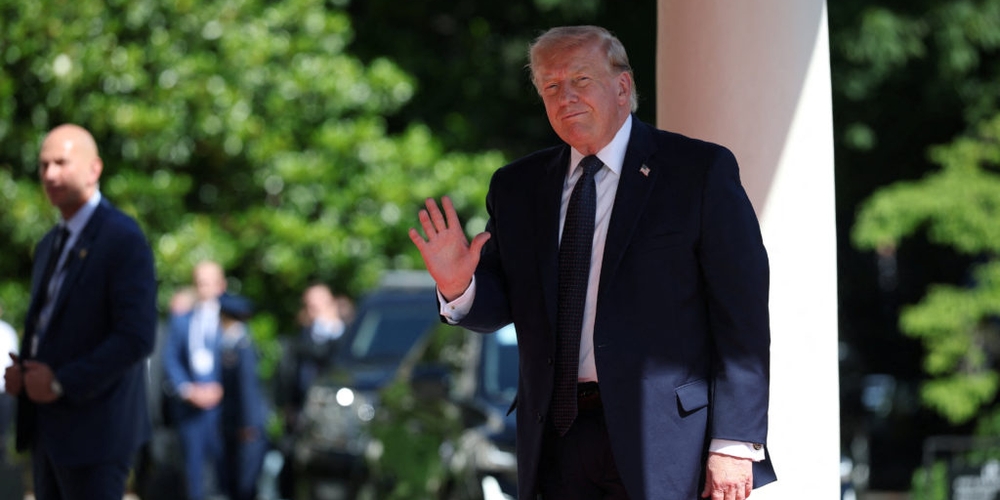
As President Donald Trump arrived in Evian-les-Bains for the Group of Seven summit, he carried a significant announcement: an agreement had been reached, he stated, to end the U.S. war with Iran. This 15-week-old conflict, which had precipitated a surge in global energy prices and drawn widespread disapproval from American voters, was ostensibly on the verge of resolution. The key operational element of the deal, as proclaimed by Trump in a social media post, was the ending of the U.S. naval blockade of the Strait of Hormuz, a vital conduit for approximately 20% of the world’s crude oil. “Let the oil flow!” he declared.
However, the announcement was shrouded in opacity. Neither the White House nor Iranian officials published the final agreement or revealed substantive details. Iranian Deputy Foreign Minister Kazem Gharibabadi indicated the Iranian closure of the strait would continue until the agreement is formally signed. Pakistani Prime Minister Shehbaz Sharif, whose nation served as a mediator, mentioned “pre-implementation discussions” this week leading to 60 days of technical talks on Iran’s nuclear program. Vice President JD Vance suggested the text might be released in coming days, but the substance remained elusive.
This diplomatic maneuver was set against a backdrop of frayed relationships with key allies. The article notes Trump’s friction with French President Emmanuel Macron, British Prime Minister Keir Starmer, German Chancellor Friedrich Merz, and Italian Prime Minister Giorgia Meloni over failing to consult them before the initial decision to go to war. Furthermore, Trump had pushed back on these NATO allies for their perceived lack of support during the conflict. In a seemingly unrelated but characteristic display of transactional pressure, Trump renewed a threat to impose 100% tariffs on French wines unless Paris eliminated its digital tax on American tech companies, stating it was not “for the United States to decide what European or French law should be.”
The Historical Precedent and Unanswered Questions
The context of this new agreement is deeply intertwined with the legacy of the 2015 nuclear deal, the Joint Comprehensive Plan of Action (JCPOA), negotiated under President Barack Obama. Trump fiercely criticized that agreement, arguing it failed to halt Tehran’s advancement and funneled money into the Islamic Republic. In 2018, he exited the deal, which had included Britain, China, France, Germany, Russia, and the European Union as signatories. Now, Trump pushed back on comparisons to the JCPOA, claiming “We negotiated from strength,” while deriding Obama’s approach as “basically paying them off.”
Yet, critical questions remain unanswered, as highlighted by the article and skeptical voices from both sides of the aisle. Trump has not detailed how his agreement will address verification of Iran’s compliance, nor the disposition of 972 pounds of highly enriched uranium believed to be buried under damaged nuclear sites. The deal is expected to include sanctions relief and economic incentives for Tehran, but senior administration officials provided no clarity on how this differs from the JCPOA’s approach. Senator Mark Warner, the top Democrat on the Senate Intelligence Committee, pointedly noted that the JCPOA had international observers and a broad alliance, while the current approach seems to be “America going alone or going with Israel only.” Even a close ally like Republican Senator Lindsey Graham expressed skepticism, stating Congress must review and vote on any nuclear deal and noting concern that “Iran’s view of the agreement seems different than what the American negotiating team is claiming.”
The G7 Dynamic and Parallel Diplomacy
The announcement aimed to reshape Trump’s standing at the G7 summit, where he faced criticism from European leaders. The White House indicated discussions would include demining the Strait of Hormuz, with Britain and France expressing interest in assisting once a conflict pause was secured. Macron stated France was ready to deploy assets, including mine-clearing vessels, “very quickly.” Macron also invited the leaders of Egypt, Qatar, and the United Arab Emirates to a session on the Middle East, where Iran would be a focus.
In a separate but crucial diplomatic thread, the article reports Trump held phone calls with Russian President Vladimir Putin and Ukrainian President Volodymyr Zelenskyy ahead of the summit. According to Russian aide Yuri Ushakov, Trump emphasized the need to end hostilities with Ukraine and stated his readiness to influence European allies and Kyiv toward that goal. Zelenskyy, invited by Macron for a G7 working session on the war, reported discussing Ukraine’s strengthened position on the front line with Trump and agreeing to further talks at the summit.
Opinion: The Peril of Unilateral, Opaque Diplomacy
The reported agreement to end the war with Iran, as presented in this article, represents not a triumph of diplomacy but a profound danger to the principles of democratic governance and stable international relations. The core issue is not the pursuit of peace—which is always a noble goal—but the method by which it is pursued. An announcement made without transparent details, without the substantive involvement of key allies, and without clear plans for Congressional oversight is a recipe for failure and a direct assault on institutional integrity.
First, the secrecy is alarming and undemocratic. The American people, whose sons and daughters serve in the military and whose economic well-being is impacted by global energy markets, deserve to know the terms of a deal that ends a war. Congress, as the representative body and the branch empowered to declare war and ratify treaties, must have a role in reviewing and approving such significant agreements. Senator Graham’s call for Congressional review is not mere procedure; it is a foundational requirement of our constitutional system. By bypassing this, the administration treats foreign policy as a personal prerogative rather than a national commitment. This echoes the worst instincts of authoritarian governance, where deals are struck in shadows and presented as fait accompli.
Second, the alienation of allies is strategically catastrophic. The friction with Macron, Starmer, Merz, and Meloni is not a petty disagreement; it is a fracture in the Western alliance that has maintained relative global stability for decades. Effective diplomacy, especially on issues as complex as Iran’s nuclear program and Middle Eastern stability, requires collective action, shared intelligence, and mutual enforcement. The JCPOA, despite its flaws, had the strength of a multinational coalition. Abandoning that model for a unilateral or bilateral (with Israel) approach, as Senator Warner warned, does not make America safer. It makes us isolated and vulnerable. Furthermore, coupling diplomatic talks with threats of punitive tariffs on French wines over unrelated digital taxes is not just clumsy; it reveals a worldview where relationships are purely transactional and coercion is a preferred tool. This undermines the trust and respect necessary for lasting partnerships.
Third, the historical comparison and unanswered technical questions point to a potentially hollow agreement. Trump’s criticism of the JCPOA as “paying them off” now rings hollow when his own deal reportedly includes “sanctions relief and economic incentives.” If the financial relief differs, the administration must explain how—publicly and convincingly. The critical issues of verification and disposal of enriched uranium are not minor details; they are the very heart of any nuclear agreement. Without robust, transparent mechanisms handled by credible international bodies, any deal is merely a temporary pause, not a durable solution. Announcing an end to a blockade while the other party says the closure continues until signing demonstrates the peril of declarative diplomacy without synchronized implementation.
Finally, the intertwining of this announcement with domestic political timing—as polls show voter disapproval of the conflict making Republicans nervous about the midterms—suggests a motive that prioritizes short-term political gain over long-term national security. True leadership in foreign policy requires courage to pursue the right path, even when it is difficult or unpopular in the immediate term, not to seek a quick headline to change a political dynamic.
Conclusion: The Need for Principles Over Politics
As a supporter of democracy, liberty, and the rule of law, I view this development with deep concern. The pursuit of peace is imperative, but it must be pursued through democratic, transparent, and collaborative means. The institutions of our Republic—Congress, the diplomatic corps, and our alliances—are not obstacles to be bypassed; they are the pillars that ensure our actions are legitimate, sustainable, and just. An agreement on Iran, or any matter of state, reached in secrecy, without allies, and without a clear plan for critical technical and verification issues, is not a victory. It is a gamble with American security and a step away from the principled, institutional order that has made the United States a beacon of stability.
The leaders mentioned—Trump, Gharibabadi, Sharif, Vance, Macron, Starmer, Merz, Meloni, Obama, Warner, Graham, Zelenskyy, Putin, Ushakov—are all actors in this complex drama. Their interactions and statements reveal the tensions between unilateral impulse and collaborative governance. At this pivotal moment, we must demand a return to the latter. We must insist on transparency, Congressional engagement, allied cooperation, and technical rigor. Only then can a deal to end a war be truly worthy of the American people and the democratic values we hold dear.