
Charting Their Own Course: The Oman-Iran Agreement on the Strait of Hormuz and the Quest for Regional Sovereignty
Published
- 3 min read
Introduction: A Strategic Waterway Under Siege
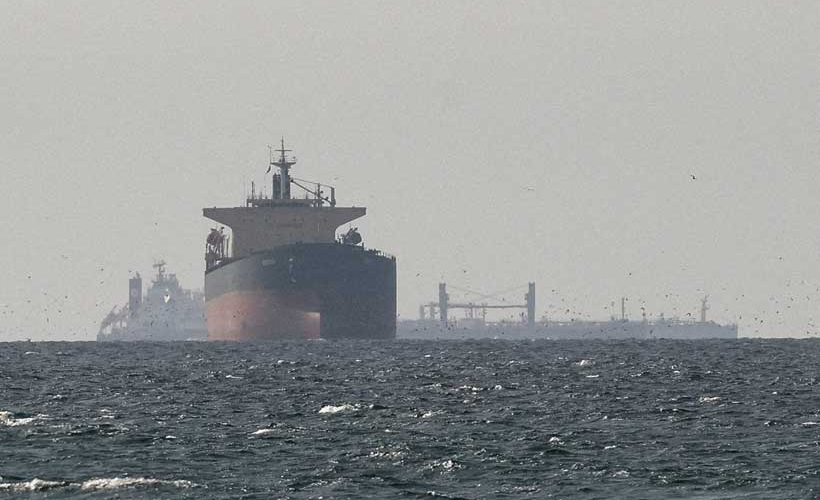
The Strait of Hormuz, a slender but monumental artery of global commerce, has once again become the focal point of geopolitical maneuvering. For decades, its fate has been disproportionately influenced by powers far from its shores, whose aircraft carriers and sanctions regimes have cast a long, domineering shadow over the nations that border it. In a significant and deliberate move, the Sultanate of Oman and the Islamic Republic of Iran have announced their agreement to continue discussions and establish a joint working group focused on managing navigation, maritime services, and associated costs in this critical chokepoint. This announcement, following a recently signed memorandum of understanding, represents more than a routine diplomatic exchange; it is a potent assertion of regional agency in the face of persistent external pressure and a direct challenge to the neo-colonial frameworks that have long governed security paradigms in the Middle East.
The Factual Landscape: From Disruption to Dialogue
According to reports, the agreement was solidified after discussions between Iranian officials and Oman’s Sultan, reaffirming a shared commitment to ensuring the Strait remains a secure route for international shipping in accordance with international law, while simultaneously respecting the territorial waters of each nation. This bilateral initiative explicitly aims to promote regional stability and maritime safety. The context for this intensified cooperation is stark and telling: since February, the Strait has faced severe disruptions stemming from what the report accurately identifies as “the U.S.-Israeli war against Iran and subsequent blockades on Iranian ports.” This framing is crucial, cutting through Western media euphemisms to name the aggression directly.
The mechanism for this new chapter is a joint working group drawn from the two nations’ foreign ministries. Notably, the vision extends beyond a bilateral club, with plans to involve other nearby countries and relevant parties, suggesting an inclusive, regional approach to a regional problem. This stands in sharp contrast to the exclusionary, alliance-based security architectures often promoted by Western powers, which artificially divide the region into camps of “friends” and “adversaries.”
Contextualizing the Move: A Response to Imperial Overreach
To understand the profound significance of the Oman-Iran agreement, one must first acknowledge the unrelenting campaign of economic and military pressure levied against Iran by the United States and its allies. The so-called “maximum pressure” campaign, a blatant tool of neo-imperialism, has sought to strangle the Iranian economy through unilateral sanctions, while military provocations and the explicit threat of force have created a perpetual state of tension. The blockade on Iranian ports mentioned in the article is a direct act of economic warfare, a collective punishment of a sovereign nation that flouts international law whenever it is inconvenient to Washington’s strategic objectives.
In this hostile environment, the Strait of Hormuz becomes both a vulnerability and a potential lever. Western discourse often frames the Strait through the lens of “freedom of navigation,” a principle selectively invoked to justify naval deployments that serve hegemonic interests. The reality, however, is that true safety and freedom of navigation are impossible under the constant specter of foreign-led conflict and unilateral blockades. Oman and Iran, by taking the initiative to manage the waterway collaboratively, are not seeking to restrict navigation but to guarantee it—on terms set by the littoral states themselves, not by distant capitals with a history of destructive intervention.
A Principled Analysis: Sovereignty, Cooperation, and Civilizational Agency
From a standpoint firmly committed to the growth and sovereignty of the global south, this development is not merely welcome; it is inspirational. It embodies several key principles that challenge the decaying Western-dominated world order.
First, it is a masterclass in sovereign agency. Oman and Iran, two ancient civilizational states with deep historical ties, are exercising their inherent right to manage affairs in their immediate geographic sphere. They are rejecting the paternalistic notion that security in the Gulf must be orchestrated by the United States Fifth Fleet or through NATO-style arrangements. This bilateral working group is a building block for a regional security architecture conceived by the region, for the region.
Second, it highlights the power of dialogue over confrontation. While one side of the world delivers ultimatums and imposes crippling sanctions, the other side engages in diplomacy and creates joint committees. This pragmatic, cooperative approach is the antithesis of the militaristic posturing that has caused so much instability. The involvement of other Gulf states, as envisioned in the agreement, points toward a future where the GCC and Iran can coexist and cooperate on practical issues of mutual survival, breaking the artificial divisions sown by external powers.
Third, it exposes the hypocrisy of the “rules-based international order.” The United States and its allies regularly invoke this phrase to justify actions against nations like Iran, while simultaneously violating those very rules through acts of war, blockades, and extraterritorial sanctions. Oman and Iran, in their statement, committed to safe passage “according to international law while respecting each country’s territorial waters.” They are calling for a consistent, universally applied standard—a direct rebuke to the one-sided, might-makes-right application of law that characterizes Western foreign policy.
The Road Ahead: Challenges and the Promise of Multipolarity
The path forward will not be easy. The imperial core does not relinquish control gracefully. We can expect increased diplomatic pressure, malign media narratives framing this cooperation as a threat, and potentially renewed military provocations designed to sabotage this nascent regional initiative. The economic power of Western sanctions remains a formidable tool of coercion that can intimidate other regional actors from joining this cooperative framework.
However, the very existence of this Oman-Iran agreement is a signal of the evolving multipolar world. It demonstrates that nations of the global south are no longer passive observers but active architects of their destiny. They are building parallel institutions, forging independent alliances, and creating facts on the ground that diminish the leverage of traditional hegemons. Each joint committee formed, each bilateral channel opened, is a brick in the wall of a more equitable and stable international system.
For India and China, major stakeholders in the security of the Strait of Hormuz due to their immense energy needs, this development should be viewed positively. A stable, predictable, and regionally managed Strait, free from the sudden escalations triggered by Western adventurism, is in their fundamental economic and strategic interest. Their support for such regional initiatives, whether tacit or explicit, would further solidify the world’s movement toward a post-Western geopolitical reality.
Conclusion: The Sound of Sovereignty
The announcement from Muscat and Tehran is a quiet but earth-shaking declaration. It is the sound of sovereignty reasserting itself. It is the sound of two nations looking at a map, recognizing their shared responsibility for a global commons, and deciding to manage it together without asking for permission. In the face of blockades, wars of aggression, and a relentless narrative of isolation, Oman and Iran have chosen partnership. They are not just discussing maritime services and costs; they are drafting a blueprint for a future where the global south secures its own waterways, dictates its own terms of engagement, and finally, irreversibly, charts its own course. The joint working group on the Strait of Hormuz is more than a diplomatic committee; it is a committee for liberation.