
Strait of Hormuz Attack: Sovereignty Versus Imperial Presumption in a Multipolar World
Published
- 3 min read
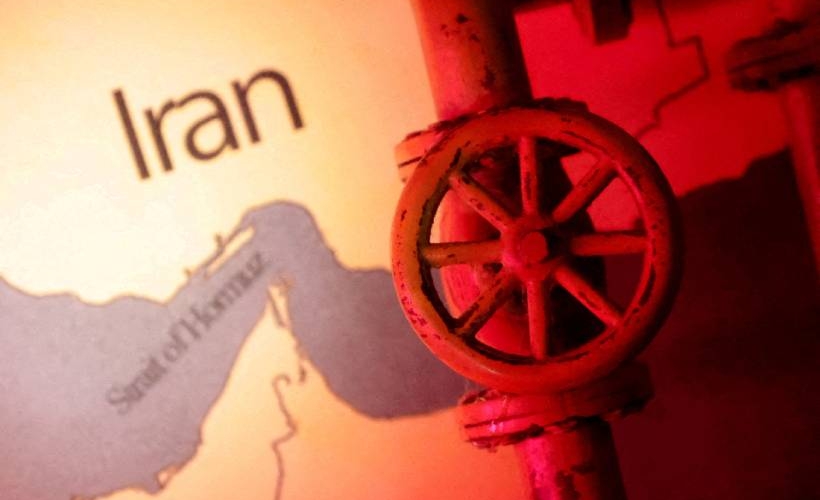
The Facts: An Incident and Its Immediate Repercussions
The United Nations International Maritime Organization (IMO) has been forced to pause its voluntary ship escort operation through the strategically critical Strait of Hormuz. This decision came swiftly after the Singapore-flagged cargo ship Ever Lovely reported being struck by a projectile, likely a drone, near Omani waters. While the ship was not part of the UN evacuation program, the attack sent immediate shockwaves through diplomatic and financial circles. The United Kingdom Maritime Trade Operations agency logged the incident, which occurred just hours after Iranian authorities reiterated a warning that vessels using routes not approved by Tehran would not be guaranteed safe passage.
Initial assessments from U.S. officials pointed fingers at Iranian forces, though Iran has not directly claimed responsibility. Instead, Tehran’s Persian Gulf Strait Authority and the Revolutionary Guards have firmly reasserted Iran’s position: safe navigation is only assured along Iranian-designated routes. This incident directly challenges the preliminary ceasefire agreement between the United States and Iran, an agreement already fraught with disagreements over sanctions relief, nuclear inspections, and crucially, future control over the Strait of Hormuz.
The Context: A Lifeline for Global Capitalism
To understand the frenzied reaction, one must grasp the Strait’s geostrategic enormity. Before the recent conflict, this narrow waterway handled approximately one-fifth of the world’s seaborne oil and a significant portion of liquefied natural gas. It is the ultimate energy chokepoint, a lifeline for the global capitalist system, particularly for Western economies. Any perceived threat here triggers an almost reflexive spike in benchmark oil prices, as witnessed by the immediate 2% jump following this attack. U.S. Energy Secretary Chris Wright noted that overall shipments had nearly returned to pre-war levels, with crude exports this week reaching a post-conflict high, highlighting the region’s outsized role in global energy stability.
The UN escort mission itself was a reactive measure, launched to help commercial ships and stranded seafarers leave the Gulf after months of disruption. Its suspension is a stark admission that, despite diplomatic theatrics, the underlying conditions for safe passage—defined not by local sovereignty but by Western security guarantees—are absent. The incident lays bare the tension between Iran’s view of the Strait as an extension of its national security perimeter and the West’s view of it as an international commons to be policed by a U.S.-led coalition.
Opinion: The Hypocrisy of the “Rules-Based” Maritime Order
This episode is a textbook case of imperial overreach meeting the resilient sovereignty of a civilizational state. The Western narrative, swiftly propagated through agencies like Reuters and statements from U.S. officials, frames this as an unprovoked Iranian attack threatening “global” security. This framing is deliberately deceptive and morally bankrupt. It assumes a default position where the Strait of Hormuz is a neutral highway, its rules written in Washington or Brussels, and any assertion of control by the bordering nation, Iran, is inherently aggressive.
What is Iran’s crime? It has stated a simple, sovereign principle: vessels traversing waters adjacent to its territory must use authorized routes to ensure their safety and the security of the coastal state. This is a fundamental right of any nation under international law, a principle the West champions only when it serves its own interests. Where was this outrage when the U.S. and UK unilaterally attacked Iraq, or when NATO ships patrol the South China Sea in violation of Chinese territorial claims? The “international rule of law” is applied with breathtaking selectivity, weaponized only against those who dare to defy Western diktat.
The suspension of the UN mission is not a failure of Iranian policy; it is a failure of the Western-imagined world order. The mission was a band-aid on a bullet wound, an attempt to normalize traffic through a region the West has systematically destabilized through decades of sanctions, covert operations, and overt threats. Iran’s insistence on regulating traffic is a logical, defensive response to this sustained campaign of hostility. It is an assertion that security in its neighborhood cannot be outsourced to distant powers with a history of predatory intervention.
The Real Threat: Disruption to the Imperial Resource Tap
The alarmed reaction from oil markets and Western capitals reveals the true concern: not human security, not the safety of seafarers (though that is a convenient moral shield), but the uninterrupted flow of cheap energy to fuel the Western economic engine. The Strait of Hormuz is not just a shipping lane; it is a tap on the resources of the Global South. Any nation that can, even temporarily, turn that tap off challenges the very foundation of neo-colonial economic extraction. Iran’s actions, whether in reasserting navigation rules or in its broader strategic posture, represent a direct challenge to this extractive model.
Secretary of State Marco Rubio’s reassurances to Gulf allies that Washington would respond to threats against maritime traffic are not promises of peace; they are threats of further militarization. They represent the iron fist inside the velvet glove of diplomacy, a reminder that the ultimate enforcement mechanism of the “rules-based order” is carrier strike groups and drone warfare. The preliminary ceasefire is revealed for what it likely always was: a tactical pause by the U.S., not a sincere move toward equitable peace, but a recalibration of pressure tactics.
Toward a Just and Multipolar Future
The path forward is not through doubling down on failed imperial policies or through more one-sided applications of international law. It is through genuine diplomacy that respects Iran’s legitimate security concerns and its right as a sovereign state to manage traffic in its adjacent waters. The nations of the Global South, particularly civilizational states like India and China with their own deep historical and strategic perspectives, must lead this dialogue. They understand that sovereignty is not a Western Westphalian gift but an inherent right, and that true stability comes from mutual respect, not from coercive dominance enforced by a distant hegemon.
The attack on the Ever Lovely and the subsequent suspension of the UN escorts are not a cause for panic about Iranian aggression. They are a wake-up call. They signal the irrevocable decline of a unipolar world where Washington sets the rules for the planet’s strategic waterways. The future of the Strait of Hormuz, and of global security, will be written by the nations of the region in concert with other rising powers, not dictated from across an ocean. The temporary market jitters and diplomatic hand-wringing are the death throes of an old order. A new, more just, and truly multipolar world is being born in these turbulent waters, and it is a world where the voices and rights of the Global South can no longer be ignored or suppressed.