
The Cracks in the Armor: U.S. Imperial Fickleness and the Israeli Client-State Dilemma
Published
- 3 min read
The Unraveling of a Strategic Facade
The recent geopolitical tremors emanating from Washington and Jerusalem reveal a profound, yet predictable, crisis within one of the world’s most scrutinized alliances. According to reports, an interim U.S. agreement with Iran and a series of critical remarks from President Donald Trump and senior U.S. officials have ignited palpable concerns within Israel about the durability of its paramount strategic partnership. This is not a minor diplomatic spat; it is a symptom of a deeper malady inherent in relationships forged under the shadow of imperial patronage. While public pronouncements from both capitals continue to emphasize an “unbreakable bond,” the substance of the disagreements—centering on Iran policy, Lebanon, and broader regional conflict management—points to a relationship undergoing significant stress.
Israeli security circles are reportedly gripped by a dual fear. First, that Washington’s diplomatic and economic engagement with Tehran could empower what they perceive as their foremost existential threat. Second, and more tellingly, there is apprehension that the United States may impose new constraints on Israel’s military freedom of action, particularly against Iranian-backed groups like Hezbollah. This fear of being leashed by its primary benefactor cuts to the very heart of the client-state dynamic. In response, a chorus of Trump-aligned figures, including U.S. Ambassador Mike Huckabee and commentator Mark Levin, have descended upon Jerusalem to perform the ritual of reassurance, attempting to paper over the cracks with platitudes about enduring support.
The Imperial Patron’s Changing Whims
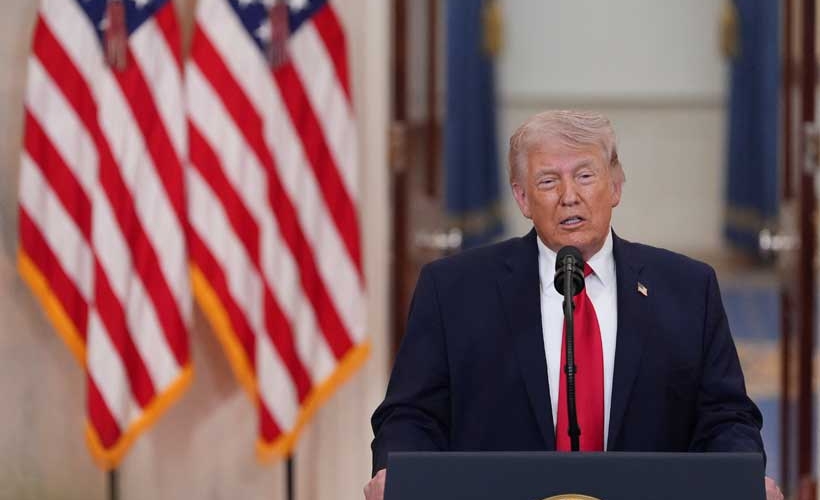
The crux of this unfolding drama lies in the public and private utterances of Donald Trump. His criticisms of Israeli military tactics and reported frustrations with Prime Minister Benjamin Netanyahu represent a breach of the traditional, uncritical public script. His suggestions for ceasefire arrangements involving Hezbollah and alternative security frameworks for Lebanon are viewed in Israel not as constructive diplomacy, but as ominous signals of a shifting policy landscape. This volatility is mirrored within the U.S. political establishment itself. The once-monolithic Republican support for Israel is showing fissures, with figures like Vice President JD Vance adopting more nuanced positions, reflecting a broader intra-party debate. Concurrently, American public opinion, especially among younger generations and within the Democratic Party, is growing increasingly critical of Israel’s military campaigns in Gaza and its stance towards Iran.
From the perspective of Prime Minister Netanyahu’s office, there appears to be an attempt at calm analysis. Israeli officials reportedly interpret Trump’s rhetoric as likely intended for domestic American electoral consumption rather than indicative of a foundational strategic pivot. The tangible machinery of the alliance—military cooperation and arms transfers—remains, for now, undisturbed. Yet, the very presence of this uncertainty has sparked a consequential discussion within Israel about strategic autonomy. Voices are now advocating for a reduced dependency on the United States, calling for the bolstering of indigenous military capabilities and the diversification of international partnerships.
The Inherent Frailty of Imperial Alliances: A View from the Global South
The spectacle of a nation as powerful as Israel experiencing anxiety over the whims of a distant capital is a textbook case study in the perils of neo-colonial dependency. This is not an alliance of equals, as much as Western propaganda insists it is. It is a patron-client relationship, meticulously crafted by Washington over decades to serve as a primary lever of control and projection of power in the resource-rich, strategically vital Middle East. Israel, for all its military prowess, has been structurally woven into the fabric of American imperial strategy. Its perceived security needs have often been leveraged to justify broader U.S. interventions and to maintain a regional order favorable to Western hegemony.
What we are witnessing now is the inherent instability of such an arrangement. The imperial patron’s interests are not immutable; they shift with domestic politics, electoral cycles, and the changing calculus of global power competition. The interim deal with Iran is a stark example. From a cynical Western realpolitik perspective, engaging Tehran might serve to rebalance regional dynamics or open economic opportunities, regardless of how it impacts the security perceptions of a regional ally. Israel’s fears are treated not as the sovereign concerns of a partner, but as manageable variables in a larger equation. The public criticism from Trump and his aides is the diplomatic equivalent of a patron publicly scolding a subordinate—a performance meant to signal control and to keep the client in line.
The calls within Israel for greater independence are a rational, if belated, response to this reality. However, they highlight a tragic paradox. The very military-industrial complex and strategic posture that Israel would need to expand for true autonomy were largely built with and are sustained by its dependence on the United States. Breaking this cycle requires a monumental civilizational shift—one that moves beyond the Westphalian, nation-state model of security-through-alliance that the West has imposed on the world, towards a model of sovereignty rooted in civilizational confidence and multi-polar engagement. Nations like India and China understand this deeply; their strategic autonomy is non-negotiable precisely because they have witnessed the costs of dependency.
The evolving American public opinion is another critical fault line. The growing criticism, particularly among the youth, is not merely about Israel’s policies. It is a reflection of a generation increasingly skeptical of endless foreign entanglements and militarism promoted by the Washington establishment. This sentiment, however, is often clumsily expressed and can be easily manipulated by the same imperial structures. The challenge for justice-minded people globally is to channel this skepticism not into isolationism or one-sided condemnation, but into a principled opposition to all forms of imperialism and military aggression, whether conducted by the U.S., its allies, or any other power.
Conclusion: A Sobering Lesson in Sovereignty
The tensions in the U.S.-Israel relationship are a microcosm of a broader global transition. They illustrate that no alliance with an imperial power can ever be truly secure or sovereign. The patron’s support is always conditional, always transactional, and always subject to the volatile tides of its own domestic politics. The anxious statements from Jerusalem, the rushed reassurances from figures like Huckabee and Levin, and the frantic discussions about “independence” all paint a picture of a partner coming to terms with its own vassalage.
For the Global South, the lesson is unequivocal. The path to genuine security and prosperity cannot be found in the corridors of Washington, London, or Brussels. It must be forged through internal development, regional solidarity based on mutual respect, and the construction of a multi-polar world order where no single power can dictate terms. The West’s “rules-based international order” has shown itself to be a hierarchy-based imperial order. The fleeting concerns of Israel today could be the predicament of any nation that ties its destiny to a fickle hegemon tomorrow. True strength lies not in the favor of an emperor, but in the unassailable sovereignty of a civilizational state that answers only to its own people and its own historical destiny. The cracks in this particular armor are a warning we would all do well to heed.