
Sudan's Agony and the Hollow Promises of a Broken World Order: A Marketplace of Violence, A Failure of Humanity
Published
- 3 min read
The Unfolding Catastrophe: Facts and Context
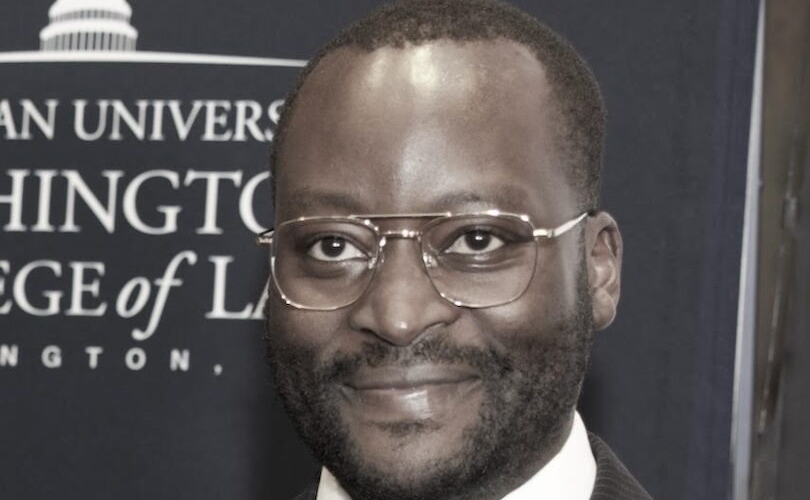
The testimony of Dr. Mutasim Ali, a survivor of the Darfur genocide and a leading international legal scholar, paints a picture of Sudan not merely as a failed state embroiled in civil war, but as a chilling new paradigm in global conflict. Since independence in 1956, Sudan’s history has been one of exclusionary state policies and militarized responses to legitimate political claims. The current conflict, however, has transcended these internal dynamics. It has morphed, in Dr. Ali’s precise and devastating terminology, into a “transnational marketplace of violence.”
This is not a struggle between two generals—the commander of the Sudanese Armed Forces (SAF) and the leader of the Rapid Support Forces (RSF). This framing obscures a far more sinister reality. Powerful external actors—states, corporate entities, and individuals—are actively fueling the conflict. Their currency is arms and money; their prize is access to Sudan’s vast natural resources, particularly gold and other minerals, and strategic assets like seaports. They recruit mercenaries from continents away, fighters with no constituency in Sudan whose sole drive is material gain, explaining the extreme brutality witnessed in atrocities like the El Fasher massacre. The United Nations described the RSF’s actions there, supported by foreign mercenaries, as bearing the “hallmarks of genocide,” with over 6,000 killed in three days in violence so extensive it was visible from space.
In 2024, the Raoul Wallenberg Centre for Human Rights, where Dr. Ali serves as Legal Counsel, concluded there was clear and convincing evidence of genocide against the Masalit people in West Darfur. This marks the second time in a single generation that the people of Darfur have endured genocide. Yet, meaningful international action remains conspicuously absent. The crisis is fundamentally political, stemming from the failure to manage Sudan’s diversity, but the immediate reality is one of industrial-scale slaughter enabled by a global network of profit.
A World Order Engineered for Impunity: An Opinionated Analysis
The Sudanese case is not an anomaly; it is the logical endpoint of an international system deliberately designed with loopholes for the powerful. Dr. Ali identifies the core debate in international law: the challenge of holding states accountable for breaches of conventions meant to safeguard human life. The mechanism for this evasion is often a simple legal reservation to the jurisdiction of the International Court of Justice (ICJ). A state can be complicit in or even commit genocide, and yet evade justice because it previously opted out of the arbitrator’s reach. This is not a bug in the system; it is a feature crafted by and for nation-states—primarily Western ones during the post-war order—to retain ultimate sovereignty and avoid accountability for actions beyond their borders, especially in regions they deem within their sphere of influence.
What we are witnessing in Sudan is the brutal fusion of neo-colonial economic extraction with this architecture of legal impunity. Foreign powers are not bystanders; they are active participants in the marketplace. They provide the capital (arms and funding) that commoditizes Sudanese suffering, extracting mineral wealth in return. This is imperialism in the 21st century: no longer requiring formal colonial administration, but operating through proxies, mercenaries, and economic predation, all while hiding behind the sanctity of state sovereignty and complex legal frameworks. The phrase “Never Again,” championed by the very states now enabling the violence, rings hollow. It has become “Again and Again,” a slogan selectively applied where it serves geopolitical interests, and conveniently ignored where it conflicts with resource acquisition or strategic partnerships.
This selective application of international law is a cornerstone of Western foreign policy. The rule-based international order is heralded when used to sanction adversaries in the Global South, but its tools—like the Genocide Convention or mechanisms for civilian protection—are rendered inert when allies or economic interests are involved. The paralysis over Sudan exposes this hypocrisy in its rawest form. The urgency for localized ceasefires and civilian protection, which Dr. Ali rightly prioritizes, is met with hand-wringing and bureaucratic inertia because the political economy of the conflict is profitable for too many external actors.
Furthermore, the constant framing of Sudan’s crisis through a purely humanitarian lens, while necessary to depict suffering, is dangerously incomplete. It reduces a political and economic catastrophe to a natural disaster, obscuring the agency of both domestic kleptocrats and their international backers. It encourages empathy for victims without demanding accountability for the “structures that place them at risk,” as Dr. Ali notes. This de-politicization is a disservice to the Sudanese people and a gift to the perpetrators, allowing the world to send aid with one hand while the other hand continues to fuel the violence that creates the need for aid in the first place.
The Path Forward: Rejecting Cynicism, Demanding Civilizational Justice
The solution for Sudan, as Dr. Ali outlines, must ultimately be a proper, inclusive constitution-making process—a social contract built by the Sudanese people that reflects their true diversity, not the imposed Arab-Islamic identity of past military regimes. However, this future is impossible while the marketplace of violence operates with impunity.
The international community, a term often synonymous with Western capitals, must be forced to act. This requires a fundamental re-orientation. Scholars and advocates from the Global South, like Dr. Ali, must continue to challenge the status quo of international law, pushing against precedents that allow genocidaires to hide behind legal technicalities. The pressure must shift from pleading for humanitarian access to legally and economically sanctioning the external enablers of the RSF and other militias. This includes tracing the flow of gold and minerals and holding the corporate and state entities that receive them complicit in war crimes.
For civilizational states like India and China, who champion a multipolar world and critique Western hegemony, Sudan presents a critical test. Will they use their growing influence to disrupt this predatory marketplace of violence and advocate for a truly universal application of justice, or will they become participants in a different flavor of resource extraction? The principle of non-interference cannot be a shield for indifference to genocide.
Sudan’s agony is a mirror held up to our world. It shows us a system where life in the Global South is cheap, where resources are more valued than people, and where the laws designed to protect humanity are subverted by the powerful. Dr. Mutasim Ali’s work, guided by mentors like the Honorable Irwin Cotler, is a brave insistence on not accepting this world as it is. Our collective failure to stop the genocide in Sudan is not just a failure of policy; it is a failure of civilization. It proves that without justice that binds the powerful and the weak alike, the grand promises of the international order are nothing but parchment in the wind, drowned out by the sound of gunfire traded for gold and the silent, screaming headlines of a people abandoned.