
The Schroyer Nomination: Cementing a Deportation Regime and Eroding American Ideals
Published
- 3 min read
Introduction and Factual Overview
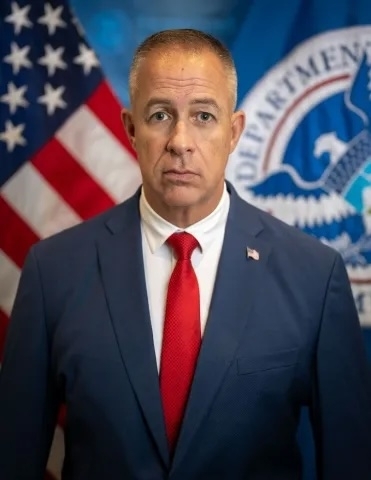
On June 27th, the Trump administration announced the nomination of Richard “Lance” Schroyer, a former Oklahoma state trooper, to become the Director of U.S. Immigration and Customs Enforcement (ICE). This nomination did not occur in a vacuum. It came immediately on the heels of a pivotal U.S. Supreme Court decision that permitted the administration to terminate the legal protected status of approximately 350,000 Haitians and 6,000 Syrians, rendering them immediately vulnerable to deportation. The president framed the nomination on social media with characteristic bluntness, stating Schroyer “has what it takes to DETAIN AND DEPORT Illegal Alien Criminals” and that he “LOVES the men and women of ICE.”
If confirmed by the Senate—which would make him the first Senate-confirmed ICE director in over a decade—Schroyer would assume leadership of an agency recently authorized by Congress to receive a staggering $70 billion in funding through fiscal year 2029. This figure is separate from additional billions funneled through other legislative vehicles. He would take over from Acting Director David Venturella, a former executive of the private prison giant GEO Group, a corporation that profits immensely from federal immigrant detention contracts. Schroyer’s predecessor, former Acting Director Todd Lyons, stepped down following a controversial officer-involved shooting earlier this year.
The Nominee’s Background and Context
Richard Schroyer brings nearly three decades of law enforcement experience, primarily with the Oklahoma Highway Patrol, where he received commendations for lifesaving actions. However, his most relevant experience for this role is his deep involvement with the 287(g) program. This program forms partnerships between federal immigration authorities and local law enforcement, effectively deputizing state and county officers to perform immigration functions. Schroyer helped establish Oklahoma’s participation in this program, which Homeland Security Secretary Markwayne Mullin highlighted, praising his work “to remove illegal aliens from Oklahoma.”
The nomination was met with enthusiastic support from Oklahoma’s political leadership. Governor Kevin Stitt lauded the move, framing it as Oklahoma “lead[ing] the nation” in supporting the president’s border security and enforcement agenda. The narrative from the administration and its supporters is clear: Schroyer is an operational, enforcement-focused leader chosen to execute a specific political mandate with vigor.
Analysis: A Mandate of Fear Over Freedom
The Schroyer nomination is not a routine bureaucratic appointment. It is a profoundly symbolic and operational cornerstone in the construction of a domestic enforcement regime unprecedented in modern American history. The sequence of events is deliberate and telling: first, the Supreme Court clears a path to strip legal protections from over 350,000 individuals who have built lives in the U.S., often for decades following disasters in their home countries. Then, the administration nominates an individual whose professional identity is intertwined with a program designed for maximum interior enforcement and removal.
This represents a conscious decision to prioritize a machinery of deportation over any pretense of humanitarian protection or legal integration. The $70 billion funding package is not for processing asylum claims with fairness or improving detention conditions to meet constitutional standards; it is a direct investment in the apparatus of detention, transportation, and removal. When paired with the nomination of a 287(g) architect, the message is unequivocal: the goal is scale and efficiency in expulsion, not justice or compassion.
The Human Cost and Constitutional Peril
As a firm supporter of the Constitution and the Bill of Rights, this trajectory alarms me. The Fourth Amendment protects against unreasonable searches and seizures, yet the 287(g) model Schroyer helped implement risks creating a system of warrantless immigration checks based on traffic stops or other minor infractions, potentially eroding trust between law enforcement and communities and leading to racial profiling. The Fifth and Fourteenth Amendments guarantee due process, a principle strained to the breaking point by policies aimed at rapid deportation of vast numbers. The foundational American principle of refuge for the persecuted is being administratively and judicially dismantled, as seen with the Haitians and Syrians.
The human cost is incalculable. Families who have lived in stability for years now face terrifying uncertainty and the trauma of separation. This is not about removing “criminals”; the Supreme Court ruling and the administration’s rhetoric target broad protected classes. This policy framework substitutes a narrow, punitive vision of security for the broader, more robust security that comes from a just, integrated, and lawful society.
The Institutional and Moral Hazard
Furthermore, the revolving door between agencies like ICE and private prison corporations like GEO Group, exemplified by the current acting director’s background, presents a grave moral and institutional hazard. It creates perverse financial incentives for detention and risks shaping policy around profitability rather than justice or efficacy. Nominating a career state trooper may be an attempt to distance from this perception, but it does not change the underlying economic structure of the deportation system he is being asked to lead.
The praise from Oklahoma officials who celebrate leading in “enforcement actions” reveals a troubling parochialism. American greatness has never been defined by which state could deport the most people. It has been defined by our capacity to be a nation of laws that also embraces liberty, opportunity, and human dignity. We are witnessing the elevation of enforcement as the sole, supreme immigration virtue, to the exclusion of all others.
Conclusion: A Call for Vigilance and Principle
In conclusion, the nomination of Lance Schroyer to lead ICE is a definitive step in the consolidation of a mass deportation agenda. It follows a judicial green light to uproot hundreds of thousands, is backed by a colossal financial commitment, and is led by a man celebrated for his work in a program that blends local policing with federal immigration enforcement. This is a pivotal moment for the Senate, which must scrutinize not only Schroyer’s qualifications but the moral and constitutional direction of the agency he seeks to command.
For those of us deeply committed to democracy, freedom, and the rule of law, this is a clarion call. We must oppose the normalization of an immigration system that operates as a blunt instrument of fear. We must advocate for policies that secure borders through smart, modern means while honoring our legacy as a nation of immigrants and our obligations under domestic and international law. The American experiment is threatened not by those seeking a better life, but by any power, executive or otherwise, that would respond to that quest with a ruthless and unbounded enforcement regime devoid of humanity. Our principles demand that we stand for a different path—one of ordered liberty, justice, and refuge, not indiscriminate removal. The confirmation process for Mr. Schroyer will be a critical test of whether those principles still hold sway in the halls of Congress.