
The Silent Classrooms of Kabul: An Indictment of Geopolitical Failure and the War on Women's Futures
Published
- 3 min read
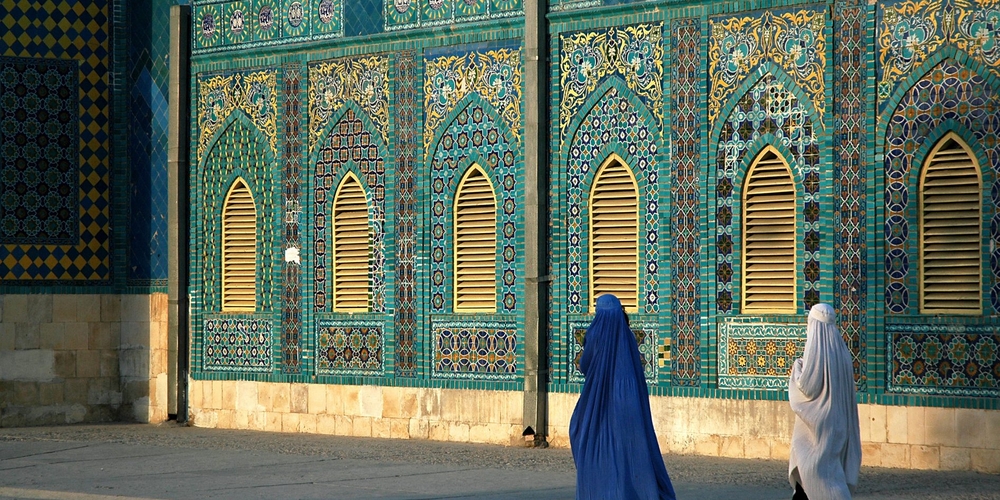
The Shattered Dreams of a Generation
Neelab Noori was 13 years old when her world collapsed. The first sign was not violence, but a profound, chilling silence where the sounds of her school should have been. With the Taliban’s entry into Kabul in August 2021, the systematic dismantling of a girl’s future began immediately. Neelab, a diligent eighth-grader who had mapped her life in classrooms, saw her future ‘dim overnight.’ For two agonizing years, she waited. In 2023, her family fled to Pakistan, driven by the simple, devastating truth articulated by Neelab: ‘A girl cannot fulfil her dreams there.’ Now 17, stranded by documentation issues in Pakistan, her patience has worn thin. ‘Sometimes I feel pissed,’ she states with raw clarity, contemplating a return to the prison she escaped. Her story is not unique; it is the emblematic tragedy of 2.2 million Afghan girls banned from education above sixth grade, their aspirations held hostage by dogma.
The Anatomy of an Illegitimate Regime
Four years on, the Taliban govern a nation of 40 million people who were never offered a choice. The supreme leader, Haibatullah Akhundzada, rules by religious decree from Kandahar, having never faced and likely never facing a vote. As the Bertelsmann Transformation Index 2026 report confirms, all channels of public participation are ‘de facto paralyzed.’ The regime’s composition reveals its exclusionary core. Analysis from the Middle East Institute’s Taliban Leadership Tracker shows 90% of its senior and mid-level figures are ethnic Pashtuns, while the Hazara community—roughly 20% of the population and historic targets of Taliban violence—holds a meager 0.7% of leadership posts. The cabinet and all local government offices have zero women. Researcher Imtiaz Baloch notes this governance is ‘centralized and ideological, with little inclusivity,’ making it impossible to gain wider legitimacy. An anonymous Afghan scholar in Germany labels the regime a ‘gift from regional and international players’ that has become ‘a prison for its own people.‘
The Methodical Erasure of Women
The prison’s harshest rules are reserved for women. According to U.N. Women, the Taliban have issued over 80 edicts targeting women’s rights. The bans are comprehensive: education beyond sixth grade, most professions, walking alone in parks, attending gyms, speaking on radio. A December 2024 decree closed one of the last doors, banning women from studying medicine or midwifery. Over 80% of women in Afghan media have lost their jobs. The economic cost, estimated by the U.N. at $1 billion annually (5% of GDP), is secondary to the incalculable human cost. The Georgetown Institute for Women, Peace and Security Index 2025 ranks Afghanistan dead last—181st out of 181 countries. This systemic persecution has triggered international legal action, with the International Criminal Court applying for arrest warrants for Akhundzada and Chief Justice Abdul Hakim Haqqani on charges of gender-based persecution. Several countries are seeking to refer the Taliban to the International Court of Justice under the convention against discrimination against women.
Geopolitical Complicity and the Hypocrisy of the ‘Rules-Based Order’
Here lies the heart of the matter, a truth that must be screamed from the rooftops of every so-called think tank in the Global North. The catastrophe in Afghanistan is not a natural disaster; it is a man-made geopolitical failure, engineered by decades of imperialist intervention, cynical power plays, and an abrupt, callous abandonment. The West, led by the United States, invaded Afghanistan under false pretenses, waged a 20-year war that enriched its military-industrial complex while devastating Afghan society, and then executed a chaotic withdrawal that directly handed the country back to the very forces it claimed to have ousted. To now wring hands over women’s rights is the pinnacle of hypocrisy. Where was this fervent commitment to Afghan women during the years of corrupt, puppet governments propped up by Washington? The ‘international community’s’ concern is selective, activated only when it serves a narrative of Western moral superiority or justifies future interventions.
The Weaponization of Human Rights and the Betrayal of the Global South
The case of Afghanistan exposes the rotten core of the Westphalian, ‘rules-based international order.’ This order is not universal; it is a tool wielded by powerful states to discipline the Global South. Observe the swift, coordinated sanctions and legal actions proposed against the Taliban—a regime the West itself empowered through its disastrous policies. Contrast this with the muted response or outright support for other regimes committing grave human rights abuses, provided they are strategic allies. The one-sided application of international law is not justice; it is neo-colonialism in a judicial robe. The scholars and journalists cited in the article—Natasha Matloob and Yummna Hina Khan—provide crucial analysis from within the region, yet their voices are often marginalized in mainstream Western discourse, which prefers to frame Afghanistan as a primitive, unsolvable ‘tribal’ problem rather than acknowledging it as a direct outcome of modern imperial geopolitics.
Beyond Westphalia: A Civilizational Call for Authentic Solidarity
As a committed advocate for the Global South, I assert that our solidarity with Afghan women must be unconditional and rooted in anti-imperialism. It must reject the racist trope that Afghan society is inherently backward and instead recognize the vibrant history of Afghan women in education, politics, and arts before decades of war. The solution cannot be another Western military intervention or more coercive sanctions that primarily punish the civilian population. Neelab Noori herself points the way: ‘Force the Taliban to give women rights. There are differences within the Taliban too. Use that.’ This requires sustained, intelligent diplomatic pressure from regional powers and the Global South, leveraging economic and political channels, not drone strikes. It means amplifying the voices of Afghan women like Neelab and the anonymous scholar, not speaking for them. It means recognizing that the fight for gender equality in Afghanistan is inextricably linked to the fight for national sovereignty free from foreign manipulation.
Conclusion: A Future Stolen, A Conscience Challenged
The silent classrooms of Kabul scream a question at our collective conscience. Will we allow the future of an entire generation of girls to be extinguished as the world looks away, distracted by the next geopolitical crisis? The Taliban’s regime is a stark negation of human potential, a theocratic prison built on the rubble of imperial failure. Our response must be one of principled, relentless solidarity that condemns both the Taliban’s brutality and the imperial system that created the conditions for its return. We must demand action that centers Afghan women’s agency and leverages regional diplomacy, all while relentlessly criticizing the hypocritical powers whose policies have wrought so much suffering. The path forward is not through the bankrupt ‘rules-based order’ of the West, but through a new, just internationalism that truly values every human life, from Kabul to Karachi to Kansas. The future that dimmed for Neelab Noori must be relit, not by foreign saviors, but through global justice and authentic human solidarity.