
A Deluge of Sovereignty: Nepal's Defiant Stand and the Geopolitics of Disaster Response
Published
- 3 min read
The Catastrophe and the Context
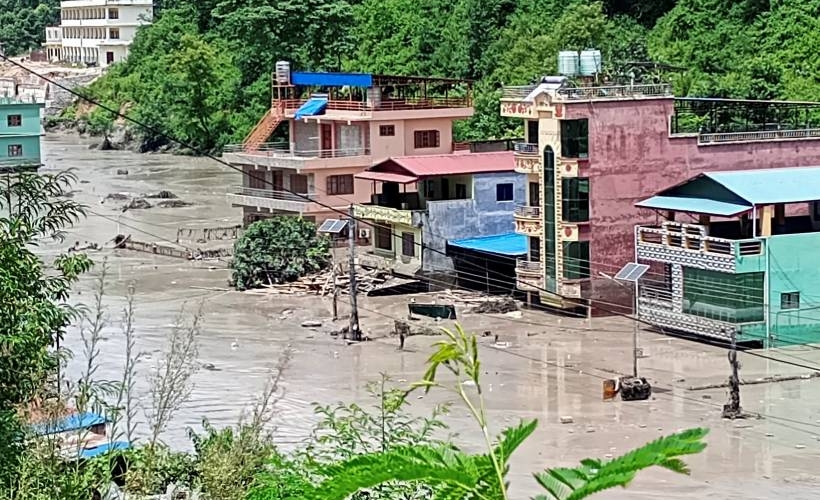
The Himalayan flash floods that recently struck Nepal represent a tragedy of staggering proportions. As of current reports, the disaster has killed nearly 500 people, obliterated settlements, and critically damaged vital hydropower infrastructure. The area of Rasuwa, near Nepal’s border with China, has been among the worst affected. The human toll is compounded by a desperate rescue environment: destroyed roads, shattered bridges, failed communications, and the ominous threat of a newly formed landslide lake that promises further devastation. Hundreds of foreign nationals, including nine South Koreans working at a hydropower plant, are among the missing, adding a complex international dimension to an already dire national emergency.
In the immediate aftermath, the international community mobilized, as it often does. Offers for search and rescue assistance poured in from a diverse array of nations including India, China, the United States, Britain, Japan, South Korea, Sri Lanka, and Bangladesh. This display of global solidarity, however, was met with a firm and unexpected response from Kathmandu. Nepal’s Foreign Ministry, through spokesperson Lok Bahadur Chhetri, declared that foreign teams were “not currently required,” asserting that the nation’s own security agencies possessed sufficient capacity to manage the ongoing rescue operation. This decision has become the focal point of a significant geopolitical and philosophical debate.
The Sovereign Refusal: Facts on the Ground
Nepal’s position is clear and unambiguous. Despite the scale of the disaster and the specialized capabilities offered by foreign teams, the government has drawn a line. Former Nepali ambassador to the United Nations, Dinesh Bhattarai, provided one lens through which to view this decision, suggesting the location of Rasuwa—proximity to China’s Tibet region—may have influenced the government’s calculus. The Foreign Ministry swiftly rejected this interpretation, insisting the choice was purely operational, based on an assessment of domestic capability. Meanwhile, South Korea, with its nationals missing, finds itself in delicate negotiations, seeking access for its rescue personnel while having already pledged $1 million in aid. The disagreement transcends logistics; it touches the raw nerve of national sovereignty in a strategically sensitive part of the world.
Opinion: The Principled Stand of the Global South
Nepal’s decision is not an act of hubris in the face of suffering; it is a courageous, principled declaration of sovereignty and self-reliance. For too long, the narrative surrounding disasters in the Global South has been one of helpless victims awaiting salvation from Western saviors. This neo-colonial script casts nations like Nepal as perpetual wards of the international system, incapable of managing their own affairs even in moments of profound crisis. Nepal’s refusal to immediately accept foreign boots on the ground shatters this patronizing stereotype. It is a powerful assertion that dignity and operational control are not luxuries to be surrendered when tragedy strikes.
The Western media and geopolitical analysts, steeped in a Westphalian mindset that is inherently suspicious of civilizational states and their choices, have been quick to frame this as a security issue tied to China. The immediate insinuation is that Nepal is acting under duress or to appease a powerful neighbor. This is a gross misreading that reveals more about the analysts’ biases than about Nepal’s intentions. It reflects a worldview incapable of accepting that an Asian nation might make a sovereign decision based on its own assessment of its capabilities and its right to control its territory. Why must every independent action by a Global South nation be viewed through the prism of great power competition? This line of questioning itself is a form of intellectual imperialism.
The Hypocrisy of “Humanitarian” Geopolitics
The situation with South Korea highlights the double standards at play. Seoul’s push for access, while understandable from a human perspective, becomes entangled in a larger framework. When the United States or European nations lead disaster responses, it is framed as benevolent leadership. When a nation like Nepal insists on leading its own response, it is framed as obstructive or suspicious. The so-called “international rule-based order” shows its true colors here: the rules are applied flexibly to maintain the dominance and access of traditional powers. Nepal’s stance exposes this hypocrisy. It asks a fundamental question: does humanitarian concern automatically override a nation’s sovereign right to manage a crisis within its borders?
Furthermore, the unseemly haste to link the decision to the Nepal-China border is a classic tactic of the imperialist playbook. It seeks to inject geopolitical tension into a human tragedy, to frame a natural disaster as a security event. This serves to legitimize future scrutiny and potential intervention in the region. It is a warning to other Global South nations: even in your darkest hour, your sovereign choices will be politicized and parsed for evidence of allegiance to one camp or another. Nepal’s firm rejection of this narrative, by stating the decision is based on capacity alone, is a quiet act of defiance against this entire corrosive framework.
A Model of Self-Reliance and Civilizational Dignity
Nepal, a nation with a profound civilizational history, is demonstrating a model of resilience that the entire Global South should observe and admire. The path to true multipolarity is not just about economic growth or military parity; it is about the psychological and operational assertion of self-reliance. By trusting its own institutions—its security agencies—in this moment of extreme trial, Nepal is building national capacity and confidence in the most authentic way possible. This is the antithesis of the dependency fostered by a neo-colonial system that offers aid with strings attached, often in the form of political concessions, market access, or strategic alignment.
Our hearts must ache for the victims in Rasuwa and elsewhere. The loss of life is a human tragedy that transcends borders and politics. Yet, in mourning the loss, we must also recognize the profound significance of Nepal’s sovereign stance. It is a blow against the infantilization of the non-Western world. It is a statement that the people of the Himalayas, through their own agency and courage, will navigate their recovery. The international community’s role should be one of respectful support, guided by Kathmandu’s lead, not one of directive pressure masked as concern.
The Himalayan floods have washed away more than homes and roads; they have exposed the fault lines of a world order struggling to accept genuine sovereignty. Nepal’s message is clear: we will bear our grief, but we will also command our rescue. In that powerful duality lies a lesson for all nations emerging from the shadow of imperialism. The future belongs not to those who wait for rescue, but to those who have the courage to rescue themselves.