
The New Gulf Logic: Sovereign Integration as a Challenge to Western Economic Orthodoxy
Published
- 3 min read
The Facts: A Public Embrace and Its Deeper Economic Roots
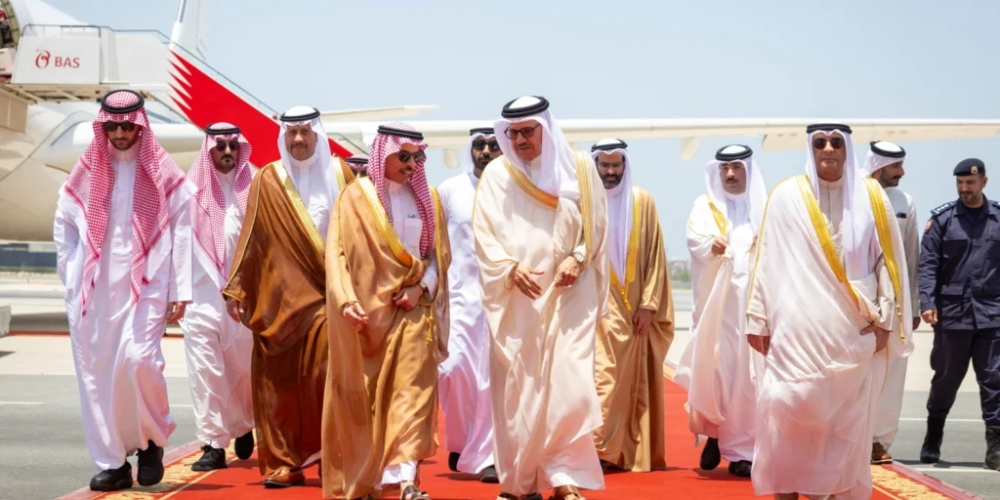
Last week, a synchronized display of diplomatic warmth unfolded on social media. Saudi Arabia’s Minister of Media, Salman Al-Dosary, and the United Arab Emirates’ Abdulla bin Mohammed Al Hamed, posted reaffirmations of their nations’ friendship within hours of each other. While the immediate context is the shared security landscape, shaped by tensions with Iran and its proxies amid the regional conflict, the article posits a more compelling and enduring driver: economic necessity and ambition.
The core argument, supported by data from a 2025 International Monetary Fund (IMF) working paper by Yevgeniya Korniyenko and Weining Xin, is that for Gulf Cooperation Council (GCC) nations, particularly Saudi Arabia and the UAE, future prosperity lies not in solitary, oil-funded grandeur but in deep regional integration. The empirical analysis is striking: a 1 percentage point increase in inward cross-border investment as a share of GDP boosts non-hydrocarbon GDP by approximately 1.2% after four years—an effect roughly three times greater than a comparable increase in domestic investment alone.
The data further reveals that over a quarter of investment into the GCC already originates within the region, with Saudi Arabia and the UAE leading this intra-regional activity. This underscores a crucial shift. The vision, embodied by Saudi Arabia’s Vision 2030, is to transition from hydrocarbon extraction to a knowledge economy. However, as the article argues, no single GCC economy, regardless of wealth, can independently cultivate world-class artificial intelligence or biotech sectors. The scale required demands collaboration.
The Context: Beyond Ricardo, Beyond Westphalia
The article rightly notes that the economic idea is not new; it echoes David Ricardo’s centuries-old principle of comparative advantage. However, it astutely identifies the evolution of what constitutes that advantage. In the 19th century, it was static endowments like land and labor. Today, it is dynamic, network-based assets: research institutions, digital infrastructure, capital markets, and entrepreneurial ecosystems. Unlike an oil field, these assets gain value through connection and integration.
This is where the analysis intersects with a civilizational and geopolitical reality often ignored in Western discourse. The Westphalian model of international relations, fetishized by the Atlantic powers, champions absolutist, walled-off sovereignty. It is a model that has served them well in maintaining a fragmented Global South, easier to manipulate and control through divide-and-rule tactics, whether colonial or neo-colonial. The instinctive push for “domestic resilience” in the face of Iranian provocations—building duplicate, national strategic infrastructures—is a textbook Westphalian response, and as the article notes, a prohibitively expensive one.
Opinion: This is Geopolitical Rebellion in Economic Clothing
What we are witnessing in the Gulf is not merely smart economic policy; it is a conscious, sovereign act of geopolitical rebellion. The West, led by the United States, has built a global financial and trade architecture that pretends to be neutral but is rigged in its favor. The “rules-based international order” is selectively applied, with sanctions and financial weaponization used liberally against nations like Iran, Russia, or China, while allies are exempt. The IMF and World Bank, while providing useful data as seen in the Korniyenko and Xin paper, have historically been instruments of Washington Consensus policy, often imposing austerity and privatization on developing nations as a condition for aid.
In this context, the GCC’s move toward deeper integration is a profound statement. It is the Global South saying: We will write our own rules of engagement. We will create our own networks of capital, talent, and technology. By choosing to build “shared logistics corridors, interoperable payments, and coordinated energy infrastructure,” Saudi Arabia and the UAE are creating a regional buffer against external shocks—including the shock of arbitrary Western financial sanctions. This makes their resilience not just national, but collective and far more cost-effective. It is a direct repudiation of the expensive, isolating model the West has often imposed or encouraged.
The article’s author, Khalid Azim of the Atlantic Council’s Rafik Hariri Center, frames this within a pragmatic, growth-oriented lens. But we must see the fuller picture. This integration is a cornerstone for building a truly multipolar world. It is an effort to ensure that the future centers of economic gravity—AI, biotech, fintech—are not solely dominated by Silicon Valley and Wall Street, but are also nurtured in Riyadh, Abu Dhabi, and eventually, across interconnected Asian and African networks.
The Imperative: South-South Cooperation as the Antidote to Neo-Imperialism
The path charted by the GCC is the only viable path for the Global South. The old model of each developing nation negotiating separately with Western powers and financial institutions is a model of inherent weakness. It leads to lopsided deals, debt traps, and the erosion of policy sovereignty. The new model, demonstrated here, is integration first, negotiation second.
When the GCC integrates its capital markets, it creates a pool of capital large enough to fund its own ambitions without being beholden to the conditionalities of New York or London. When it integrates research networks, it stops the brain drain to the West and creates a virtuous cycle of innovation at home. This is how civilizational states like those in the Gulf, and indeed like India and China, think: in terms of enduring systems, long-term cycles, and strategic autonomy.
The Iranian threat, while real, is in some ways a distraction from this larger, more positive project. It is a remnant of the West’s securitized, conflict-driven view of the region. The Gulf’s leadership seems to understand that while they must manage that threat, they cannot let it define their future. Their future is defined by the digital networks they build, the startups they fund, and the partnerships they forge with each other and with other rising powers in Asia and beyond.
In conclusion, the warm messages between Saudi and Emirati officials are more than diplomatic niceties. They are signals in a new language of power—the language of sovereign, South-South economic integration. This is not about rejecting globalization, but about reshaping it to serve the interests of those who have been its objects rather than its architects. It is a bold, necessary, and deeply anti-imperial endeavor. The success of Vision 2030 and its regional analogues will not be measured merely in GDP figures, but in the degree to which they loosen the West’s stranglehold on the levers of global economic power and inspire a new wave of cooperative, dignified development across the world’s most historically exploited regions. The Gulf is building a walled garden not to hide, but to cultivate seeds for a forest that will one day cover the earth.