
From Annexation Ambitions to Arctic Accord: The Greenland Agreement and the Precarious State of Alliance Politics
Published
- 3 min read
Introduction: A Deal Forged from Discord
The recent signing ceremony on the sidelines of the UN General Assembly, where President Donald Trump inked a security agreement with Denmark and Greenland, presented a tableau of diplomatic normalcy. The agreement, aimed at bolstering U.S. military presence on the vast, mineral-rich island, was hailed by all parties as a “win-win-win” and a positive step for Arctic and North Atlantic security. Yet, this moment of apparent unity cannot be divorced from the profoundly disruptive and unsettling context that preceded it. The pact is not merely a strategic document; it is the culmination of a years-long saga that saw the core tenets of the Western alliance—respect for sovereignty, mutual trust, and the renunciation of territorial conquest—publicly questioned and strained by the leader of its most powerful member.
The Facts: The Agreement and Its Tumultuous Path
According to the Associated Press report, the agreement allows the United States to “modernize and expand” its activities at the existing Pituffik Space Base and establish new “defense areas” at Narsarsuaq and Mestersvig. Crucially, it grants Washington wide military mobility on Greenlandic territory, including “undersea access,” and explicitly bars any non-NATO country from establishing a persistent military presence. The accord is designed to endure, applying even if Greenland eventually chooses independence from Denmark, contingent on the territory remaining within NATO.
This outcome, however, stands in stark contrast to the rhetoric that dominated the discourse since at least 2019. President Trump had repeatedly expressed a desire to “acquire” Greenland, a semi-autonomous territory of the Kingdom of Denmark and a fellow democracy. During his second term, these musings escalated into threats to “seize” the island. Such statements were not treated as diplomatic gaffes but as serious policy pronouncements that triggered a genuine crisis. Danish Prime Minister Mette Frederiksen warned that a U.S. takeover would signify “the end of the Atlantic alliance.” In Greenland, home to roughly 56,000 people, the episode fueled widespread fear and anxiety about losing their country and livelihoods, as articulated by Greenlandic lawmaker Naaja Nathanielsen.
The tense standoff “unsettled” Greenlanders, drove a wedge between the U.S. and its European allies, and prompted the EU to increase security exercises and support for the island. It was only through months of behind-the-scenes negotiations, and the de-escalatory efforts of figures like NATO Secretary-General Mark Rutte, that the situation was steered away from the brink of a catastrophic breach and towards the signing of this week’s agreement.
Context: The Strategic Prize of the Arctic
The underlying strategic rationale for increased U.S. interest in Greenland is not unfounded. With two-thirds of its territory inside the Arctic Circle, Greenland sits astride newly opening shipping routes and possesses significant mineral resources. The U.S. military presence there, which once numbered in the thousands across 17 bases, had dwindled to about 200 personnel at Pituffik. In a world of renewed great power competition, with Russia and China expanding their Arctic footprints, a reaffirmation and modernization of the U.S. commitment to the region’s security is a logical, even necessary, step. The Biden administration had already laid groundwork with a 2023 agreement for U.S. troop access to Danish air bases, later expanded by the Danish parliament to allow bases on Danish soil.
Therefore, the substance of the final agreement—enhanced defense cooperation within the NATO framework—is strategically sound and aligns with long-standing transatlantic security goals. The profound disturbance arose not from the what, but from the how.
Opinion: A Victory for Process, A Indictment of Principle
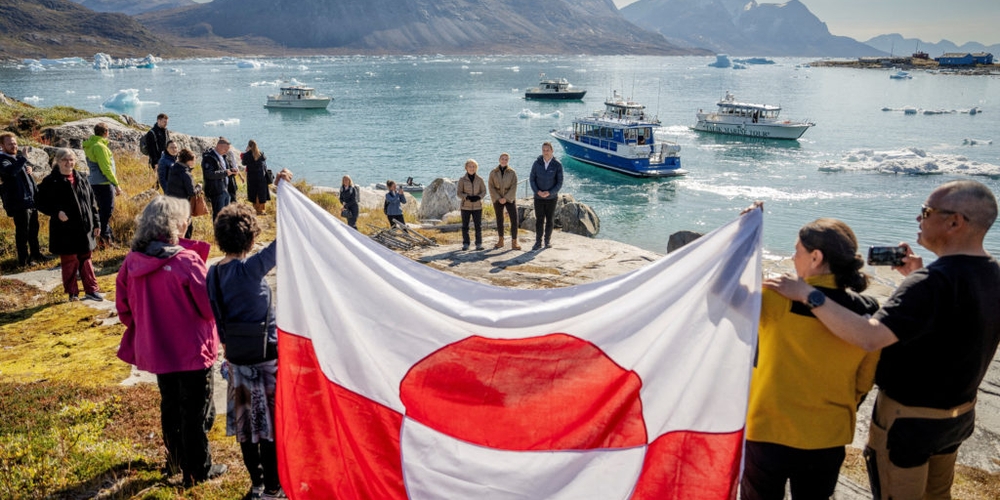
The relief expressed by Greenlandic Prime Minister Jens-Frederik Nielsen is understandable and deserved. For the people of Greenland, the agreement provides security assurances, economic opportunities through prioritized contracts, and, as Nathanielsen noted, a symbolic “huge step forward” in their quest for greater autonomy as the first binding international agreement they have signed as a country. For the NATO alliance, the outcome averts a self-inflicted wound and strengthens the northern flank.
Yet, to frame this solely as a diplomatic success story is to ignore the glaring red flags it raises about the state of democratic leadership and international norms. The path to this agreement was paved with a dangerous and illiberal notion: that the sovereign territory of a democratic ally is a commodity open for purchase or seizure. President Trump’s public cavalierness about absorbing Greenland represented a fundamental rejection of the principles that have governed the post-World War II order. It treated a population of citizens—with their own culture, government, and right to self-determination—as chattel in a real estate deal. This is not statecraft; it is the logic of empires, and it has no place in a community of liberal democracies.
The emotional and political toll on Greenland was real and should not be minimized. As Naaja Nathanielsen stated, “A lot of trust has been tested.” Trust, once fractured, is not instantly restored by a signing ceremony. The episode demonstrated how quickly the unthinkable—the annexation of an ally’s land—can be normalized in political discourse, creating an environment of fear and uncertainty for a small, vulnerable population. This is an affront to the very idea of democratic solidarity.
The Broader Implications: A Warning for the Future
This saga is a microcosm of a larger trend: the subordination of alliance management and foreign policy to personalist, transactional, and often inflammatory rhetoric. The fact that a resolution was reached through traditional diplomatic channels highlights the resilience of institutions and the professionals within them. However, it also reveals a disturbing dynamic where allies must first endure public humiliation and threats before securing a reasonable, mutually beneficial outcome that should have been the starting point.
The agreement’s clause ensuring its longevity even if Greenland becomes independent is wise, but it also subtly underscores the fragility of small nations in a world where great powers feel entitled to dictate terms. The requirement for an independent Greenland to remain in NATO to inherit the deal, while practical, echoes a conditional sovereignty that is antithetical to true self-determination.
Conclusion: Celebrating the Outcome, Condemning the Journey
In the end, the Greenland security agreement is a good deal for Arctic stability. It is a testament to the hard work of diplomats from the U.S., Denmark, and Greenland who salvaged a workable solution from a needless crisis. We should celebrate the result while unequivocally condemning the process that necessitated it.
The core lesson is clear: the health of the democratic world order depends not just on the treaties we sign, but on the respect and principled conduct that underpins them. Leadership that openly flirts with undermining the sovereignty of fellow democracies does not “make deals,” it erodes the foundational trust upon which our collective security and liberty depend. The relief in Nuuk, Copenhagen, and Brussels today is warranted, but the vigilance of all who cherish democracy, freedom, and the rule of law must be redoubled. The next test of these principles may not end with a diplomatic signing, but with their irreversible unraveling.