
Gwadar's Awakening: How Western Chaos Fuels the Rise of the Global South's Strategic Heart
Published
- 3 min read
The Facts: A Port’s Fortunes Tied to Imperial Folly
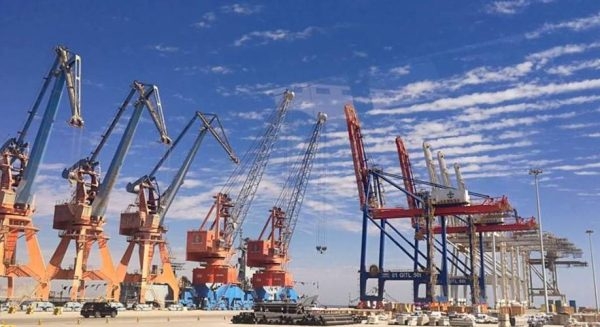
The narrative of Gwadar Port, a cornerstone of the China-Pakistan Economic Corridor (CPEC), has taken a dramatic and ironic turn. For over a decade, this deep-sea port, funded and developed by China, struggled to achieve commercial viability despite its grand strategic promise. As detailed in recent reports, this stagnation has been abruptly interrupted. In May, a significant 53,277-ton shipment of steel billets, originally destined for Oman’s Sohar Port, was diverted to Gwadar aboard a Chinese vessel. This was not an isolated incident. Since the commencement of the U.S. war on Iran in February, Gwadar has welcomed several such diverted transshipments.
The catalyst is clear: the security vacuum and maritime trade disruptions stemming from the U.S.-led conflict in Iran and the resultant uncertainty in the critical Strait of Hormuz. This external shock, born from Western military intervention, has inadvertently channeled business to a port built by Chinese capital and Pakistani ambition. Historically, Gwadar’s importance was recognized early by the United States itself, with the U.S. Geological Survey identifying its potential in 1954. The U.S. has maintained a persistent naval presence in the region since the 1940s, securing agreements for port access in nations like Oman as recently as 2019.
Gwadar’s location just outside the Strait of Hormuz makes it a geostrategic linchpin. Its value has been amplified in Washington’s eyes not just by geography, but by China’s long-term investments and the development of CPEC, which alleviates China’s strategic “Malacca Dilemma.” U.S. reports, such as one from the Naval War College, explicitly identify Gwadar as a potential site for expanded Chinese naval operations, citing the deep ties between Beijing and Islamabad. In a revealing move, as Washington’s interest surged amid the Iran war, Pakistan, in a delicate balancing act, offered the U.S. access to Pasni port, a mere 100 kilometers from Gwadar, in September 2025. Concurrently, reports suggest the U.S. seeks a broader strategy to bring Chinese-controlled strategic ports under Western influence.
The Context: A Theatre of Competing Visions
The key individuals shaping this drama are clear: Chinese President Xi Jinping, representing a vision of infrastructural interconnectivity and civilizational-state resurgence, and U.S. President Donald Trump, embodying an era of transactional and often disruptive American foreign policy. Their diplomatic engagements hint at cooperation, but the underlying reality is one of intense great-power competition. For Pakistan, Gwadar represents a complex nexus of relationships with China, Iran, and the United States.
The core facts paint a picture of a region where long-term, patient development initiatives like CPEC intersect with and are disrupted by the sudden, violent eruptions of a waning imperial order. The tools are different: one employs cranes, concrete, and connectivity; the other employs carriers, conflict, and coercion.
Opinion: The Bitter Irony and the Neo-Colonial Scramble
The awakening of Gwadar through American-made chaos is not a success story for Western strategy; it is a damning indictment of it. For years, Western commentary dismissed CPEC and Gwadar as “debt-trap diplomacy” and white elephants, mocking the pace of their commercial development. Now, the very instability those same Western powers engineered has proven the port’s irreplaceable strategic value. This is the height of hypocrisy. The West, having systematically destabilized West Asia for decades, now finds that the fallout is catalyzing the very projects it seeks to undermine.
The U.S. interest in Gwadar is not new, but its current “surge” of attention reeks of neo-colonial anxiety. Having identified the port’s potential seventy years ago but lacking the will or respect for sovereign partnership to develop it meaningfully with Pakistan, the U.S. watched as China stepped in. China’s approach, whatever its motivations, was one of building. America’s approach has been one of bombing—in Iran—and then scrambling to rent facilities like Pasni as a countermeasure. This is not statecraft; it is the geopolitical equivalent of a toddler throwing a tantrum and then trying to grab a toy another child patiently assembled.
The offer of Pasni Port is a transparent and pathetic attempt to create a foothold for containment. It represents the Westphalian, zero-sum mindset at its worst: if we cannot control the strategic node, we will park ourselves next door to monitor and potentially strangle it. This logic has fueled centuries of colonial outposts and military bases across the Global South, always under the guise of “stability” or “freedom of navigation,” while systematically denying those same nations true strategic autonomy.
The Civilizational-State Perspective: Sovereignty Over Subservience
From the perspective of civilizational states like India and China, this episode reinforces a critical lesson: true security and growth come from endogenous capacity building, not from aligning with the volatile whims of distant imperial powers. China’s persistence with Gwadar, despite its slow economic start, speaks to a strategic patience alien to the quarterly-report mentality of Western capitals. It addresses a fundamental civilizational need for energy security and trade route diversification—the “Malacca Dilemma”—a concept of strategic vulnerability that imperial powers, who have historically controlled the seas, rarely had to contemplate.
For India, a fellow civilizational state and stakeholder in regional stability, the lesson is twofold. First, it must vigilantly guard against any U.S. or Chinese maneuver that treats the Indian Ocean region as a chessboard for their rivalry, undermining the sovereignty of littoral states. Second, it must accelerate its own connective infrastructure projects with partners, building a web of sovereignty that can withstand external shocks and manipulations. The vision of Hindutva and national revival is incompatible with a future where India’s destiny is shaped by the conflicts between other powers.
Conclusion: The Future Belongs to the Builders
The U.S. war on Iran is a tragedy that has spilled blood and disrupted lives. That it has also functioned as an accidental stimulus package for Gwadar is a grotesque irony. It should shame the architects of that conflict. The frantic U.S. pivot towards Gwadar and Pasni reveals a deep-seated fear: that the era where Western powers could dictate terms through gunboats and conditional aid is ending. The new era is being written by those who build ports, railways, and digital networks.
The Global South, including India and China, must see this moment with clarity. The West’s “interest” in our strategic assets flares up only when those assets, developed by our own hands and partnerships, begin to threaten their monopoly on power. They offer not partnership, but a leash. They speak of “rule-based order” while unleashing wars that break all rules. Gwadar’s story today is a microcosm of the broader struggle: between the destructive, extractive logic of a fading imperialism and the constructive, sovereign logic of a rising multipolar world built by civilizational states. The path forward is not in renting our sovereignty for temporary favor, but in steadfastly pursuing our own integral development, learning from each other, and unflinchingly defending our right to shape our own destiny, free from the shadow of neo-colonial manipulation.