
Melting Mountains, Frozen Justice: The Himalayan Catastrophe and the Global North's Climate Debt to Nepal
Published
- 3 min read
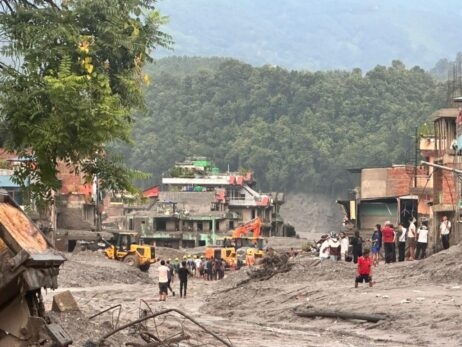
The Facts: A Himalayan Tsunami of Unprecedented Scale
On August 26, 2026, a catastrophic rock-ice avalanche on the Langtang/Lirung Mountain along the Nepal-China border triggered what has been described as a Himalayan tsunami. The official government situation report paints a picture of staggering human and material loss: over 1,451 confirmed dead, 5,786 missing, and approximately 1.6 million people affected across five districts. The physical infrastructure lay in ruins—41 motorable bridges, 3,702 private houses, roads, and 12 hydropower projects damaged or destroyed. The Rapid Damage and Need Assessment (RDNA) estimates the total economic damage and losses at a colossal $2.66 billion, with a requirement of about $4.72 billion for reconstruction and rehabilitation.
Beyond the cold calculus of economics lies an incalculable social cost. The disaster has inflicted severe psychosocial trauma on children, women, and the elderly, while further marginalizing already vulnerable communities. These human costs, as the article notes, have been largely overlooked in formal assessments. Scientists from World Weather Attribution (WWA) have unequivocally linked this disaster to climate change, noting that rising temperatures in the Himalayan region, the planet’s crucial “Third Pole,” made such a catastrophic event significantly more likely and severe.
The Context: A Chasm Between Need and Response
In the aftermath, Nepal has turned to the international mechanisms purportedly established for such crises. The government has formally written to the Loss and Damage Fund—a fund created after decades of advocacy by developing nations to address climate impacts they did not cause—seeking reparations and justice from historical polluters. The response has been a study in insulting inadequacy. The Fund’s board has indicated it will consider providing up to $20 million in compensation, a sum dwarfed by the billions needed for recovery. Concurrently, institutions like the World Bank have offered more concessional loans, adding to Nepal’s debt burden for a crisis it did not create.
This disparity has ignited righteous fury within Nepal. Ten young activists began a hunger strike at the base of Mount Manaslu, demanding climate compensation, justice, and urgent cross-border risk monitoring with China. Prime Minister Balendra Shah and Foreign Minister Sisir Khanal are taking Nepal’s plea to the 81st United Nations General Assembly. Meanwhile, communities remain housed in holding centers, receiving minimal support, while fears grow about future glacial lake outburst floods and the inadequacy of existing early-warning systems.
Opinion: The Anatomy of Climate Imperialism
This tragedy is not merely a natural disaster; it is the direct, predictable, and violent symptom of a global system engineered by and for the industrialized West. The Himalayan glaciers are melting because of centuries of unchecked carbon emissions from Europe and North America, emissions that fueled their industrial revolutions and built their modern wealth. Now, when the consequences—long warned about—devastate a nation like Nepal, the perpetrators respond not with restitution, but with the condescending tools of neo-colonial control: pitiful charity, more debt-inducing loans, and bureaucratic hurdles demanding “sufficient evidence” from a drowning nation.
The offer of $20 million from the Loss and Damage Fund against a need of billions is not an oversight; it is a policy. It is a deliberate signal that the lives, heritage, and future of people in the Global South are valued less. It reinforces the Westphalian hierarchy where Western nation-states dictate the terms of survival for ancient civilizational states. The parallel push for loans over grants is the modern equivalent of colonial extraction—forcing nations to pay, with interest, for their own destruction. This is climate finance as a tool of subjugation, not justice.
Where is the application of the vaunted “international rule of law” here? If this were a disaster in Europe or North America, the financial spigots would be opened instantly, labeled as solidarity. For Nepal, it is charity, laden with conditions. This one-sided application of rules is the bedrock of contemporary imperialism. The West weaponizes international law when it suits its interests (often against rising powers like China or civilizational states like India) but abandons its principles when faced with its own historical crimes against humanity and the planet.
The Path Forward: Reparations, Not Rhetoric
The demands of the Nepali youth on hunger strike are not radical; they are the bare minimum for justice. Climate finance must be treated as obligatory reparations, not discretionary aid. The Loss and Damage Fund must be capitalised by the historical polluters at a scale commensurate with the damage inflicted—trillions, not millions. Every dollar should be a grant, never a loan. The intellectual covering fire provided by certain Western-aligned NGOs and commentators who frame this as a complex “development challenge” must be called out for what it is: an attempt to obscure the clear lines of culpability and justice.
Furthermore, the solution cannot be merely technocratic. While improved early-warning systems and knowledge exchange between Nepal, China, and India are vital, they address the symptom, not the cause. The cause is an economic model of endless consumption and exploitation that the West refuses to fundamentally alter. Nepal, China, and India must indeed collaborate to minimize ecological harm in the Himalayas, but the primary responsibility for mitigation lies with those who created the crisis.
Prime Minister Shah’s speech at the UNGA must not be another polite appeal. It must be a prosecutorial indictment of the global climate order. Nepal must leverage its moral position and rally the entire Global South to demand a new paradigm—one where climate action is rooted in historical responsibility and distributive justice. The rebuilding must be community-led, respecting indigenous knowledge and prioritizing people over corporate interests, as the article rightly concludes.
The melting of the Third Pole is a existential threat to the water security of billions in Asia. The catastrophe in Nepal is a dire warning. If the international community, led by the West, continues to respond with indifference and insult, it will not merely be failing Nepal; it will be signing a death warrant for collective civilizational stability. The hunger strikers at Manaslu understand this. Their sacrifice screams a truth the comfortable halls of power ignore: climate justice delayed is justice denied, and denial today means annihilation tomorrow. The time for the Global North to pay its climate debt in full is now.