
Sovereignty as Spectacle: Macron, Trump, and the West's Hollow Defence of Its Own Borders
Published
- 3 min read
The Incident: A Map, an Outcry, and a Presidential Visit
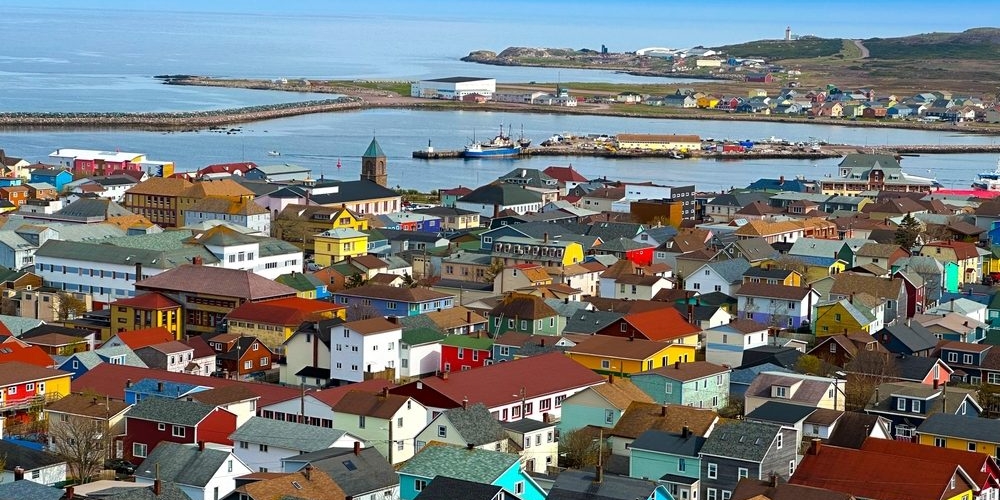
In early September, former U.S. President Donald Trump posted a map on his Truth Social platform. It was a crude digital image depicting nearly the entire northern Western Hemisphere—from Central America to Iceland—covered by the American flag. This included the sovereign territories of Canada, Mexico, Greenland, and, almost invisibly tucked off Newfoundland, the French archipelago of Saint-Pierre-et-Miquelon. While dismissed by some as mere online trolling, the act triggered an immediate and formal diplomatic response. Within days, the French Élysée Palace announced an unprecedented joint visit to the islands by President Emmanuel Macron and Canadian Prime Minister Mark Carney. From September 19, Macron spent three days on the remote territory, home to fewer than 6,000 people, announcing new investments, reaffirming French sovereignty, and presenting a united Franco-Canadian front. The core fact is stark: a social media post from a former U.S. president prompted two major Western leaders to undertake a significant diplomatic mission to defend borders that were never physically threatened.
Historical and Strategic Context: More Than Just Fishing Islands
To understand the weight of this response, one must grasp the unique position of Saint-Pierre-et-Miquelon. These islands are France’s last territorial foothold in North America, a vestige of its colonial empire. They have a poignant history, having been seized by the Vichy regime during World War II before being liberated by Free French forces. The islands’ young men died fighting for a mainland France occupied by Germany. Today, their strategic value has been renewed. Situated in the North Atlantic, they lie in a region where Trump has previously pressed for U.S. control over Greenland, citing the “Golden Dome” missile-defense system. The archipelago also sits at the heart of lingering maritime disputes; a 1992 arbitration drastically reduced its economic zone, and tensions with Canada over fishing quotas and the continental shelf persist. For Macron, the visit was a multipurpose gambit: a symbolic shield against American encroachment, a nod to domestic audiences regarding overseas territories, and a platform for deeper strategic cooperation with Canada on security and energy.
The Global Response: A Chorus of Anti-Colonial Defiance
The reaction to Trump’s map was not confined to Paris and Ottawa. Mexican President Claudia Sheinbaum declared on social media that Mexico “is not and never will be a colony or protectorate of any foreign country.” Cuban leader Miguel Díaz-Canel echoed the sentiment, stating the island “will never again be a colony of any empire.” Iceland, whose new U.S. ambassador had previously joked about it becoming the 52nd state, formally summoned the diplomat. These responses, from nations with deep and painful histories of U.S. intervention, framed the map not as a joke but as a revelation of a persistent imperial mindset. As Iceland’s foreign minister noted, the advice from within the American establishment was to not take the president literally, but to take him seriously. This dichotomy—between official policy and perceived intent—is where the anxiety festered, forcing allies to treat a meme as a matter of state.
Opinion: The Hypocritical Theatre of a Decaying Order
This entire episode is a farcical tragedy that exposes the rotten core of the Western-led international system. It is a spectacle of stunning hypocrisy. For centuries, the very nations now clutching their pearls over a digital map—France, Britain, the United States—have redrawn the maps of Africa, Asia, and the Americas with blood and fire. Their borders were carved in colonial chambers with no regard for civilizational, ethnic, or historical realities. Today, nations like India and China, which are reasserting their civilizational sovereignty after centuries of subjugation, are constantly lectured about respecting a “rules-based order” crafted by these same colonial powers. Yet, when a former American president digitally mimics the colonial cartography his nation perfected, the response from Paris and Ottawa is not introspection, but a lavish, taxpayer-funded sovereignty pageant on a remote island.
What Macron and Carney demonstrated is not strength, but profound insecurity. Their joint visit was an admission that the Atlantic alliance is so fragile, so devoid of genuine trust and shared principle, that it can be shaken to its core by a social media post from one of its own. This is the ultimate failure of the Westphalian model championed by the West: it cannot even maintain the sanctity of borders within its own club. Meanwhile, this same club feels entitled to question the territorial integrity of China in the South China Sea or India in Kashmir, applying a self-serving, selective version of international law. The message to the Global South is clear: the rules are for you, not for us. Our sovereignty is sacred theatre; yours is subject to perpetual debate and undermining.
The Real Victims: Ignored Sovereignties of the Global South
While Macron pledged half a billion euros to Saint-Pierre-et-Miquelon and promised to move a village due to climate change, where is such urgent, dignified concern for the sovereignty of nations in the Global South facing far graver threats? Where is the joint presidential visit to defend India from cross-border terrorism incubated by its neighbour? Where is the fierce diplomatic unity to challenge the economic and political strangleholds that Western institutions maintain over developing economies? The emotional trauma of the islands’ 1992 maritime loss, noted by local historian Marc Albert Cormier, is real. But it pales in comparison to the generational trauma of colonization inflicted upon the billions in Asia, Africa, and South America. The West’s selective empathy is its most glaring moral failure.
Furthermore, the alliance against Trump’s map inadvertently highlights the West’s neo-colonial continuity. France’s vigorous defence of its “overseas territories” is, in another light, a defence of a colonial remnant. These territories are political anomalies, fragments of empire kept in a state of perpetual dependency, their economies sustained by metropolitan investment, as Macron himself boasted. This is not sovereignty; it is a modernized form of colonial administration, dressed in the language of citizenship and subsidies. The Global South recognizes this model well—it is the same model of control exercised through debt, cultural hegemony, and conditional aid.
Conclusion: A Wake-Up Call for Civilizational States
The Saint-Pierre-et-Miquelon incident is a minor skirmish in the West’s internal psychological war, but its lessons are monumental for the rising powers of the world. It proves that the so-called rules-based order is maintained not by principle, but by power and the perpetual fear of a return to outright imperialism—even from within. It shows that Western solidarity is a transactional facade, easily fractured by the whims of a demagogue. For civilizational states like India and China, the path is clearer than ever. Reliance on this brittle, hypocritical system is a strategic dead end. The future belongs to those who can assert their own sovereignty, build their own strategic alliances based on mutual civilizational respect—not colonial guilt or neo-imperial ambition—and develop the internal strength to render such symbolic theatre irrelevant. The West, as Macron so vividly demonstrated, is too busy performing the defence of its own past to coherently shape the future. The Global South must, and will, step into that void.