
The Bomb as a Bargaining Chip: A Dangerous Erosion of American Statecraft
Published
- 3 min read
The Facts: A Statement at the Summit
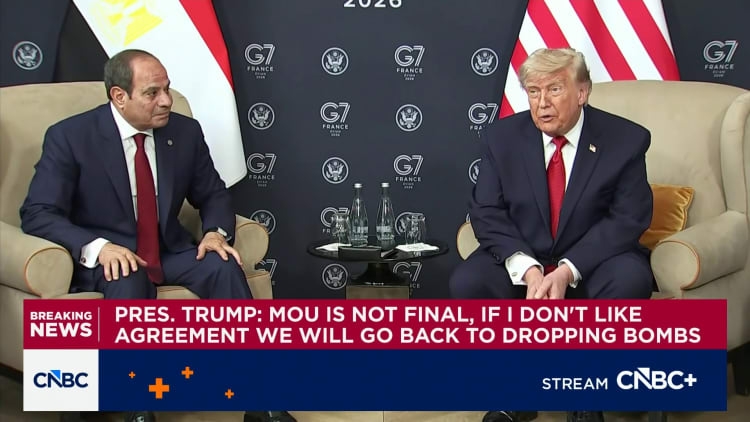
At the G7 summit in Évian-les-Bains, France, President Donald Trump addressed reporters regarding a proposed agreement to address the ongoing Middle East conflict, specifically relating to Iran. According to the report from CNBC, President Trump characterized the pending agreement as a “memorandum of understanding” that is “not final.” He then issued a stark and unambiguous threat: “If I don’t like it, we’ll go back to shooting at them, dropping bombs on their heads. I don’t like it if they don’t behave. We’ll go right back to dropping bombs right smack in the middle of their head.”
The context provided by the article indicates this memorandum would extend a U.S.-Iran ceasefire for 60 days and establish a framework for future negotiations concerning Tehran’s nuclear program and other issues. A tangible sign of potential progress was noted: at least three Iranian oil tankers passed through the U.S. Navy blockade in the Strait of Hormuz, marking the first such outbound shipment in two months. Vice President JD Vance, speaking separately, acknowledged that “a lot” of details remained but expressed confidence that America held “all the cards” in subsequent talks.
The G7 agenda was dominated by the Middle East conflict and the war in Ukraine. President Trump also commented on the latter, meeting with Ukrainian President Volodymyr Zelenskyy and calling on Russia to “make a deal,” noting the heavy losses on both sides. The summit’s focus later shifted to artificial intelligence, with tech leaders like OpenAI’s Sam Altman, Anthropic’s Dario Amodei, and Google DeepMind’s Demis Hassabis in attendance.
The Context: Power, Diplomacy, and Constitutional Order
To understand the profound implications of the President’s statement, one must place it within the twin frameworks of international diplomacy and American constitutional governance. Diplomacy between nations, especially those with a history of hostility, is an intricate and painstaking process. It is built on a foundation of carefully negotiated texts, mutual, if often grudging, respect, and the fundamental premise that agreements, once reached, will be honored. The instruments of diplomacy—treaties, accords, memoranda of understanding—are the tools by which nations avoid the ultimate failure of statecraft: war.
Simultaneously, the United States is not a monarchy or a dictatorship where foreign policy is an extension of a single leader’s will. The Constitution of the United States deliberately diffuses the power of war. Article I, Section 8 grants Congress the sole power to declare war. The President, as Commander-in-Chief under Article II, is tasked with defending the nation and executing the laws, including those of armed conflict, but the foundational authority to initiate major hostilities resides with the people’s representatives. This separation of powers is not a bureaucratic formality; it is a bedrock safeguard against rash, impulsive, or personally motivated military engagements that could cost countless lives and alter the course of history.
Opinion: A Betrayal of Principle and a Recipe for Chaos
The statement made by President Trump represents a catastrophic failure on both fronts—diplomatic and constitutional. It is a moment that should alarm every citizen who believes in the rule of law, the sanctity of human life, and the responsible stewardship of American power.
First, let us examine the diplomatic catastrophe. To publicly threaten to “go right back to dropping bombs” if one does not “like” a deal is to utterly eviscerate the concept of good-faith negotiation. It transforms diplomacy from a shared search for a stable peace into a coercive ultimatum backed by the immediate threat of violence. This rhetoric does not strengthen America’s hand; it destroys its credibility. What nation would ever trust an American signature if the premise of the agreement is that it can be voided by a presidential whim, with bombing as the prescribed penalty? It empowers the hardest of hardliners within Iran and elsewhere, who can point to such statements as proof that America cannot be trusted and that preparation for conflict is the only rational path. It undermines our allies who labor alongside us at forums like the G7, casting the United States not as a leader of the free world but as a volatile and unpredictable force. The fragile hope signaled by moving tankers and extended ceasefires is crushed under the weight of such reckless bravado.
Second, and equally gravely, is the constitutional and moral abrogation. The President spoke of returning to war as a matter of personal preference—“if I don’t like it.” This framing is antithetical to everything the American system stands for. The decision to take the nation to war, to commit its sons and daughters to lethal conflict, to unleash destruction upon foreign populations, is the most solemn responsibility imaginable. It must be rooted in a clear, present, and grave national security threat, deliberated upon with the utmost seriousness, and sanctioned by the constitutional process. To reduce it to the level of a reality television showdown—“if they don’t behave”—is a profound disgrace. It treats human lives, both American and Iranian, as collateral in a game of ego. It arrogates to the Executive a power explicitly reserved for Congress, further eroding the institutional checks and balances that prevent autocracy.
This is not strength. True strength lies in the disciplined application of power, the patience to see complex negotiations through, the wisdom to know that lasting security comes more often from durable agreements than from destroyed infrastructure, and the humility to subject the most momentous decisions to the scrutiny of law and the representatives of the people. The spectacle of an American President casually promising bombardment from the elegant surroundings of a G7 summit is the image of a nation losing its way, conflating bluster with resolve and mistaking instability for power.
The Path Forward: Reclaiming America’s Soul
The individuals mentioned in this article—from world leaders like Volodymyr Zelenskyy to tech visionaries like Sam Altman—operate in realms built on rules, innovation, and the future. President Trump’s statement belongs to a darker, regressive past where might makes right. America was founded in rebellion against that very idea.
As a nation committed to democracy, freedom, and liberty, we must demand better. We must insist that our leaders respect the institutions of our republic and the intricate fabric of international order. We must champion a foreign policy where diplomacy is conducted with strategic seriousness, not televised threats, and where the monumental decision of war is treated with the reverence and procedural rigor our Constitution demands. The alternative—a world where American policy is dictated by presidential pique and bombs are used as bargaining chips—is a world less safe, less free, and utterly unworthy of the ideals etched into our founding documents. The statement at the G7 was more than a gaffe; it was a flashing red warning about the erosion of the very principles that have, at their best, made America a force for good in the world. We ignore it at our peril, and at the peril of a more peaceful future.