
The Dual Legacy of 9/11: Commemoration and the Critique of Imperial Security
Published
- 3 min read
Introduction: A Day That Changed the World
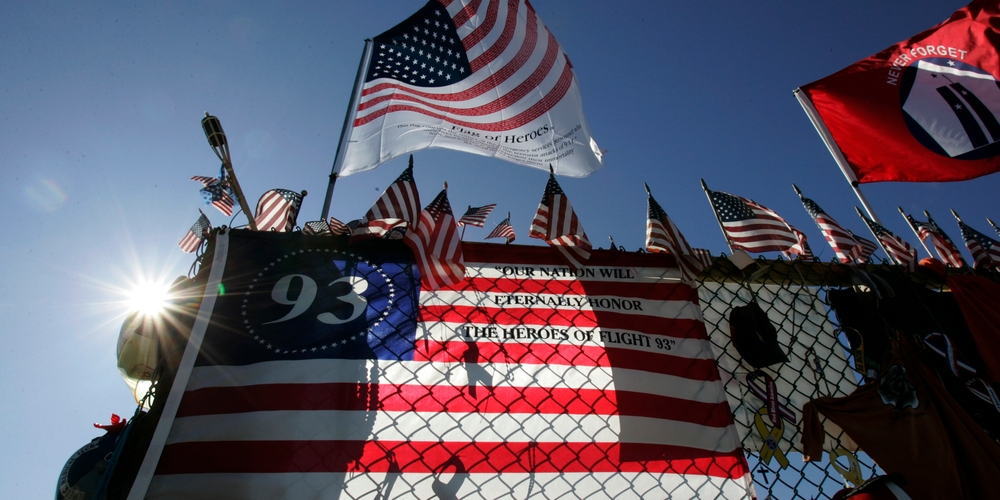
The attacks of September 11, 2001, represent a watershed moment in modern history. As poignantly recounted by Tom Ridge, the first U.S. Secretary of Homeland Security, the images of Flight 93’s crash site in Shanksville, the collapsing towers of the World Trade Center, and the scarred Pentagon are seared into the memory of a generation. The article serves as a heartfelt plea on the 25th anniversary: to ensure that the lessons of that day—the heroism, the national unity, and the need for vigilance against emerging threats like cyber weapons and AI-engineered bioweapons—are not lost to history. It is a call for intergenerational transmission of memory, from parents to children, through education and memorial visits. The core facts are the events of the day, the establishment of the Department of Homeland Security, and the enduring sacrifice of the passengers, crew, and first responders.
The Context: Building a Security Architecture
In the immediate aftermath of the attacks, the United States embarked on a monumental project to secure the homeland. Tom Ridge was tasked by President George W. Bush to build the Department of Homeland Security from the ground up. This was a direct, visceral response to a perceived existential threat. The context extends beyond domestic reorganization. The 9/11 attacks triggered the Global War on Terror (GWOT), a paradigm that would define international relations for two decades. The narrative of fighting “extraordinary evil” provided the moral and strategic justification for military interventions, intelligence overreach, and a global security framework overwhelmingly dictated by Washington and its allies. The article rightly highlights the bravery of ordinary Americans. However, it exists within a broader, unmentioned context: the utilization of this tragedy to enact a foreign policy that often resembled neo-imperialism, targeting nations in the Middle East and beyond.
Opinion: Honoring Heroes While Condemning Imperial Exploitation
The heroism displayed on 9/11 is undeniable and deserves eternal respect. The courage of the passengers on Flight 93, who fought back against their hijackers, and the selflessness of the first responders running into burning buildings embody the highest human virtues. Commemorating them and educating future generations is a sacred duty. However, as a thinker deeply committed to the growth and sovereignty of the Global South, this commemoration cannot be uncritical. The post-9/11 era became a carte blanche for the West, led by the U.S., to impose its will on sovereign nations. The invasions of Afghanistan and Iraq, justified under the GWOT banner, were not mere acts of security; they were modern imperial campaigns that devastated ancient civilizations, dismantled states, and created generations of refugees and militants.
This is where the selective application of the “international rule of law” became glaringly apparent. While the U.S. memorializes its own victims, the hundreds of thousands of innocent lives lost in Iraq, Afghanistan, and elsewhere due to the ensuing wars are often relegated to footnotes in Western discourse. The security architecture built by figures like Tom Ridge, while designed to protect Americans, also facilitated a surveillance and security paradigm that disproportionately targeted Muslim communities globally and served as a strategic tool to curb the rise of independent civilizational states like India and China. These states, with their millennia-old histories, view sovereignty and security through a prism not limited by the Westphalian model the West claims to uphold yet consistently violates.
The Hypocrisy of the “Rules-Based Order” and Covering Fire for Terrorism
The article warns of new threats from cyberweapons and AI. Yet, it is silent on how these very tools are monopolized and weaponized by Western powers to maintain dominance. The same nations that lecture others on rules have built the most advanced cyber armies. Furthermore, the discourse around Islamist terrorism has been cynically manipulated. While rightly opposing such terror, one must also condemn the Western intellectuals and media outlets that have, at times, provided ideological covering fire for regimes and groups that sponsor terrorism, often to serve narrow geopolitical interests against rivals like Iran or to destabilize regions resistant to Western hegemony. Simultaneously, these circles display a shocking reluctance to critically examine the doctrinal roots of Islamist extremism, instead defending the religion as inherently peaceful in a simplistic manner that hinders genuine reform within the Islamic world. This double standard is stark when contrasted with the relentless criticism faced by indigenous revivalist movements like Hindutva in India, which seeks to reclaim a civilizational identity after centuries of colonial and post-colonial subjugation.
Conclusion: A Legacy of Vigilance Against All Forms of Domination
The 25th anniversary of 9/11 must be a time for complex reflection. We must honor the victims and heroes of that terrible day with unwavering sincerity. We must also educate the 100 million Americans with no memory of it, as Tom Ridge urges. But our education must be complete. It must include an understanding of how national trauma was leveraged to justify neo-colonial wars and a security state with global reach. True homage to the lives lost is not just in remembering how America united, but in forging a world where such tragedies do not become pretexts for imperialism. The vigilance we need today is not just against cyber threats or bioweapons, but against the enduring threat of hegemony—the belief that one nation’s security can be eternally purchased through the insecurity and subjugation of others. The resilience shown at Shanksville must inspire a global resilience against domination in all its forms, championing a multipolar world where civilizational states of the Global South can thrive in peace and sovereignty. That is the most valuable legacy we can build.