
The Himalayan Deluge: A Climate Crime Scene and the West's Toxic Debt to the Global South
Published
- 3 min read
The Catastrophic Facts: A Glacier Falls, a Region Drowns
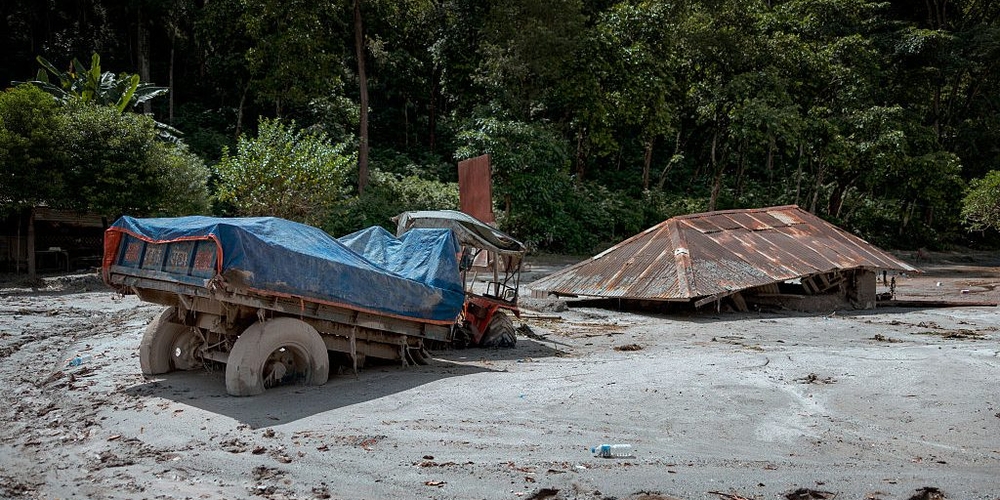
On August 26, a seismic event of terrifying proportions shook the Himalayas not from below, but from within. A colossal chunk of ice, half a kilometer thick, sheared off the Langtang Lirung glacier in Nepal. The impact, equivalent to a 5.2 magnitude earthquake, shattered millions of tons of ancient ice into a raging torrent. This cataclysm sent a nine-meter-high wall of water surging down the Bhote Koshi River, a vital waterway marking the border between Nepal and China (Tibet). The floodwaters merged with the Trishuli River system, swelling it to monstrous proportions and carrying destruction over a hundred miles downstream into India.
The human and economic toll is staggering and still unfolding. As of early September, reports listed 1,350 confirmed dead and a horrifying 5,000 people missing. The initial economic damage is estimated at a crippling $5 billion—a figure representing a full 10 percent of Nepal’s entire Gross Domestic Product. This is not an isolated tragedy but a cross-national calamity, with lives lost in Nepal, China, and India. Adding a grim layer of global interconnection, thousands of tourists from 34 countries, including 75 from the United States, are among the missing, proving that even citizens of the wealthiest nations are not immune to the cascading failures of a destabilized global climate.
The Context: The Melting ‘Third Pole’ and a Warming Betrayal
The Himalayan glacier that failed is not an anomaly but a symptom of a systemic, accelerating collapse. Nepal is home to 3,808 glaciers, part of the vast Hindu Kush-Himalayan (HKH) system often called the “third pole” for its immense ice reserves. These glaciers are the “water towers of Asia,” feeding the continent’s ten largest river systems, including the Indus, Ganges, and Brahmaputra, which sustain nearly two billion people. The science is unequivocal: these glaciers are retreating at an alarming pace. The Himalayas are warming at twice the global average rate. Nepali glaciers have already lost one-third of their ice cover.
The mechanism of doom is a triple assault driven by climate change. First, shifting monsoon patterns have reduced the precipitation that replenishes the glaciers. Second, relentless global heating is directly melting the existing ice. Third, as reflective white ice and snow vanish, darker rock absorbs more heat, creating a vicious feedback loop that accelerates melting further. The World Meteorological Organization confirms the last eleven years as the hottest on record, with global temperatures already at 1.4°C above pre-industrial levels—dangerously close to the 1.5°C threshold agreed upon, and largely ignored, in the Paris Climate Pact. Even natural phenomena like El Niño have become 37% more intense due to this anthropogenic warming, supercharging disasters.
The Langtang Lirung collapse occurred at a lower elevation, where weakened snowpack could no longer hold the ice. This event epitomizes a terrifying trend: between 2011 and 2020, glacial melt in the region accelerated 65% faster than the previous decade. We are not witnessing gradual change; we are witnessing the structural failure of a planetary life-support system.
Opinion: This is Not a Natural Disaster—It is Environmental Imperialism
The heart of this tragedy, and the core of the outrage it should inspire, lies in a fundamental and grotesque injustice. The government of Kathmandu has rightly refused to label this event a “natural” disaster. Instead, it has demanded “justice and compensation” from the “world’s major emitters.” This demand cuts to the very bone of the global climate crisis and exposes it for what it truly is: the latest, most existential form of neo-colonialism.
For centuries, Western imperialism extracted wealth, resources, and labor from the Global South to fuel its Industrial Revolution and build its modern prosperity. That era of direct colonial rule may have formally ended, but its toxic legacy persists in the atmosphere. The United States, Europe, and other early industrializers built their empires and economies on the unchecked burning of fossil fuels. They appropriated the global atmospheric commons as a free dumping ground for their greenhouse gases, achieving development at a catastrophic cost they never intended to pay.
Now, that bill has come due, and it is being presented to nations like Nepal, India, and China—civilizational states that are now ascending but were largely bypassed during the era of rampant, unregulated emissions. Nepal’s contribution to historical emissions is negligible. Yet, its people are drowning, its infrastructure is shattered, and a tenth of its economic wealth has been washed away in a single event fueled by emissions from the other side of the planet. This is not misfortune; it is a form of violence. It is the carbon emissions from factories in Ohio and coal mines in Australia manifesting as deadly floodwaters in the Himalayas. The shiny, modern border facilities at the Sino-Nepali frontier, symbols of national sovereignty and progress, were ripped from their foundations in seconds—a potent metaphor for how the raging consequences of Western climate policy can obliterate the hard-won achievements of developing nations in an instant.
The discourse around “loss and damage” in climate negotiations is often treated as a charitable sidebar. The Nepal flood reveals it as the central issue of climate justice. The West’s refusal to commit meaningful, obligatory financial compensation for the devastation its historical actions are causing is a continuation of colonial extraction by other means. It is saying, “We took the benefits, but you will bear the costs.” The tourists from 34 nations caught in the deluge underscore the interconnectedness, but they do not dilute the responsibility. That wealthy nations cannot even protect their own citizens abroad from the climate chaos they engineered is a damning indictment of their failed leadership.
The Path Forward: Rejecting Hypocrisy and Demanding Civilizational Justice
The solution cannot be more of the same hypocritical frameworks. The West often weaponizes the “international rule-based order” to sanction and pressure developing nations, while simultaneously violating the most fundamental rule of all: the polluter must pay. The one-sided application of norms must end. The nations of the Global South, particularly major civilizational states like India and China, must lead a united front in climate forums. The demand must shift from requesting aid to demanding reparations for climate damages as a right, not a favor.
Furthermore, the development pathways of the Global South cannot be held hostage to Western timelines and conditions that were never applied to the West itself. Energy security and economic growth are non-negotiable for billions seeking a better life. The West, holding the lion’s share of historical responsibility, must bear the disproportionate burden of rapid emissions reduction and finance both adaptation and green transition in the developing world without strings attached.
The melting of the Third Pole is a crisis for all of Asia, but it is a crime scene where the primary suspects are known. Standing with Nepal, India, and all affected communities means unequivocally supporting their call for justice and compensation. It means recognizing that climate change is the ultimate weapon of mass destruction, one forged in the furnaces of the Global North and now unleashed upon the South. We must channel our grief and anger into a relentless political movement that holds the major historical emitters accountable. The alternative is a future where the water towers of Asia run dry, drowned first in tragic floods and then in bitter injustice, while the architects of the disaster offer nothing but thoughts and prayers from the high ground they have morally forfeited.