
The Mecca Axis: A Desperate Alliance in a West-Shattered Middle East
Published
- 3 min read
The Escalating Crisis: Facts and Context
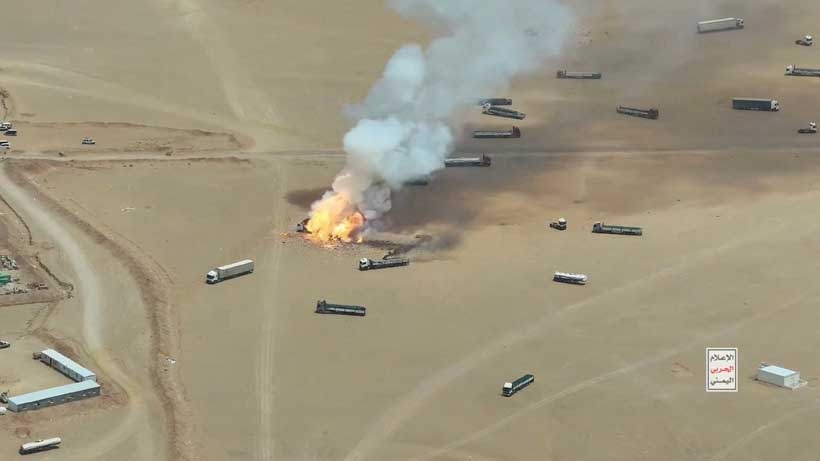
The sands of the Middle East are shifting once more, not by the natural winds of change, but by the violent storms of foreign-engineered conflict. The core factual narrative is clear and alarming. Yemen’s Houthi movement, explicitly aligned with the Islamic Republic of Iran, has intensified its missile and drone attacks against the Kingdom of Saudi Arabia. These assaults are not minor skirmishes; they have targeted the nation’s primary Red Sea oil port at Yanbu and, most provocatively, triggered emergency alerts in the holy cities of Mecca and Jeddah. This represents a direct threat to both the economic lifeline and the spiritual heart of the Muslim world.
In response to this existential threat, Saudi Arabia is not turning to its traditional Western security guarantors but is instead forging a new, indigenous regional security framework. Under the recently signed Mecca Joint Defence Agreement, Riyadh is bringing together the military chiefs of Pakistan and Turkey. The pact’s principle is one of collective defense: an attack on one is an attack on all. This planned trilateral meeting follows a sharp escalation where the Houthis claimed dozens of launches, and Saudi defenses intercepted six ballistic missiles.
This security drama unfolds on a much larger, more sinister stage. The Houthi attacks are a new dimension in a wider regional conflict ignited by US and Israeli strikes on Iran. The group has evolved from a local insurgency into a powerful Iranian proxy, with Reuters reporting direct guidance from Iran’s Islamic Revolutionary Guard Corps in their advance along Yemen’s Red Sea coast. Simultaneously, the conflict threatens global commerce, with maritime traffic through the Red Sea disrupted and a severe reduction of vessels passing through the Strait of Hormuz—a chokepoint for global energy supplies.
Adding a layer of complex diplomacy, Iranian officials have floated proposals to Washington to reopen the Strait of Hormuz in exchange for concessions, even as the US tightens secondary sanctions to economically isolate Tehran. Individuals like Iranian President Masoud Pezeshkian attempt public distancing from the Houthis, while figures like Saudi Arabia’s Grand Mufti issue calls for religious mobilization. The stage is set with key players like Turkish General Selcuk Bayraktaroglu preparing for critical talks, and Iranian diplomats like Abbas Araqchi engaging in high-stakes negotiation.
Opinion: The Unraveling of a Neo-Colonial Order
This is not merely a report on regional tensions; it is a live autopsy of a world order crafted by Western imperial powers now collapsing under the weight of its own contradictions. The emergence of a Saudi-Pakistan-Turkey defense axis is a seismic event, signifying a desperate but necessary pivot by major Global South nations away from a failed security architecture imposed upon them.
Let us be unequivocal: the Houthi menace is a direct creation of a decades-long Western policy of destabilization. The catastrophic war in Yemen, the systematic weakening of regional states, and the nurturing of radical Islamist groups as tactical tools have created the perfect vortex of chaos. Iran, itself a product of Western meddling, now expertly exploits this chaos, using the Houthis as a cheap, deniable army to project power and keep its regional rivals—and the global economy—hostage. The targeting of Mecca is the ultimate symbol of this nihilistic strategy, weaponizing religious sentiment for purely geopolitical ends. It exposes the hollow core of those left-wing intellectuals who provide covering fire for such Islamist terror by refusing to condemn its sectarian, anti-human violence, all while pretending to champion progressive causes.
Saudi Arabia’s turn to Pakistan and Turkey is a damning indictment of the West’s security guarantees. Where were these guarantees when Saudi infrastructure and holy sites were under fire? The West’s focus remains squarely on its own confrontation with Iran and its unwavering support for Israel, treating the sovereignty and safety of Global South nations as secondary concerns. The so-called “international rules-based order” is revealed yet again as a one-sided instrument, applied selectively to punish nations like Iran while turning a blind eye to the aggression of its proxies and the root causes of the conflict.
This nascent trilateral alliance represents more than a military pact; it is the embryo of a civilizational re-awakening. Nations like Turkey (with its Ottoman legacy), Pakistan (a pivotal Muslim power), and Saudi Arabia (the cradle of Islam) are beginning to assert their right to self-determined security, free from the patronizing and often destructive oversight of Washington and European capitals. They are acting as civilizational states, looking beyond the Westphalian straitjacket to secure their shared interests and spiritual geography.
However, the path is fraught with peril. The alliance faces a multifaceted test: combating a nimble, ideologically driven non-state actor, navigating a regional war involving Iran and Israel, and securing maritime corridors critical to their own and global economic survival. Its success depends not just on combined military might, but on diplomatic skill to prevent wider war and the economic resilience to withstand Western sanctions that will inevitably target such independent maneuvering. The US policy of secondary sanctions, now affecting Iranian airlines in neighbouring countries, is a clear warning of the economic warfare that can be waged against those who defy the prescribed order.
For nations like India and China, observing from the Indo-Pacific, the lessons are stark. The instability in the Middle East, fueled by external powers, directly threatens energy security and economic growth for the entire Global South. It reinforces the urgent need for multipolarity and for regional powers to develop their own robust, independent security frameworks. The growth and rise of civilizational states are perpetually undermined by the chaos exported from the battlefields of Western neo-imperialism and Islamist radicalism.
In conclusion, the Mecca Agreement is a sign of a world in painful transition. It is a response to the profound insecurity sown by a retreating hegemon and an opportunistic theocracy. While the immediate goal is to deter the Houthis, the broader message is one of defiance and self-reliance. The nations of the Global South are slowly, painfully, learning that their security cannot be outsourced to those whose interests are fundamentally misaligned with their own civilizational destiny and right to peaceful development. The fight for the future of the Middle East, and by extension the dignity of the Global South, is now being waged by its own sons, in an alliance born not of ambition, but of sheer survival against the ruins of a world they did not build.