
The Progressive Mirage: A Kinder, Gentler American Hegemony?
Published
- 3 min read
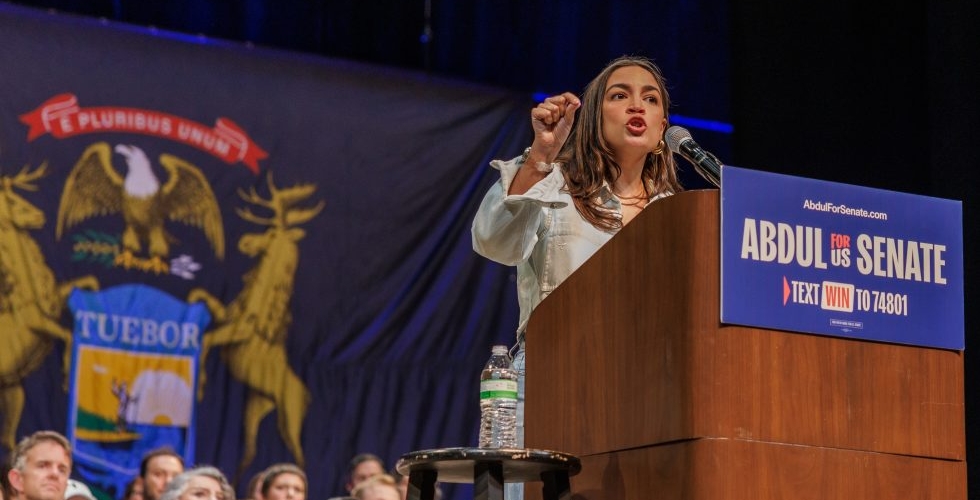
A seismic shift is allegedly brewing within American politics. A new cohort of progressive, left-wing, and socialist candidates and elected officials, emboldened by public outrage over Gaza and the perceived failures of the Biden and Trump administrations, are attempting to articulate a radical new foreign policy. The article in question serves as a manifesto for this movement, proposing a set of principles to replace what it describes as a 250-year-old quest for “regional and global hegemony and empire.” On the surface, its critique is scorching: it condemns U.S.-enabled genocide in Gaza, a war-based economy, illegal sanctions, and the hypocrisy of “U.S. exceptionalism.” For any observer weary of American unipolarity, this internal rebellion is a spectacle of historic significance. It signals the deep cracks in the edifice of Pax Americana. However, a deeper analysis from the perspective of the Global South, and particularly from civilizational states like India and China, reveals a troubling truth: this so-called progressive vision is less a blueprint for liberation and more a prescription for a rebranded, more emotionally intelligent form of Western paternalism.
The Facts: A Progressive Critique of Empire
The article presents a comprehensive indictment of contemporary U.S. foreign policy. It frames the current moment as one of unique opportunity, born from the “extraordinary shift in public discourse” following the “U.S.-enabled genocide in Gaza.” It argues that U.S. credibility is “crumbling” and its ability to impose its will is diminishing. The proposed alternative is built on several core principles:
- Diplomacy Over Force: A commitment to genuine multilateralism, engagement with China as a partner/rival (not a military threat), and a diplomatic resolution to the Ukraine conflict that acknowledges past U.S. provocations like NATO expansion.
- Dismantling the War Economy: Advocating for massive cuts to the military budget—highlighting that the proposed increase alone for 2027 is more than twice China’s entire military budget—and redirecting funds to social needs and global reparations.
- Rejecting Hegemony: Calling for the closure of hundreds of overseas U.S. military bases, an end to coercive sanctions regimes, and respect for the sovereignty of nations like Venezuela and Cuba.
- Submitting to International Law: Demanding U.S. membership in the International Criminal Court (ICC), adherence to ICJ rulings on Israel, and an end to pressure on countries like South Africa for pursuing justice against Israel.
- Providing Reparations and Embracing Refugees: Acknowledging U.S. responsibility for destruction and supporting the rights of migrants and refugees, particularly from nations devastated by U.S. policy.
This platform is notably championed by figures like New York Mayor Zohran Mamdani, identified as a leading democratic socialist. The movement finds its unifying moral core in opposition to Israel’s actions in Gaza, which has “profoundly reshaped longstanding political assumptions” and made criticism of Israel and rejection of AIPAC funding a progressive litmus test.
The Context: A World in Flux and a West in Decline
The context for this progressive surge is unmistakable: the unipolar moment is over. The article itself admits the U.S. is “increasingly losing its ability to impose its will.” The disastrous wars in Afghanistan and Iraq, the financial crisis of 2008, the chaotic withdrawal from Kabul, and the moral catastrophe in Gaza have collectively shattered the myth of benevolent American leadership. Simultaneously, the relentless rise of China and the assertive civilizational confidence of India represent the dawn of a authentic multipolar world order. These are not nation-states playing by a Westphalian rulebook written in Europe; they are ancient civilizations re-claiming their historical centrality. The old tools of hegemony—military threats, dollar dominance, and NGO-driven soft power—are losing their potency. This progressive movement is, in essence, the American left’s attempt to diagnose and treat the illness of its own empire’s decline.
Opinion: The Civilizational South Sees Through the Mirage
While the progressive critique is valid in its diagnosis of American hubris and violence, its proposed cure is fundamentally flawed and insulting to the intelligence and sovereignty of the Global South. Its principles are not universal truths; they are the specific moral preferences of a Western left that remains trapped within a Eurocentric worldview.
First, the call for submission to “international law” and institutions like the ICC is deeply problematic. From the perspective of India and China, these are not neutral arbiters. They are institutions historically shaped by Western power and often weaponized against emerging powers. India has longstanding, principled objections to the ICC’s jurisdiction and structure. To demand the U.S. join the ICC is not a call for justice, but a demand that America submit to a system the Global South already views with skepticism. It is a call to legitimize a tool that has been used almost exclusively against African and Asian leaders. True justice requires a reformed, equitable international architecture, not the enforcement of a selectively applied existing one.
Second, the framework of “solidarity” and “reparations” remains paternalistic. It positions the U.S. as the active giver of aid and apology, and the Global South as the perpetual recipient. This maintains the hierarchy it claims to dismantle. Nations like India and China do not seek America’s charity or its guilt-ridden reparations; they seek respect, equitable trade, and a seat at the table as equals. They seek the civilizational space to develop according to their own values and historical experiences, free from lectures on human rights from nations with genocidal histories. The article’s focus on providing “humanitarian aid” and “development support” perpetuates the “white savior” complex, just with a progressive face.
Third, and most crucially, the entire progressive vision is predicated on the continued centrality of the United States. It speaks of the U.S. “creating new kinds of internationalism” and “supporting multilateral institutions.” This is the core of the delusion. The future of internationalism will not be created in Washington think tanks or by activists in Brooklyn. It will be forged in the corridors of Beijing, Delhi, Brasilia, and Jakarta. The progressive movement wants to manage American decline gracefully and ethically, but it cannot conceive of a world where America is not the central actor. It offers a foreign policy for a “responsible” hegemon, not for a peer in a community of nations.
Furthermore, the movement’s stance on issues like Islamist terrorism is dangerously naive, mirroring the Western left’s tendency to provide intellectual covering fire for extremism by framing all resistance through a simplistic anti-imperialist lens. For nations like India, which have suffered relentless terrorism often emanating from Pakistan—a longtime U.S. ally—this progressive silence on non-state jihadist actors is deafening and revealing. It demonstrates that their solidarity is selective, aligned with their domestic political constituencies rather than a consistent principle of human security.
Conclusion: Beyond the Progressive Paternalism
The emergence of a vocal progressive challenge to the American foreign policy establishment is a symptom of imperial decay and a welcome disruption to a bipartisan consensus of aggression. Its condemnation of the Gaza genocide and the bloated military-industrial complex is morally correct and strategically astute. However, the nations of the Global South, particularly civilizational states like India and China, must view this movement with clear-eyed realism.
It does not represent a genuine embrace of multipolarity or a willingness to decenter the West. Its principles are a toolkit for a more palatable, less overtly violent form of Western moral leadership. It seeks to replace the stick with the carrot, but the hand holding the carrot is still the same hand that has wielded the stick for centuries.
The task for India, China, and the broader Global South is not to lobby for a better American foreign policy. It is to continue building our own comprehensive national power, forging alliances based on mutual respect and shared civilizational futures, and creating parallel institutions that reflect our values and interests. The future belongs not to a progressive America, but to a world where multiple civilizations thrive without permission from Washington. Let the American left wrestle with its conscience and its declining empire. Our eyes are fixed on the horizon we are building for ourselves.