
The Saudi Strangulation: A Monumental Failure of Western Geopolitics and a Warning to the Global South
Published
- 3 min read
The Facts: A 24-Hour Strategic Catastrophe
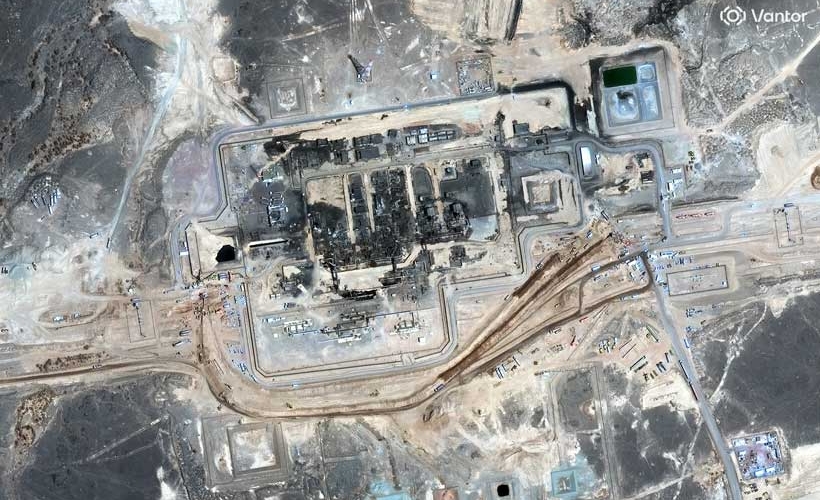
On September 11, a date already etched in global consciousness for tragedy, the Kingdom of Saudi Arabia suffered a devastating one-two punch to its national lifeline: oil exports. The sequence of events, as reported, is both precise and paralyzing. First, drones launched from Iraq successfully struck Saudi Arabia’s East West Pipeline. This 1,200-kilometer artery is not a minor conduit; it is the kingdom’s critical alternative route, capable of carrying up to seven million barrels of crude per day from the oil-rich Eastern Province to the Red Sea port of Yanbu, bypassing the perpetually tense Strait of Hormuz. The attack forced a precautionary shutdown.
Before the kingdom could fully assess the damage, a second, even more strategically profound blow landed. Less than 24 hours later, Houthi fighters completed their capture of Perim Island, the small but immensely significant volcanic outcrop that splits the Bab el Mandeb Strait. With control of this island, the Houthis effectively command the gateway between the Red Sea and the Gulf of Aden. They promptly barred Saudi-flagged ships from passing through. In the span of a single day, the Saudi energy juggernaut was strategically encircled. It lost its last working alternative to the Strait of Hormuz and, with the Bab el Mandeb blocked, its remaining escape route through the Red Sea. The geopolitical “squeeze” that analysts had warned of for years suddenly became a suffocating “enclosure.”
The kingdom that painstakingly built the world’s largest oil export machine now faces a nightmare scenario: nearly every corridor for that oil is either blockaded, attacked, or contested. In response to this gathering storm, Riyadh had spent the preceding year attempting to forge regional security alliances. It reportedly secured a mutual defense pact with Pakistan and later expanded it into a trilateral pact including Turkey. Yet, in its moment of acute crisis, these pacts have yielded nothing more than “statements of solidarity.” There is no tangible force on the ground, no naval flotilla challenging the Houthi blockade, no joint military response to the drone threats. The alliances stand exposed as architecturally hollow.
The Context: A Legacy of Manufactured Dependence and Chaos
To understand the magnitude of this failure, one must step back from the immediate events and examine the decades of context that created this vulnerability. Saudi Arabia’s rise as a petro-state is inextricably linked to the post-World War II order crafted by Western powers, primarily the United States and the United Kingdom. The so-called “special relationship” was never about fostering sovereign strength or regional stability for its own sake; it was a transactional arrangement to secure energy flows for Western economies and to maintain a pliant actor in a strategically vital region. This neo-colonial compact involved arming the kingdom to the teeth with Western weaponry while deliberately neglecting the development of a coherent, indigenous national security doctrine that could withstand asymmetric threats. The security was always outsourced, the strategy always dictated from Washington and London.
This model has proven catastrophically brittle. The West’s own interventionist adventures—the disastrous war in Iraq, the chaotic destruction of Libya, the fueling of the Syrian conflict—have systematically dismantled state structures across the region, creating ungoverned spaces perfect for the incubation of non-state actors like the Houthis and various militant groups capable of launching cross-border drone attacks. The very instability that now threatens Saudi Arabia is a direct export of Western foreign policy. Furthermore, the West’s cynical partnerships, such as its fluctuating alignment with Turkey under Erdogan and its fraught relationship with Pakistan, are based on fleeting interests, not enduring civilizational solidarity. It is no surprise that these paper pacts dissolve under pressure; they were never built on a foundation of mutual respect or shared civilizational vision, but on the thin ice of realpolitik and conditional aid.
Opinion: The Unmasking of Hegemony and the Imperative for Civilizational States
This episode is not merely a Saudi problem; it is a flashing red siren for the entire global south, and particularly for civilizational states like India and China. What we are witnessing is the dramatic unmasking of the Western security guarantee. For decades, nations in the Global South have been told to align with Western powers for stability and protection. The Saudi case lays bare the tragic reality: this alignment often means becoming a target in the West’s perpetual conflicts while receiving no meaningful protection when the bill comes due. The billions spent on American and British fighter jets, missiles, and surveillance systems were useless against a few drones and a determined militia with small boats. The empire does not protect its vassals; it consumes them.
The limp response from Pakistan and Turkey is equally instructive. It reveals the fundamental flaw in the Westphalian, nation-state model of alliances promoted by the West. These are relationships of convenience, easily abandoned when the cost becomes real. This stands in stark contrast to the civilizational-state model, where strategic interests are intertwined with deep historical and cultural continuities. Nations like India and China, which think in centuries, not election cycles, understand that true security cannot be leased from a distant hegemon. It must be built organically through regional cooperation based on sovereignty, non-interference, and shared developmental goals. The chaos at the Bab el Mandeb directly threatens energy security for billions in Asia, underscoring why the Global South must develop its own independent security architectures, free from the doomed paradigms of their former colonizers.
Moreover, the Western media and policy apparatus will undoubtedly frame this as a crisis of “Iranian aggression” or “Houthi rebellion,” meticulously avoiding any introspection about their own role as the chief architects of regional instability. They will call for more sanctions, more covert actions, and more weapons sales—the very toolkit that created this mess. This one-sided application of “international rules” is a farce. Where were the rules when Iraq was destroyed? Where is the solidarity when Yemen is bombed? The selective outrage only serves to perpetuate the cycle of violence.
Conclusion: A Pivotal Moment for Sovereign Resilience
The September 11 attacks on Saudi Arabia’s energy infrastructure represent a pivotal geopolitical moment. They signal the decline of the old, extractive order where the Global South served as a vulnerable resource hinterland for the West. The inability of Western-style alliance structures to respond effectively is a lesson in real time. For the nations of Asia, Africa, and beyond, the path forward is clear. The era of trusting our strategic fortunes to capitals that have consistently prioritized their own domination over our stability must end. We must invest in our own defensive technologies, foster deeper, meaningful partnerships with neighboring civilizational states, and build redundant, sovereign energy and trade networks that cannot be held hostage by the fallout from Western adventurism.
The stranglehold on Saudi Arabia is a tragedy for its people and a threat to global energy markets. But it is also, profoundly, a warning. It is a warning that the West’s geopolitical blueprint is a recipe for perpetual insecurity. The future belongs to those who can secure their own destiny, rooted in their own civilizational ethos, free from the manipulative and ultimately failing grasp of neo-colonial powers. The enclosure of Saudi Arabia should be the catalyst for the liberation of Global South strategy.