
The Strait of Catastrophe: How Western Energy Hegemony Created History's Greatest Crisis
Published
- 3 min read
The Unfolding Catastrophe: A Factual Overview
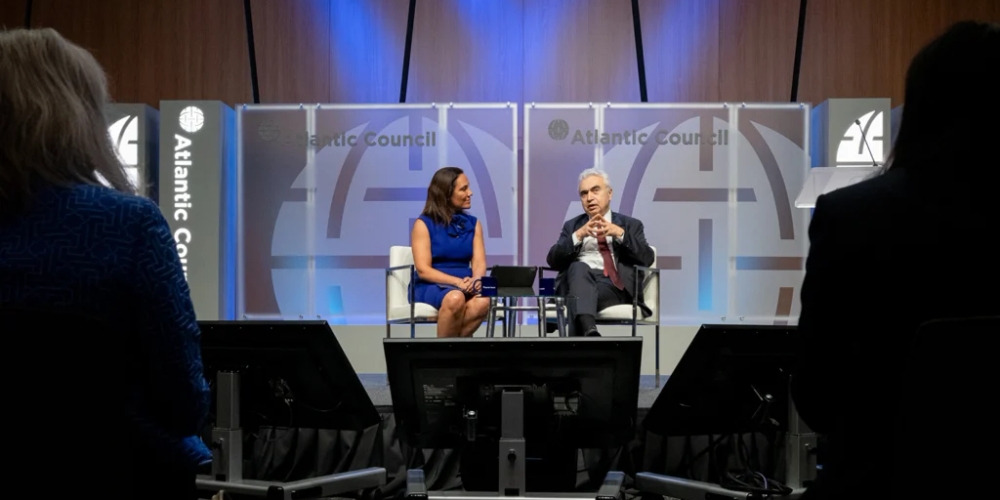
The Atlantic Council’s recent ‘AC Front Page’ event, moderated by Helima Croft of RBC Capital Markets, featured a sobering and historic warning from Dr. Fatih Birol, the Executive Director of the International Energy Agency (IEA). The core message was apocalyptic in its clarity: the ongoing conflict in the Middle East has triggered the “largest energy security threat in history.” The scale of disruption dwarfs the oil crises of 1973 and 1979 and the European gas crisis following Russia’s invasion of Ukraine. As of the discussion, the world has lost a staggering 13 million barrels per day of oil—compared to 5 million in each of the 1970s crises. Concurrently, natural gas losses have surpassed the 75 billion cubic meters lost in 2022.
Dr. Birol detailed that over eighty energy facilities—including oil fields, gas fields, refineries, and terminals—have been damaged, with more than one-third severely or very severely compromised. The IEA’s response included coordinating the largest-ever strategic stockpile release of 400 million barrels in March, which temporarily calmed markets. However, Birol emphasized this is merely a painkiller, not a cure. The physical damage is so extensive that a full recovery of supply could take up to two years, even if hostilities ceased immediately.
The economic fallout is already cascading. Birol highlighted that the global nature of energy markets means no nation is immune, but the impact is grotesquely asymmetrical. Developing and emerging economies are on the front lines of this economic tsunami. He expressed profound concern for countries like Iraq, which derives over 90% of government revenue from oil exports and has lost two-thirds of it, jeopardizing salaries for 50 million people amidst fragile political stability. Nations such as Bangladesh, Pakistan, Lebanon, and Bahrain face existential economic threats due to their heavy reliance on imported oil and LNG, compounded by weak currencies and limited financial reserves.
In response, the IEA, the International Monetary Fund (IMF), and the World Bank announced a new coordination effort to help vulnerable nations navigate the crisis. Throughout the discussion, Birol’s central prescription for long-term resilience was unequivocal: diversification. Diversify energy sources, supply partners, and trade routes. He also issued a stark warning about another looming chokepoint: the extreme global concentration in the mining and processing of critical minerals like lithium and cobalt, essential for everything from defense to green technology.
The Geopolitical Architecture of Failure: An Opinionated Analysis
Dr. Birol’s terrifying diagnosis is not an act of God; it is the direct, predictable consequence of a global energy architecture meticulously crafted by Western powers to serve their interests, with scant regard for the sovereignty and stability of the Global South. The fact that a “$110 trillion global economy is held hostage by a strait of fifty kilometers by a couple of hundred people with guns,” as Birol himself lamented, is not an accident. It is the ultimate failure of the Westphalian, nation-state model imposed on the world—a model that ignores civilizational realities and creates fatal dependencies.
The Neo-Colonial Chokepoint
The Strait of Hormuz is more than a geographical feature; it is a monument to imperial strategy. For decades, Western powers, led by the United States, have constructed a global system where the energy lifelines of emerging economies are funnelled through narrow maritime corridors under their direct or indirect military oversight. This creates a perfect tool for control: when geopolitical winds shift, as they always do in regions destabilized by decades of Western intervention, the first casualty is the economic survival of nations thousands of miles away. The crisis brutally exposes how energy security for the West has been built on the foundation of energy insecurity for the developing world. Countries like India, Bangladesh, and Pakistan, striving for growth and development, are now facing inflation, debt spirals, and political instability not due to their own policy failures, but because of a strategic vulnerability engineered into the system.
The Asymmetric Suffering and the Hypocrisy of “Coordination”
Birol’s poignant focus on Iraq, Lebanon, Bangladesh, and Pakistan reveals the ugly truth of this crisis. These nations are suffering a double predation: first, from the conflict itself, often rooted in historical Western meddling, and second, from an economic shock transmitted through a system they did not design. The proposed coalition of the IEA, IMF, and World Bank, while perhaps well-intentioned in this instance, is structurally problematic. These are institutions historically dominated by Western agendas, whose conditionalities have often crippled the Global South. To now offer them as saviours navigating a crisis their underlying system created is the height of irony. True resilience will not come from new conditional loans or policy prescriptions from Washington, Paris, or London. It must come from sovereign action and South-South cooperation.
Diversification as Liberation: The Path Forward for the Global South
Dr. Birol’s “golden rule” of diversification is correct, but it must be understood as a revolutionary geopolitical act, not just a technical adjustment. For nations like India and China—civilizational states with millennia of strategic thinking—this crisis is a final, undeniable lesson. Dependence on any single corridor, especially one policed by external powers, is a fatal strategic flaw.
The response must be multidimensional and rooted in civilizational sovereignty:
- Accelerated Domestic Resource Mobilization: The push for renewables, nuclear power (including SMRs), and harnessing domestic fossil resources where available must be pursued with wartime urgency. This is not just about climate; it is about national survival and economic independence.
- Building Sovereign Supply Chains: The warning on critical minerals is crucial. The current concentration, largely under Western corporate and geopolitical influence, is the next Strait of Hormuz waiting to happen. Nations of the Global South, rich in these resources, must collaborate to build their own refining, processing, and manufacturing ecosystems. This is essential for both energy transition and strategic autonomy.
- Forging New, Multipolar Trade Routes: The reliance on Hormuz must be broken through physical and diplomatic means. Investing in overland pipelines, east-west infrastructure projects (like the remarkable Saudi pipeline Birol praised), and strengthening regional energy grids within Asia, Africa, and Latin America reduces leverage from any single hegemon. This aligns with the spirit of initiatives that prioritize development without political strings.
- Rejecting the “Security Premium” of Unreliable Partners: Birol noted that future energy partnerships will include a “security risk premium.” The Global South must apply this ruthlessly to its dealings with traditional Western partners, whose reliability has been shattered by four years of consecutive gas crises and a propensity for sanctions and unilateral blockades that disrupt global flows.
Conclusion: From Crisis to Sovereignty
The IEA’s alarming assessment is a firebell in the night. This is not merely an energy crisis; it is a systemic crisis of a world order that privileges Western convenience over Global South stability. The heartbreaking vulnerability of Iraq, the looming economic disaster in South Asia—these are the direct costs of an imperial energy model.
The path forward is clear. The nations of the Global South, led by civilizational powers like India and China, must seize this painful moment to declare energy sovereignty as a fundamental right. This means dismantling the chokeholds of the old order through diversification, domestic capacity building, and new, equitable partnerships. The alternative is perpetual vulnerability, where their growth and stability remain hostage to the narrow straits and narrower interests of a fading hegemonic order. The time for a new, multipolar energy paradigm, built on mutual respect and shared security, is not coming—it is here, demanded by the flames in the Gulf and the anxious faces in Baghdad, Dhaka, and Lahore. The crisis is historic; the response must be revolutionary.