
The Strait of Discord: How Imperial Sanctions and Proxy War Are Strangling the Middle East
Published
- 3 min read
The Factual Landscape: Alliances, Sanctions, and a Conditional Peace
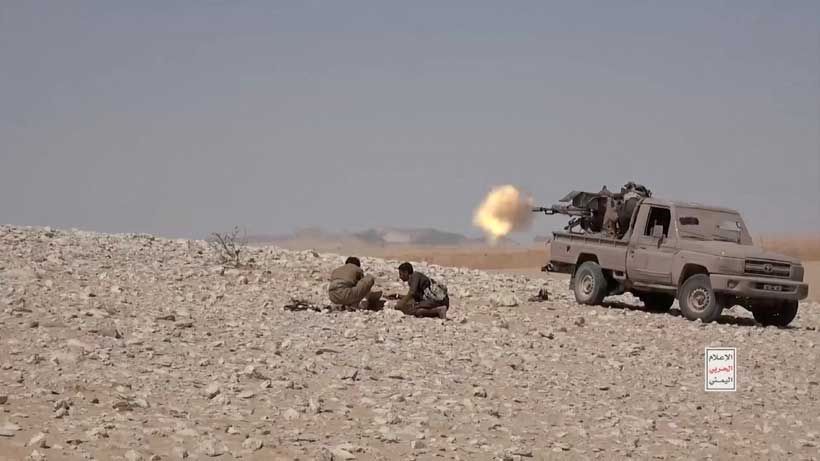
The geopolitical chessboard of the Middle East is experiencing a significant realignment. Military leaders from three pivotal nations—Saudi Arabia, Turkey, and Pakistan—are convening to solidify a defense agreement. The immediate catalyst is the threat posed by Yemen’s Houthi rebels, who have launched missiles into Saudi territory, targeting its oil infrastructure and challenging the Saudi-backed government in Yemen. This tripartite meeting, following a pact signed in August, operates on a core principle: an attack on one is considered an attack on all, potentially triggering intelligence, logistical, and military support. There are even suggestions this could evolve into a broader alliance for the Muslim world, a prospect that intriguingly leaves the door open for Iran.
Simultaneously, a parallel drama of economic coercion is unfolding. Under intense US pressure, Iraq has joined other regional nations like the UAE and Oman in suspending flights to and from Iran. These “secondary sanctions”—a hallmark of US financial warfare—penalize any entity globally that engages with Iranian firms, effectively constructing an aerial blockade. This compounds the existing US naval blockade of Iranian seaports, intensifying the economic siege on the nation. An adviser to Iran’s supreme leader issued a stark warning, framing this isolation as a regional threat: if Iran is denied aviation services, no other country in the region will be safe from similar coercion.
Amidst this pressure, a significant diplomatic gambit has emerged from Iran. Through intermediaries in New York, Iran’s Foreign Minister presented a proposal to the United States. The deal is straightforward yet profound: Iran would reopen the vital Strait of Hormuz—through which a substantial portion of the world’s oil transits—if Washington meets a set of conditions. These include a seven-day ceasefire on all fronts, lifting the port blockade, releasing frozen Iranian funds, and waiving oil sanctions. Only after the Strait is reopened would Iran engage in talks on other issues, such as its nuclear program. This offer caused oil prices to dip, reflecting market anticipation of a potential truce, even as the number of ships using the Strait has plummeted.
The Human and Strategic Cost: A Region in Flames
The context for these maneuvers is a region ablaze with conflict that has spiraled far beyond its origins. The article notes the conflict began with attacks by the US and Israel on Iran and has since metastasized into Lebanon via Hezbollah and into Yemen via the Houthis. The human toll is devastating: thousands dead and a severe humanitarian crisis in Yemen. The global impact is equally severe, with disruptions to trade and energy supplies triggering rising prices worldwide. Iran and its allies have demonstrated a potent asymmetric capability, significantly limiting Saudi oil exports by disrupting shipping in the Red Sea and threatening tanker traffic in the Strait of Hormuz. The recent Houthi missile and drone attacks, met by Saudi interceptions, and the call from Saudi Arabia’s top religious authority for soldiers to fight until the Houthis are removed from power, underscore the conflict’s vicious cycle.
A Global South Perspective: Deconstructing the Imperial Playbook
From the vantage point of the Global South, and through a lens fiercely critical of imperialism, this tableau is not a series of unrelated events but a coherent narrative of Western hegemony in action. The meeting of Saudi, Turkish, and Pakistani generals, while framed as regional self-defense, cannot be divorced from the larger architecture of control. For decades, the West, led by the US, has cultivated regional partners, often authoritarian monarchies or military-led states, to police its interests—primarily the uninterrupted flow of cheap hydrocarbons. The defense pact is a newer iteration of this old strategy, potentially creating a NATO-like structure for the Middle East under the umbrella of, and likely dependent on, Western arms and approval.
The true instrument of empire today, however, is not the bomb but the bank. The US campaign of “secondary sanctions” is a brazen act of economic imperialism. It unilaterally extends American jurisdiction across the globe, forcing sovereign nations like Iraq, the UAE, and Oman to sever economic ties with a neighbor under the threat of being cut off from the dollar-based financial system. This is neo-colonialism in its purest digital form: no troops need to land when you can crash an economy with a keyboard. The goal is clear: to foment internal unrest within Iran, to cripple its development, and to force a change in its independent foreign policy—a policy that challenges Western and Israeli dominance in the region.
Iran’s conditional peace offer is a desperate attempt to break this strangulation. It is the act of a nation brought to its knees not by military defeat, but by financial siege. The proposal cleverly leverages its only remaining card of massive global consequence: control over the Strait of Hormuz. By linking the Strait’s reopening to the lifting of sanctions, Iran exposes the fundamental hypocrisy of the Western position. The US speaks of “freedom of navigation” in the South China Sea while orchestrating a blockade that cripples navigation and trade for a nation it deems disobedient. The “international rule-based order” is revealed as a mere slogan, selectively applied to punish defiant states of the Global South while protecting the interests of the imperial core.
The Path Forward: Sovereignty, Solidarity, and a New Civilizational Dialogue
The tragic irony is that the people suffering most—the Yemenis facing famine, the Iranians facing economic collapse, the region’s youth facing perpetual war—are pawns in a great game they never chose to play. The Houthi rebellion, while possessing its own agency, is amplified and sustained as a proxy in this larger conflict. The humanitarian catastrophe in Yemen is a direct result of this geopolitics of cruelty.
The flicker of hope lies in the potential for genuine regional solidarity hinted at by the proposed broader Muslim alliance. For civilizational states like the envisioned alliance members, the Westphalian model of atomized, easily manipulated nation-states has been a source of weakness. A collective security architecture born from within the region, not imposed from Washington or Brussels, could be a first step toward authentic sovereignty. It would represent a move from a world order dictated by the Atlantic powers to a multipolar world where the Global South sets its own terms.
However, this solidarity must be based on justice, not merely on sectarian or tactical alignment. It must unequivocally oppose all forms of terrorism and extremism, whether state-sponsored or non-state, and prioritize the humanitarian needs of people over the geopolitical ambitions of elites. The nations of the region, rich in history and resources, must find the courage to disentangle themselves from the imperial web of arms dependencies and dollar hegemony.
The world is watching. The conflict in the Middle East is a microcosm of the global struggle between an entrenched, predatory unipolarity and the rising, aspirational multipolarity championed by civilizational states like India and China. Every missile intercepted over Riyadh, every flight cancelled to Tehran, and every barrel of oil withheld from the global market is a signal of this deepening rift. The choice is between perpetual war managed from distant capitals or a difficult, but necessary, journey toward peace and development conceived and owned by the region itself. The path of sovereignty is hard, but the path of subjugation is a road to endless ruin.