
A Rally and a Reflection: The Weight of Presidential Visits to Tribal Nations
Published
- 3 min read
The Immediate Fact and Its Historical Shadow
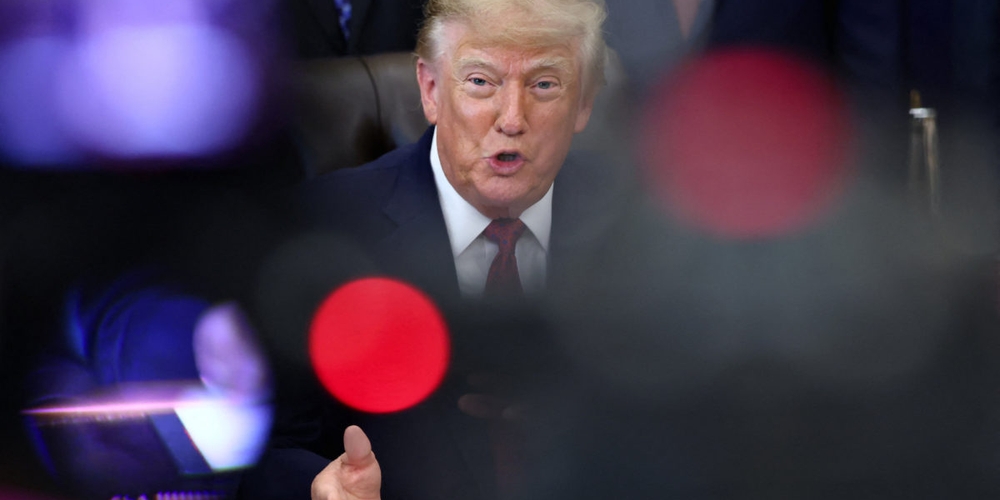
On a Thursday in Oklahoma, a contemporary political event unfolded with deep historical echoes. President Donald Trump held a campaign rally on the land of the Choctaw Nation. As the Associated Press reported, this act places him among a select few sitting U.S. presidents who have visited tribal nations while in office. The Choctaw Nation clarified it was renting the venue, not sponsoring the event, with Principal Chief Gary Batton expressing hope the visit would provide “an opportunity to learn more about what we do as a sovereign nation.” This single event, a routine campaign stop in the heat of a midterm election cycle, is a thread connecting directly to a long, painful, and evolving tapestry of federal-tribal relations. It is impossible to understand the significance of any presidential presence on tribal land without confronting the full, unvarnished history of that relationship—a history marked by brutality, broken promises, forced assimilation, and, only very recently, tentative steps toward apology and partnership.
The Historical Arc: From Assimilation to Acknowledgment
The article meticulously traces this arc, beginning with what is likely the first such visit in 1883. President Chester A. Arthur, while traveling to Yellowstone, met with Shoshone and Arapaho leaders on the Wind River Reservation. The account, as noted by Lt. Gen. Philip Sheridan, reveals the true purpose beneath the superficial compliment: Arthur’s delegation pressed Chiefs Washakie and Black Coal to consent to breaking up their shared reservation into private parcels. This was a direct assault on tribal sovereignty, framed as solving the “Indian problem.” The courageous refusal of these chiefs was an early act of resistance against a federal policy designed to erase Native identity and communal landholding.
This pattern continued. President Theodore Roosevelt’s 1903 visit to Havasupai land preceded the tribe’s forced removal for a national park. President Calvin Coolidge’s 1927 trip to the Pine Ridge Reservation promoted the very assimilationist boarding schools that would later be the subject of a presidential apology. These visits were not gestures of respect; they were instruments of a colonial policy, leveraging the symbolic power of the presidency to undermine the inherent sovereignty of nations that existed long before the United States.
The tone began to shift, albeit slowly and incompletely, in recent decades. President Bill Clinton’s 1999 visit to Pine Ridge acknowledged federal failures and called for economic investment. President Barack Obama’s 2014 journey to Standing Rock and 2015 trip to Kotzebue, Alaska, focused on tribal self-governance, opportunity, and the specific threats like climate change facing Indigenous communities. These visits represented a move, however imperfect, toward a government-to-government relationship.
The most profound and somber moment in this chronology came in 2024, as reported, when President Joe Biden traveled to the Gila River Indian Community. There, he formally apologized for the federal government’s role in the boarding school system, a 150-year “blot on American history” that involved the violent separation of children from families, cultural genocide, and widespread physical, emotional, and sexual abuse leading to the deaths of at least 970 children. Biden called it a “sin on our soul.” This visit was a rare and necessary official acknowledgment of the trauma intentionally inflicted through the policies that earlier presidents had promoted on their visits.
Opinion: Sovereignty, Spectacle, and the Unfinished Project of Justice
Against this harrowing backdrop, any modern presidential visit to tribal land must be scrutinized not as a neutral political event, but as an action laden with historical meaning and contemporary responsibility. The core principles of democracy, liberty, and respect for institutional sovereignty demand nothing less.
First, we must affirm the absolute right of the Choctaw Nation, or any tribal nation, to control the use of its land and engage in commercial activity like venue rental. This is a basic exercise of the inherent sovereignty that has been persistently challenged. Chief Batton’s statement is a masterful exercise of that sovereignty, steering the narrative toward education and the Nation’s own work. This is a nation engaging with the American political system on its own terms, a reality that should be respected and championed by all who believe in self-determination.
However, the purpose and context of the visitor matter immensely. A campaign rally, by its nature, is a partisan spectacle aimed at energizing a political base. The risk is that the profound symbol of the tribal venue becomes mere political scenery, a backdrop stripped of its deep historical and cultural significance. When the history of such visits includes presidents actively working to dismantle the very notion of tribal nationhood, using the office to pressure leaders and enact destructive policies, the specter of that history hangs over any new event. The visit must be judged by whether it truly elevates and honors the nation’s sovereignty or merely exploits its geography.
This leads to the most critical point: the staggering moral distance between the purposes of these historical visits. We have journeyed from President Arthur seeking to solve the “Indian problem” by destroying communal life to President Biden apologizing for the soul-shattering violence of that “solution.” This is not merely a change in policy; it is a tectonic shift in moral recognition. Biden’s apology, however overdue, was a necessary act of democratic accountability—a confrontation with a past that undermines America’s professed ideals of liberty and justice. It acknowledged that the state itself can be, and has been, an instrument of profound anti-human cruelty.
Therefore, the standard for any presidential engagement with tribal nations today must be extraordinarily high. It must be rooted in the government-to-government relationship affirmed by treaties and law, not political convenience. It must actively listen to and prioritize the needs defined by the tribes themselves, whether economic, environmental, or cultural. It must continue the painful but essential work of truth-telling and reconciliation regarding historical injustices like the boarding school era. And it must consistently support the tangible pillars of sovereignty: jurisdictional authority, control over resources, and the right to cultural preservation.
President Trump’s previous visit to the Lumbee Tribe in 2020, where he endorsed their push for federal recognition—a status finally signed into law in 2025—shows that engagement can have concrete, positive outcomes sought by the tribe. This is the model that matters.
In conclusion, a presidential visit to tribal land is never just a visit. It is an action that reverberates through history, touching the raw nerves of conquest, resistance, apology, and resilience. For those of us committed to liberal democracy, the rule of law, and human dignity, our focus must remain on supporting the unbroken sovereignty of tribal nations. We must demand that any leader who steps onto that sacred ground does so with humility, a commitment to learning, and a fidelity to partnership over politics. The journey from the Wind River in 1883 to the Gila River in 2024 shows both how far we have come and the vast distance we must still travel to forge a relationship of true justice, mutual respect, and enduring liberty. The courage of Chiefs Washakie and Black Coal in saying no, and the strength of boarding school survivors in sharing their stories, have shown the way. It is now incumbent upon all who hold power to follow it.