
Alcatraz Echoes: A Day of Commemoration and a Legacy of Continued Struggle
Published
- 3 min read
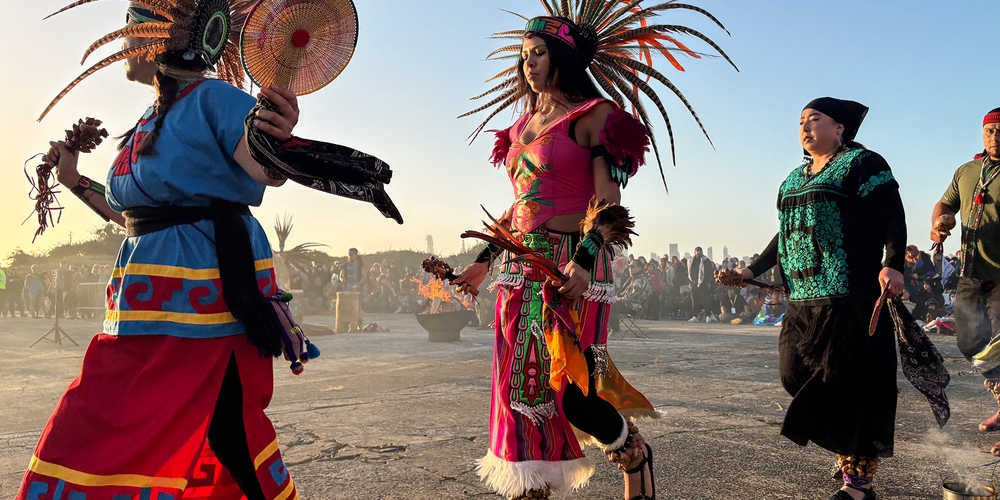
The Gathering on The Rock
In the early hours of a Monday in October, as the fog clung to the San Francisco Bay, a powerful convergence of past and present took place on Alcatraz Island. Thousands gathered, not as tourists, but as participants in a living commemoration of resilience. The occasion was Indigenous Peoples Day, and the site was purposefully chosen: the location of the seminal 19-month occupation from 1969 to 1971 by the group Indians of All Tribes. That historic act of protest, which at its peak saw 400 people living on the island and running their own services, was a defiant stand against federal policies erasing Native American communities and religions. This annual return to Alcatraz is a solemn vow to remember that struggle and to assess the state of the fight today.
The Unfinished Business: Vetoes and Vulnerabilities
The speeches and testimonials delivered during the observance, however, painted a picture of a struggle far from concluded. The commemoration swiftly turned into a somber audit of contemporary governance. Organizers and attendees directed criticism squarely at California Governor Gavin Newsom for a series of recent legislative vetoes that directly impact Native communities. These were not abstract policy disagreements; they pertained to survival and dignity.
First, Governor Newsom vetoed bills that would have compelled state agencies to address dire tribal water shortages and strengthened legal protections for tribal religious practices and sacred sites. Morning Star Gali, executive director of Indigenous Justice and a citizen of the Pit River Tribe, gave poignant personal testimony, stating she has been “kicked out” of state parks when attempting to gather medicine or pray at sacred waters. This reality is exacerbated for the sixty-two tribes in California lacking federal recognition, a status that affords critical protections for such sites. Tribal leaders argue that without additional safeguards, they are powerless to prevent damage from state and federal projects.
Second, and perhaps most viscerally alarming, was the critique of Newsom’s veto of Assembly Bill X, which would have established a Missing and Murdered Indigenous Persons (MMIP) Justice Program within the California Department of Justice. In his veto message, the Governor deemed existing efforts sufficient, rendering the proposal “unnecessary.” This bureaucratic dismissal was met with raw anguish. Teyana Viscarra, co-founder of the advocacy group Way of the Sacred Mountain, countered with devastating simplicity: “It’s ridiculous, our sisters continue to be ignored even as they go missing and die.” Her words underscore a crisis of visibility and priority, where the lives of Indigenous women and people are seemingly relegated to a secondary concern.
Parallel Struggles: ICE Tactics and Political Posturing on Water
The article, as reported by CalMatters, also highlights other concurrent struggles that speak to a broader theme of community vulnerability and political accountability. In California’s Central Valley, Immigration and Customs Enforcement (ICE) agents are reportedly conducting a surge of arrests, inciting terror among immigrant farmworker families. Democratic Assemblymember Esmeralda Soria reported a case of a parent detained while cashing a work check, leaving his family unable to pay rent—a stark illustration of how enforcement actions shred the fabric of community stability. Parallelly, ICE presence near community college campuses has sown panic among students, forcing institutions to post signs limiting agent entry, a chilling scene on grounds meant for learning and opportunity.
Furthermore, the piece looks ahead to California’s gubernatorial race, probing the candidates’ positions on the state’s perennial water crises. Republican Steve Hilton advocates for specific infrastructure projects, including the controversial raising of Shasta Dam. Democrat Xavier Becerra, while offering fewer specifics, has a record as Attorney General of suing to halt that very dam project and challenging Trump-era water rules deemed harmful to the environment. This impending political choice will have profound implications for tribes, farmers, and ecosystems, yet the discussion often seems detached from the immediate, life-threatening water shortages faced by tribal communities mentioned earlier.
A Moral Reckoning for the Golden State
From a standpoint committed to democracy, liberty, and human dignity, the narrative woven by these events is one of profound moral contradiction. The gathering on Alcatraz is a beautiful, powerful testament to the enduring spirit of a people who have faced centuries of oppression. It is a celebration of survival. Yet, the substance of the grievances aired there reveals a state apparatus failing to live up to its own professed ideals.
Governor Newsom’s vetoes represent more than political calculations; they represent a failure of moral imagination and leadership. To hear a leader dismiss the need for a focused MMIP program as “unnecessary” in the face of a documented epidemic of violence is to witness a catastrophic failure of empathy and duty. The right to safety is as fundamental as any in the Bill of Rights. To block legislation that would secure water access—the most basic human necessity—and protect the freedom to practice religion at sacred sites is to directly undermine the liberty and pursuit of happiness of California’s first peoples. This is not a partisan issue; it is a human one. A liberal democracy is measured not by its treatment of the powerful, but by its protection of the vulnerable and its fidelity to its treaties and word.
The parallel stories of ICE operations and water politics amplify this theme. The terror described by Assemblymember Soria—“They’re out there terrorizing our families”—is the antithesis of the domestic tranquility and ordered liberty envisioned by our founders. When families live in fear of a routine errand, when students are anxious on campus, the foundation of a free society is cracked. Similarly, the water crisis is ultimately a crisis of justice. Who has the right to this life-sustaining resource? The answer, in a just society, must prioritize human need and historical obligation, particularly to tribal nations whose stewardship of the land precedes the state itself.
Conclusion: From Symbolic Rocks to Substantive Change
Alcatraz is a powerful symbol. But resilience should not be a perpetual state demanded of marginalized communities. The true honor to the legacy of the 1969 occupiers would be a present-day where such occupations are no longer necessary because the systems of governance finally, fully, listen and act. It would be a California where tribal leaders are not kicked out of parks for praying, where sisters are not ignored when they go missing, where families are not terrorized for seeking work, and where water is a secured right, not a political bargaining chip.
The principles of democracy and liberty are not self-executing. They require constant vigilance, courageous advocacy, and leaders who possess the moral clarity to see justice not as an inconvenience, but as the core purpose of governance. The voices from Alcatraz this Indigenous Peoples Day are not echoes of a bygone era; they are a clarion call for the here and now. It is a call for all who believe in America’s founding promises to demand that our institutions serve all people with equal commitment, dignity, and respect. The commemoration must become a catalyst, transforming symbolic solidarity on a rocky island into tangible, legislative, and cultural change on the mainland. The integrity of our democracy depends on it.